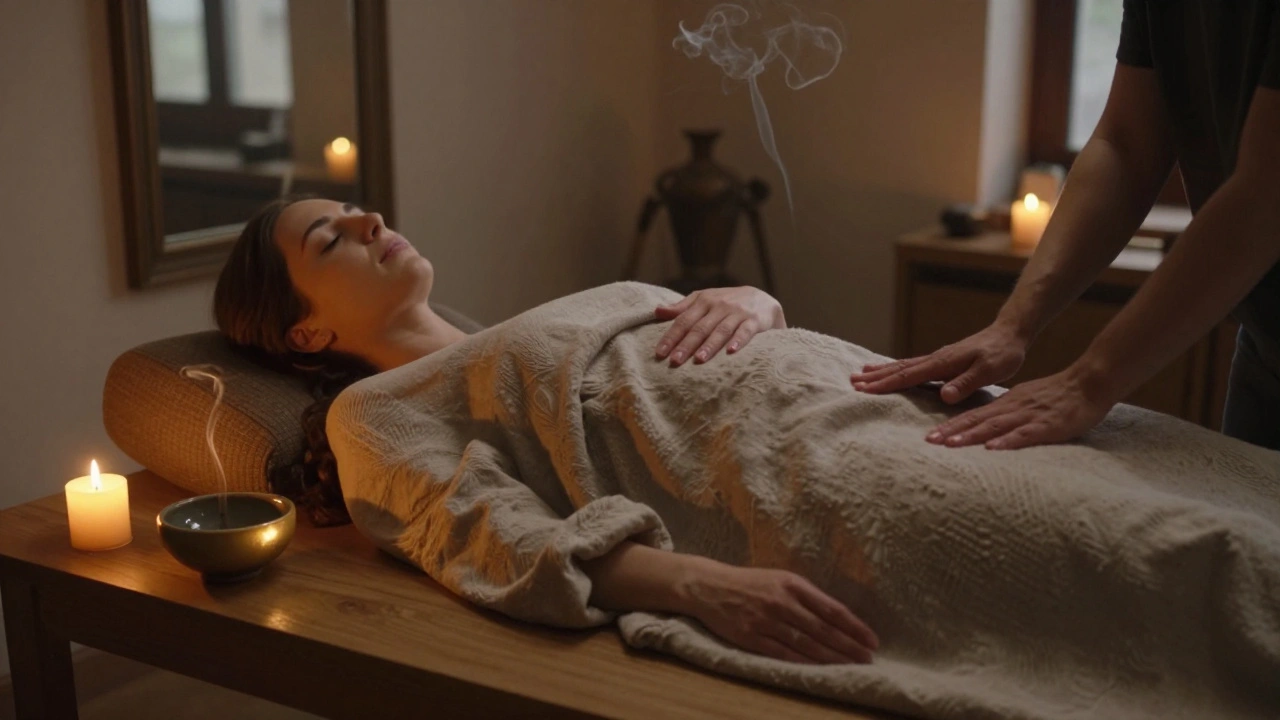
What if the most powerful part of your body isn’t what you think it is? Not your mind, not your muscles-but your yoni. Not as a symbol, not as a fantasy, but as a living, breathing source of pleasure, power, and deep healing. If you’ve ever felt disconnected from your body, or like your sensuality has been buried under stress, shame, or years of neglect, yoni massage might be the quiet revolution you didn’t know you needed.
What Exactly Is Yoni Massage?
Yoni is the Sanskrit word for the female sacred space-the vulva and vagina. A yoni massage isn’t about sex. It’s not about orgasm. It’s not even about pleasing someone else. It’s about yoni massage as a sacred practice: a slow, intentional, non-goal-oriented touch that reconnects you with your body’s natural rhythm.
This isn’t something you learn from a video or a quick tutorial. It’s rooted in ancient Tantric traditions from India and Southeast Asia, where the yoni was seen as a gateway to spiritual energy, not just physical pleasure. Modern practitioners have adapted it into a therapeutic, self-empowerment tool. Think of it like acupuncture for your sensuality-except instead of needles, you use breath, warmth, and gentle pressure.
Unlike erotic or happy-ending massages, yoni massage doesn’t end with release. It ends with presence. With awareness. With a quiet, deep knowing that you are safe, worthy, and whole exactly as you are.
Why It Matters: The Hidden Benefits
You might think, ‘I’ve had orgasms before. Why does this matter?’ But here’s the truth: most women have never touched their own yoni with tenderness. Not to please, not to perform, not to fix something-but just to feel.
Yoni massage helps:
- Release stored trauma-physical or emotional-from childbirth, abuse, or societal shame
- Improve pelvic floor health and reduce chronic pain or tension
- Boost natural lubrication and sensitivity without chemicals or stimulants
- Reconnect with your sexual energy in a way that feels grounding, not overwhelming
- Quiet the mental noise and step into your body like you’ve never done before
One client in Istanbul, a 38-year-old teacher, told me after her first session: ‘I hadn’t felt anything down there in years-not since my divorce. I thought I was broken. Turns out, I was just scared to touch it. Now, I sleep better. I laugh more. I feel like I finally live in my own skin.’
Types of Yoni Massage Practices You’ll Find in Istanbul
Not all yoni massage is the same. In Istanbul, you’ll find a few different approaches, each with its own flavor:
- Tantric Yoni Massage: Focuses on energy flow, breathwork, and slow, circular movements. Often includes meditation before and after. Best for spiritual seekers.
- Healing-Centered Yoni Massage: Practiced by therapists trained in somatic trauma release. Uses oils, warm stones, and gentle pressure to release pelvic tension. Ideal for survivors of abuse or birth trauma.
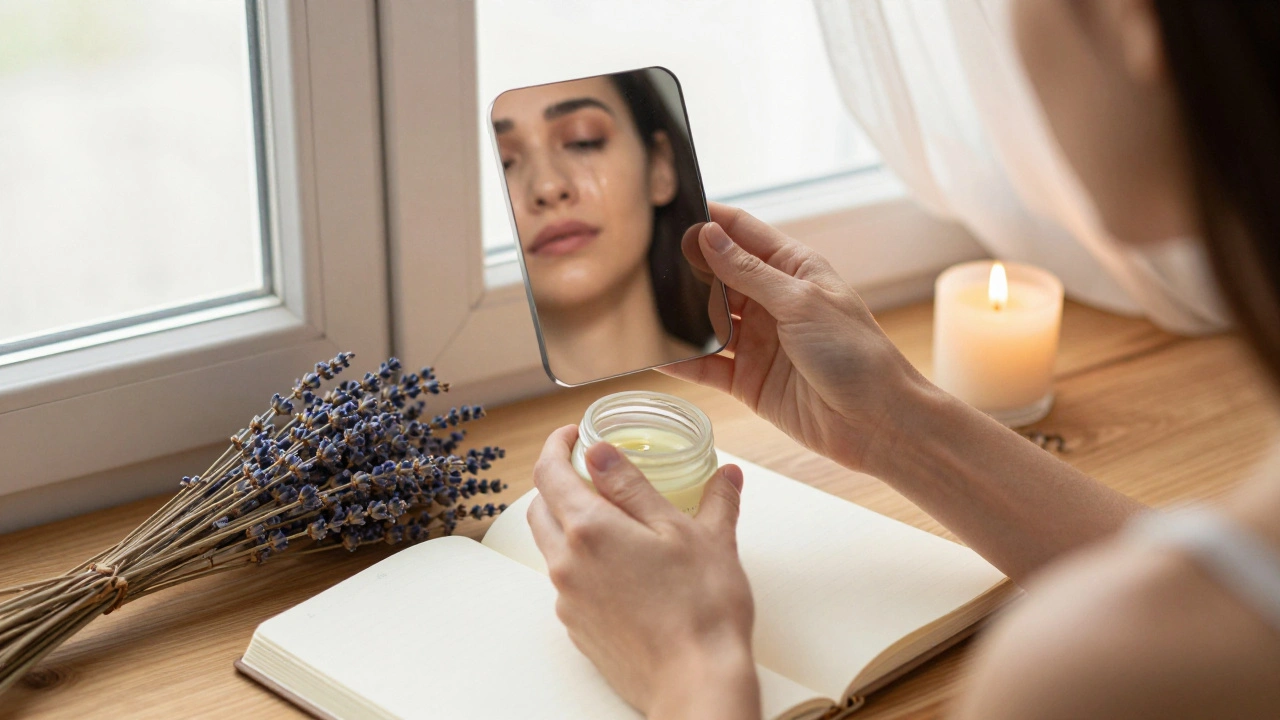
- Self-Yoni Massage: Done alone, with guidance. Uses a mirror, warm oil, and journaling. No therapist needed. Great for beginners who want to start privately.
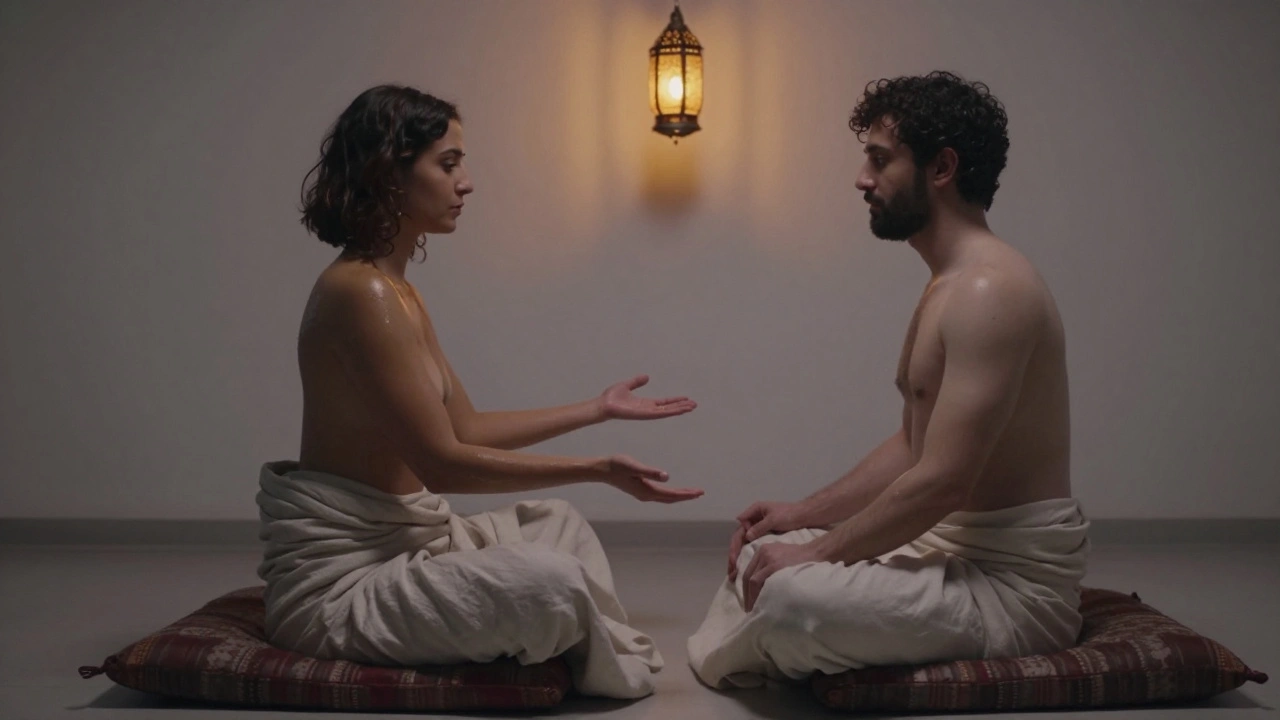
- Couples Yoni Massage: A partnered practice where one person gently touches the other’s yoni while maintaining eye contact and breathing together. Builds deep intimacy without pressure to perform.
Most practitioners in Istanbul blend elements from several traditions. The key? They never rush. Sessions last 60 to 90 minutes. You’re never pressured. You’re always in control.
How to Find a Trusted Yoni Massage Practitioner in Istanbul
Not every ‘sensual massage’ studio offers real yoni work. Many use the term loosely. Here’s how to spot the real thing:
- Look for practitioners who mention trauma-informed, consent-based, or body-positive training. Avoid places that use suggestive photos or language.
- Check if they offer a pre-session consultation. A good practitioner will ask about your history, boundaries, and goals-not just your budget.
- Ask if they’re certified. Look for training from organizations like the Tantric Healing Institute or International Association of Somatic Therapists.
- Read reviews carefully. Real clients talk about feeling safe, not just ‘turned on.’
In Istanbul, trusted practitioners often work out of quiet, minimalist studios in Beyoğlu, Kadıköy, or Beşiktaş. Some even offer home visits-always verify safety first.
What to Expect During Your First Session
Picture this: Soft music. Candles. Warm oil. You’re lying on a padded table, wrapped in a blanket. The practitioner doesn’t touch you right away. First, they guide you through breathing-slow inhales, long exhales. They ask: ‘Where do you feel safe in your body?’
Then, they begin. Fingers, not tools. Light pressure. Slow circles. No rushing. You might feel tingling, heat, tears, or nothing at all. All of it is normal. You might laugh. You might cry. You might just lie there, stunned by how quiet your mind has become.
The practitioner never asks you to ‘relax’ or ‘let go.’ They just hold space. They check in constantly: ‘Is this okay?’ ‘Do you want more pressure?’ ‘Would you like to stop?’
At the end, you’re offered herbal tea. No pressure to talk. No expectation to perform. Just quiet. Just you.
Pricing and Booking in 2026
In Istanbul, a professional yoni massage session costs between 350 and 650 Turkish Lira (roughly $10-$18 USD), depending on the practitioner’s experience and location. Longer sessions (90 minutes) are usually 500-800 TL.
Most places require a 24-hour cancellation policy. You’ll typically book through a website or WhatsApp message. Don’t be surprised if they ask you to fill out a short intake form-it’s for your safety.
Payment is usually cash or bank transfer. Credit cards are rare in these intimate spaces. And yes, receipts are rarely provided. This isn’t a spa-it’s a sanctuary.
Safety First: Your Rights in a Yoni Massage
Here’s what no one tells you: You have the right to say no at any moment. Even if you’ve paid. Even if you’ve traveled across the city. Even if you feel guilty.
Red flags:
- Practitioner touches without asking
- They pressure you to ‘let go’ or ‘open up’
- They talk about their own experiences or sexual history
- They don’t offer a private space to dress
- They mention ‘happy endings’ or ‘extras’
Green flags:
- They ask for verbal consent before every touch
- They let you keep your clothes on if you want
- They explain the process in advance
- They respect silence
If something feels off, leave. No explanation needed. Your safety is non-negotiable.
Yoni Massage vs. Sensual Massage: What’s the Difference?
| Aspect | Yoni Massage | Sensual Massage |
|---|---|---|
| Primary Goal | Healing, reconnection, presence | Pleasure, arousal, release |
| Focus Area | Yoni, pelvic floor, energy centers | Full body, often including breasts and genitals |
| Technique | Slow, intentional, breath-led | Fluid, rhythmic, often erotic |
| Outcome | Emotional release, body awareness | Physical arousal, possible orgasm |
| Aftercare | Tea, silence, journaling | Often none-client leaves |
| Practitioner Training | Therapeutic, trauma-informed | Often none; may be freelance |
Yoni massage is not a sexual service. It’s a healing ritual. Sensual massage can be beautiful-but it’s not the same thing. Confusing the two is like mistaking a yoga class for a party.
Frequently Asked Questions
Is yoni massage only for women?
No. While the term ‘yoni’ refers to the female anatomy, the practice of sacred pelvic touch can be adapted for anyone with a vulva or vagina-including trans women and non-binary individuals. Some practitioners also offer similar work for men (called lingam massage), but yoni massage specifically honors the feminine sacred space.
Can I do yoni massage on myself?
Absolutely. Self-yoni massage is one of the most powerful ways to begin. You’ll need a mirror, organic coconut or almond oil, and a quiet space. Start with five minutes a day. Breathe. Touch gently. Notice what you feel-without judgment. Many women find that after just a week, they feel more connected to their bodies than they have in years.
Is yoni massage legal in Turkey?
Yes-when practiced as a therapeutic, non-sexual bodywork modality. Turkey has no law against tantric or energy-based healing. However, any service that implies or offers sexual acts is illegal. Legitimate practitioners avoid all sexual language and focus on healing, consent, and presence.
What if I feel embarrassed or ashamed?
That’s completely normal. Most people feel this way at first. The practice isn’t about fixing shame-it’s about sitting with it. A good practitioner will never push you. They’ll let you go at your pace. You might cry. You might laugh. You might sit in silence for ten minutes. All of it is part of the healing.
How often should I get a yoni massage?
There’s no rule. Some people come once and feel transformed. Others come monthly for ongoing healing. If you’re working through trauma, once a week for 4-6 weeks is common. For maintenance, once a month or even once a season is enough. Listen to your body-not your calendar.
Ready to Begin?
You don’t need to be ‘ready’ to start. You just need to be willing to feel. To sit with what’s been buried. To touch yourself-not to fix, not to perform, but to remember.
The yoni isn’t broken. It’s waiting. And in a world that tells women to shrink, to hide, to perform-it’s radical to simply be. To feel. To receive.
Start small. Breathe. Touch. Listen.
Your body has been waiting for this.
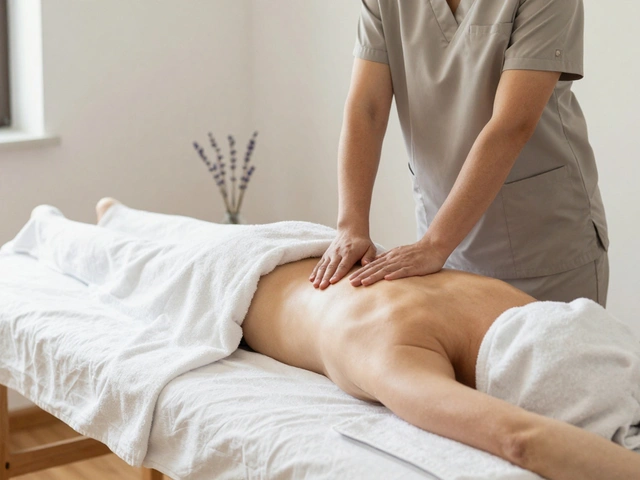
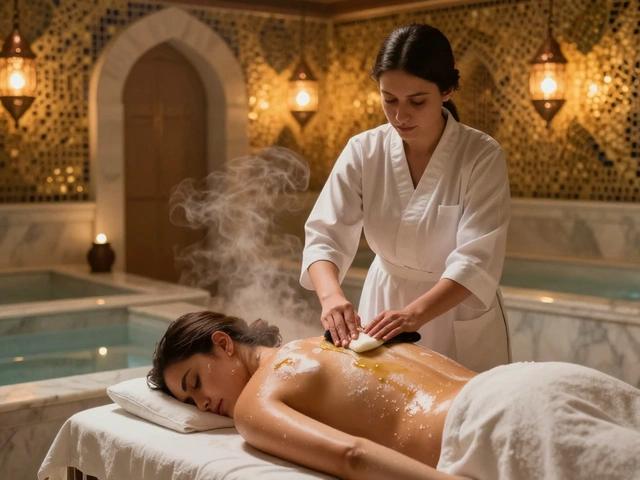

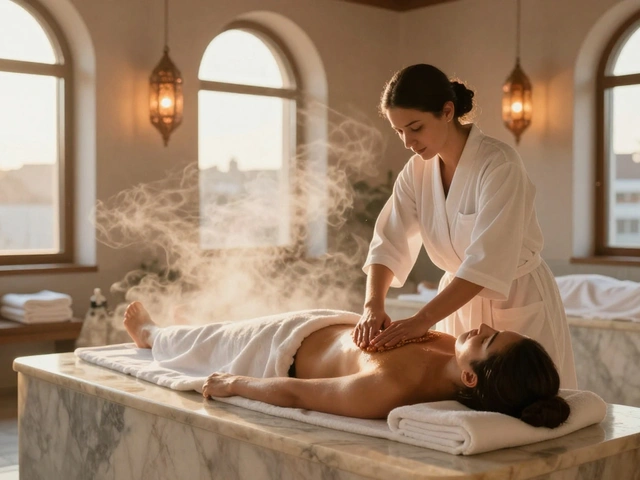
Yoni massage isn't just about touch-it's about reclaiming autonomy. I've seen clients with PTSD from childbirth finally sleep through the night after three sessions. No drugs. No talk therapy. Just breath, oil, and permission to feel. The body holds trauma like a clenched fist, and this is how you slowly unclench it.
What's wild is how many women come in saying they 'don't feel anything down there.' Not numbness from injury-just years of being taught their pleasure is secondary. This work flips that script.
And yes, it's legal in Turkey as long as it's framed as somatic therapy. No sexual acts, no pressure, no 'happy endings.' If a studio offers those, run. Real practitioners don't advertise with lingerie photos.
Self-practice works too. Five minutes a day with coconut oil and a mirror can reset your nervous system faster than a month of meditation apps.
It's not mystical. It's neurobiology. The pelvic floor is wired to the vagus nerve. Gentle pressure calms the fight-or-flight response. That's why people cry. That's why they laugh. That's why they say, 'I didn't know I could feel this safe.'
Also, if you're a man reading this thinking 'this isn't for me'-you're wrong. Your partner might need this. Your daughter might need this. Your sister might need this. It's not gendered. It's human.
This is the most pretentious, overwrought, pseudo-spiritual nonsense I’ve read all year. You call this ‘healing’? It’s just a fancy way to charge $20 for someone to rub your vulva while whispering ‘breathe’ like a cult leader. If you need a stranger to touch you to feel ‘whole,’ maybe therapy-actual, evidence-based therapy-would help more than candlelit oil massages.
And don’t get me started on ‘Tantric traditions.’ Ancient Indians didn’t have licensed ‘yoni massage therapists’ in Beyoğlu. This is Western capitalism repackaging spirituality as a luxury spa service for rich women who think they’re enlightened because they drink matcha.
Also, ‘no orgasm’? Sure. That’s what they all say. Until they’re charging $800 for a ‘sacred union’ session with a ‘certified’ practitioner who’s actually a yoga instructor with a YouTube channel.
There are multiple grammatical errors in this post. ‘Yoni massage’ is not capitalized consistently. ‘Sanskrit’ is misspelled as ‘Sanskrit’ in one instance. The phrase ‘you’re never pressured’ should be ‘you are never pressured’ for formal correctness. The use of em dashes is inconsistent. Also, ‘lingam massage’ is mentioned without proper contextualization for those unfamiliar with Sanskrit terminology.
Additionally, the claim that ‘Turkey has no law against tantric or energy-based healing’ is misleading. While no specific law bans it, Turkish medical regulations classify any genital touching by non-medical professionals as potential sexual misconduct under Article 102 of the Turkish Penal Code-unless performed under licensed physical therapy, which yoni massage is not.
Furthermore, the author’s anecdote about a ‘38-year-old teacher in Istanbul’ lacks verifiable sourcing. This reads like fiction dressed as journalism.
And while the intention may be compassionate, the romanticization of trauma as ‘sacred’ is dangerous. Trauma is not a spiritual awakening. It’s a clinical condition. This post blurs the line between healing and exploitation.
Bro, this is exactly what my aunt in Varanasi did after her husband died. She didn’t call it ‘yoni massage’-she called it ‘maa ki seva’-service to the mother. She’d rub warm sesame oil on her belly and inner thighs while chanting mantras. No therapist. No candles. Just her, the floor, and silence.
People in India never needed a $600 session to reconnect. We’ve had this for centuries. But now? Westerners buy it as a ‘retreat’ and post it on Instagram like it’s a new discovery.
Don’t get me wrong-I’m glad it’s helping people. But don’t erase the roots. This isn’t ‘spiritual innovation.’ It’s ancestral wisdom being packaged for the wellness industrial complex.
Also, ‘tantric’ doesn’t mean ‘slow touch.’ It means energy channeling through breath, mudra, and mantra. Most ‘tantric’ practitioners in Istanbul have never read the Vijñāna Bhairava Tantra.
Respect the tradition. Don’t commodify it.
I’m a guy, and I’ve never thought about this stuff before. But reading this made me think about my sister. She went through a really rough time after her miscarriage. Never talked about it. Never went to therapy. Just… shut down.
I showed her this article. She didn’t say much. But last week, she sent me a photo of her with a bottle of coconut oil and a journal. Just a simple pic. No caption.
I don’t know if she’s doing it. But I know she’s trying.
That’s all I needed to see.
Thanks for writing this. Not because it’s perfect. But because it gave someone permission to start.
As a scholar of Indian spiritual traditions, I must clarify that the term ‘yoni’ in Sanskrit denotes not merely the anatomical region but the cosmic source-the primordial womb from which all creation emerges. To reduce this sacred concept to a therapeutic technique is to engage in profound cultural reductionism.
Traditional Tantric practices involving yoni worship are embedded within complex rituals of puja, yantra, and mantra, requiring years of initiation and discipline under a qualified guru. The modern adaptation described here, while potentially beneficial on a somatic level, strips away the metaphysical framework that gives it meaning.
Furthermore, the commercialization of such practices in Westernized contexts often leads to misappropriation, where spiritual symbols are detached from their ethical and doctrinal foundations. One must ask: who benefits? The practitioner? Or the entrepreneur?
Let us honor the roots. Not as exotic aesthetics, but as living wisdom.
i just tried self yoni massage last week. i was nervous. i thought i’d feel weird. but i used coconut oil and sat on my bed with the lights off and just touched myself. slow. like, really slow. no goal. just feeling.
and i cried. not sad crying. like… i don’t know. relieved? like my body had been waiting for me to show up.
it’s not magic. it’s just… being with yourself. and that’s harder than it sounds.
if you’re scared. do it anyway. you don’t need a therapist. you just need five minutes and a little oil.
OMG I JUST HAD MY FIRST SESSION AND I’M STILL SHAKING. I THOUGHT I WAS BROKEN BECAUSE I COULDN’T ORGASM WITH MY PARTNER FOR TWO YEARS. TURNED OUT I WASN’T BROKEN-I WAS SCARED. AND I HADN’T TOUCHED MYSELF IN 8 YEARS BECAUSE I THOUGHT IT WAS ‘SLEAZY.’
THE PRACTITIONER ASKED ME IF I WANTED TO WEAR UNDERWEAR. I SAID YES. SHE SAID ‘GOOD.’ I FELT SAFE.
THEN SHE PUT HER HANDS ON MY BELLY AND JUST… WAITED. NO TALKING. NO PRESSURE. JUST BREATHING TOGETHER.
I CRIED FOR 20 MINUTES. THEN I LAUGHED. THEN I FELL ASLEEP.
I DIDN’T EVEN KNOW I COULD FEEL THIS MUCH.
IF YOU’RE READING THIS AND YOU’RE SCARED-GO. YOU DON’T NEED TO BE ‘READY.’ YOU JUST NEED TO BE WILLING.
This is a front. Every ‘healing’ genital massage service is a cover for prostitution. The ‘trauma-informed’ language? That’s just to lure vulnerable women. The ‘no orgasm’ claim? Lies. They’re charging for sex under the guise of therapy. The fact that they don’t take credit cards? That’s to avoid paper trails. The ‘certifications’? Bought online for $20.
Look at the locations: Beyoğlu, Kadıköy. Tourist zones. Places where brothels have always operated under the radar. This isn’t healing. It’s exploitation dressed in crystals and incense.
And don’t tell me ‘it’s legal.’ Just because it’s not explicitly banned doesn’t mean it’s not illegal. Turkish authorities crack down on ‘sensual massage’ all the time-under different names.
Don’t be fooled. If it involves touching private parts and costs more than a haircut, it’s sex work. Period.