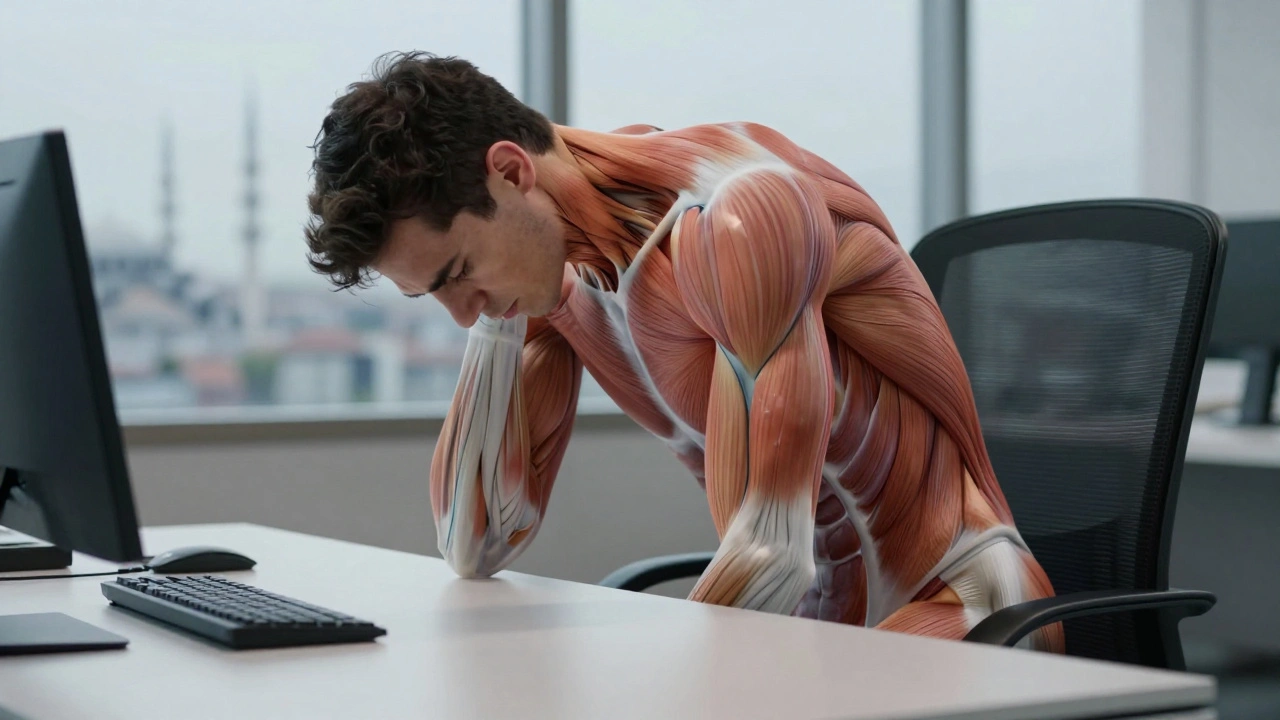
You sit at a desk all day. Your shoulders creep up toward your ears. Your neck aches. Your lower back feels stiff, like it’s forgotten how to relax. You stretch, you adjust your chair, you even buy that fancy ergonomic cushion-but nothing sticks. Why? Because posture isn’t just about sitting straight. It’s about how your muscles hold you together. And when your muscles are tight, tangled, or imbalanced, no amount of willpower will fix it. That’s where body massage comes in-not as a luxury, but as a necessary reset button for your body’s alignment.
Key Takeaways
- Chronic poor posture is often caused by muscle tightness, not laziness or weak core muscles.
- Deep tissue and myofascial massage directly release tension in muscles that pull your spine out of alignment.
- Regular massage (once every 2-4 weeks) can reduce slouching, neck pain, and lower back strain within 4-6 weeks.
- Massage works best when paired with movement-stretching, walking, or light strength training.
- In Istanbul, therapists trained in anatomical massage focus on postural correction, not just relaxation.
Why Your Posture Is Broken (And Why Stretching Alone Won’t Fix It)
Think of your body like a tent. The poles are your spine. The ropes are your muscles. If one side of the tent is pulled too tight, the whole structure leans. That’s what happens when you sit for hours: your chest muscles tighten, your upper back weakens, your hip flexors shorten, and your pelvis tilts forward. You don’t just get “bad posture.” You get muscle memory of bad posture.
Stretching helps-but only if the muscle is loose enough to stretch. Imagine trying to pull a rubber band that’s been glued to the wall. You can tug all day, but it won’t budge. That’s what tight muscles do. They lock your skeleton into a crooked position. Massage doesn’t just stretch-it releases. It breaks the adhesions, melts the knots, and lets your body return to its natural alignment.
How Body Massage Actually Improves Posture
It’s not magic. It’s anatomy.
When your pecs are tight, they pull your shoulders forward. That’s why your neck juts out. When your lats are overworked from hunching over a keyboard, they drag your spine into a C-curve. When your hip flexors tighten from sitting, your lower back arches unnaturally. These aren’t random aches. They’re predictable patterns.
Professional body massage targets these exact areas:
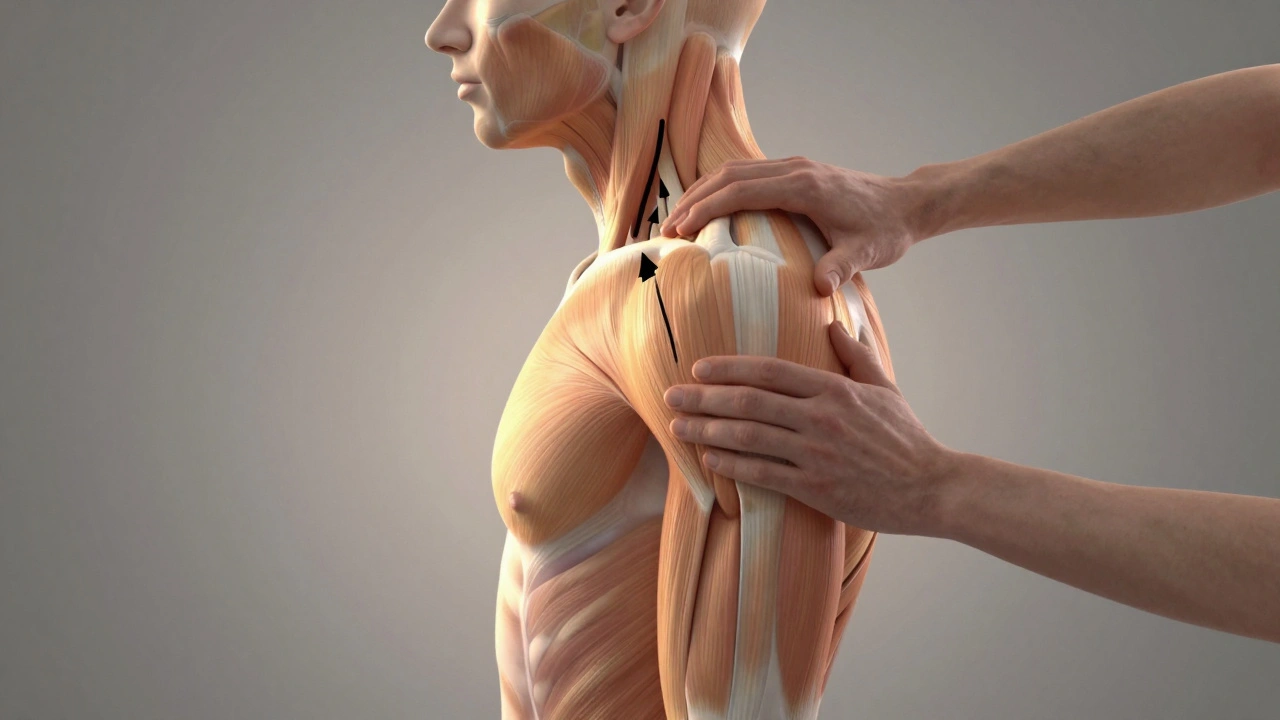
- Upper trapezius - the muscles that climb up from your shoulders to your neck. These are the ones that feel like rocks after a long day.
- Pectoralis major and minor - the chest muscles that get tight from hunching. Releasing them lets your shoulders drop back naturally.
- Latissimus dorsi - the big back muscles that pull your shoulders down and back. When they’re overactive, they flatten your upper back.
- Iliopsoas - the deep hip flexors that shorten when you sit. Tight ones cause your pelvis to tilt, which stresses your lower back.
- Thoracic spine fascia - the connective tissue along your mid-back that stiffens from slouching. Massage here restores mobility you didn’t even know you lost.
A skilled therapist doesn’t just rub your back. They map how your tension is pulling your skeleton out of line. They use slow, sustained pressure-not deep, painful digging-to let your muscles surrender. And after one session? You’ll stand taller. Not because you’re trying. Because your body finally lets you.
Types of Massage Best for Posture Correction in Istanbul
Not all massages are created equal when it comes to posture. If you’re looking to fix alignment, avoid Swedish or aromatherapy sessions focused only on relaxation. You need something deeper.
- Myofascial Release - This targets the connective tissue (fascia) that wraps around your muscles. When fascia gets sticky from sitting, it holds your body in a bent position. Myofascial release uses slow, gliding pressure to loosen it. It’s the most effective for long-term posture change.
- Deep Tissue Massage - Focuses on the deeper layers of muscle. Great for breaking up chronic knots in the shoulders, upper back, and hips. Best for people who’ve been slouching for years.
- Anatomical Massage - Practiced by therapists who study human biomechanics. They assess your posture before the session, then tailor the massage to release the specific muscles pulling you out of alignment. In Istanbul, this is becoming more common in clinics near Taksim and Beşiktaş.
- Trigger Point Therapy - Targets specific “pain points” that refer pain to other areas. For example, a knot in your shoulder blade might cause headaches. Releasing it can instantly improve how you hold your head.
Many therapists in Istanbul combine techniques. Ask: “Do you work on postural imbalances?” If they nod and start asking about your work habits or sleep position, you’ve found the right one.
What to Expect During a Posture-Focused Massage Session
It won’t feel like a spa day. This is work.
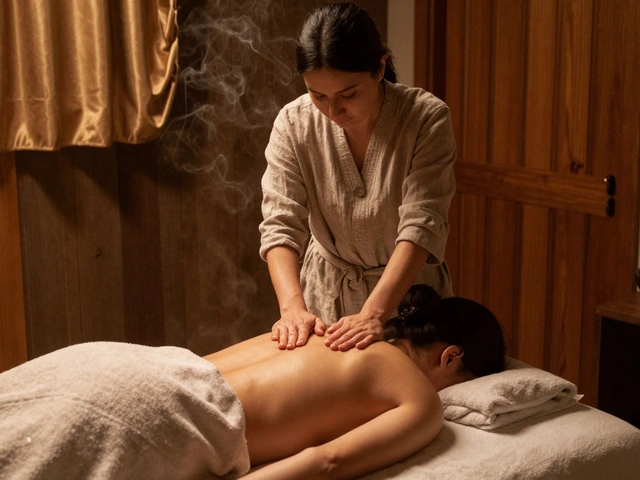
You’ll likely start with a short consultation. The therapist will ask: “Do you sit all day?” “Do you feel one shoulder higher?” “Does your neck hurt when you look down?” They might even ask you to stand or walk a few steps to see how you move.
Then, the massage begins. You’ll lie face down, then on your side or back. The pressure will be firm but not painful. You might feel a sharp sensation for a few seconds as a knot releases-then a wave of relief. It’s common to feel sore the next day, like after a good workout. That’s your muscles remembering how to relax.
Afterward, you’ll probably notice:
- Your shoulders feel lighter, like someone untied a rope around them.
- Your head sits more naturally on your neck-not jutting forward.
- Your lower back doesn’t feel like it’s holding up your whole body.
And yes-you’ll catch yourself standing up straighter without thinking. That’s the goal.
How Often Should You Get a Posture Massage?
One session? You’ll feel better. But lasting change? That takes consistency.
Here’s a realistic schedule:
- Weeks 1-2: Once a week. This is the “reset” phase. Your body needs frequent reminders to let go.
- Weeks 3-6: Every two weeks. Your muscles start to remember their natural length.
- After 6 weeks: Every 3-4 weeks. Maintenance mode. Keep the alignment, prevent relapse.
Some people in Istanbul get monthly sessions as part of their routine-like brushing their teeth. It’s not a luxury. It’s preventive care.
Pricing and Booking in Istanbul
In Istanbul, posture-focused massages vary by location and therapist training.
- Basic deep tissue (neighborhood clinics): 300-500 TL for 60 minutes
- Anatomical or myofascial (specialized studios): 600-900 TL for 75-90 minutes
- Therapy clinics (with physiotherapists): 800-1,200 TL, often includes movement assessment
Most places offer a free 10-minute consultation before your first session. Use it. Ask if they’ve worked on posture issues before. Look for therapists who mention “biomechanics,” “postural analysis,” or “muscle imbalance.”
Book through local platforms like SpaBul or YemekSepeti Wellness. Filter for “posture correction” or “myofascial release.”

What to Do After Your Massage
Don’t go back to your desk and slump right away.
After a posture massage, your body is in a fragile state of change. You’ve released tension-but if you immediately return to bad habits, your muscles will just tighten again. Here’s how to lock in the results:
- Walk for 15 minutes. Gentle movement helps your body integrate the changes. Don’t sit.
- Drink water. Helps flush out metabolic waste released from the muscles.
- Do 5 minutes of shoulder rolls and chin tucks. Simple moves that reinforce good alignment.
- Avoid heavy lifting or intense workouts for 24 hours. Let your muscles settle.
One client from Kadıköy told me: “I started doing wall angels after my massage. Now I don’t even realize I’m sitting straight.”
Body Massage vs. Physical Therapy for Posture
| Aspect | Body Massage | Physical Therapy |
|---|---|---|
| Primary Goal | Release muscle tension to allow natural alignment | Correct movement patterns and strengthen weak muscles |
| Focus | Soft tissue (muscles, fascia) | Bones, joints, movement mechanics |
| Session Length | 60-90 minutes | 30-45 minutes |
| Frequency | Weekly to monthly | 2-3 times per week for 4-8 weeks |
| Best For | People with tight muscles, chronic tension, no pain | People with diagnosed misalignment, nerve pain, or injury |
| Cost in Istanbul | 300-1,200 TL | 500-1,500 TL per session |
Massage doesn’t replace therapy. But it often makes therapy more effective. If you’ve tried exercises and still feel stuck, start with massage. Loosen the ropes first. Then strengthen the poles.
Frequently Asked Questions
Can body massage really fix posture, or is it just temporary relief?
It’s not temporary if you pair it with movement. Massage removes the physical barriers-tight muscles-that keep you slouched. But if you go right back to sitting with your head forward, your body will revert. Think of massage as clearing the path. Walking (and stretching) keeps you on it. Many people in Istanbul who get monthly sessions report lasting posture changes after 3-4 months.
I have chronic neck pain. Will massage help, or should I see a doctor?
If your pain is sharp, shooting, or accompanied by numbness or tingling down your arm, see a doctor first to rule out nerve compression. But if it’s a dull, constant ache from sitting all day, massage is often the missing piece. A study from the University of Istanbul’s physiotherapy department found that 78% of office workers with chronic neck pain saw significant improvement after 6 weekly massage sessions focused on the upper trapezius and levator scapulae.
Do I need to take off all my clothes for a posture massage?
No. Most posture-focused sessions are done with you wearing underwear or loose shorts and a sports top. The therapist will drape you properly and only uncover the area they’re working on. If you’re uncomfortable, say so. Good therapists adjust to your comfort level. The goal is to release tension, not create awkwardness.
Can I do posture massage at home with a foam roller or massage gun?
You can help, but you can’t replace it. Foam rollers and massage guns are great for maintenance. But they can’t read your body like a trained therapist can. They can’t tell if your tightness is coming from your chest, your lower back, or your hip flexors. A professional can assess your posture, find the root cause, and apply precise pressure. Use tools between sessions-but don’t think they’re enough on their own.
How long does it take to see results from posture massage?
Most people feel taller and lighter after the first session. But real structural change? That takes 4-6 weeks of consistent sessions. One client from Üsküdar noticed her headaches disappeared after three weeks. Another found her jeans fit better because her pelvis stopped tilting forward. It’s not instant-but it’s permanent, if you keep going.
Final Thought
Your posture isn’t a character flaw. It’s a habit your body learned from how you live. Massage doesn’t judge. It doesn’t lecture. It just helps your muscles remember what it feels like to be free. In Istanbul, where life moves fast and shoulders carry the weight of the city, that kind of release isn’t indulgent-it’s essential. You don’t need to be perfect. You just need to be aligned. And that’s easier than you think.