
You’ve probably heard whispers about yoni massage-maybe from a friend, a wellness blog, or a quiet moment of curiosity late at night. But what if it’s not about sex? What if it’s about something deeper: reconnection, healing, and a kind of intimacy that doesn’t require words?
What Exactly Is Yoni Massage?
Yoni is a Sanskrit word meaning "sacred place"-and yes, it refers to the female genitalia. But yoni massage isn’t a sexual service. It’s a mindful, slow, and intentional practice rooted in ancient tantric traditions. Think of it as a form of self-care that honors the body’s natural rhythms, not a quick fix for arousal.
This technique focuses on releasing stored tension, emotional blockages, and physical discomfort that many women carry silently. It’s not about reaching orgasm. It’s about returning to a state of wholeness. Women who practice it regularly report feeling more grounded, less anxious, and more connected to their partners-not because of what happens physically, but because of how it makes them feel emotionally.
In Istanbul, where the pace of life can be overwhelming and intimacy often gets buried under work stress and screen time, yoni massage is becoming a quiet revolution. Not because it’s trendy, but because it works.
Why Try Yoni Massage?
Let’s be real: most of us don’t talk about our vulvas outside of doctor’s appointments or porn. That silence breeds shame, disconnection, and even pain. Yoni massage breaks that cycle.
- Reduces pelvic floor tension-Many women hold stress in their pelvic muscles without realizing it. This can lead to discomfort during sex, urinary issues, or even chronic lower back pain. Yoni massage gently releases that tension.
- Improves sexual pleasure-When you learn to touch your body without pressure to perform, sensitivity increases. Many women say they experience more intense, longer-lasting orgasms after consistent practice.
- Heals trauma-For those who’ve experienced assault, childbirth trauma, or medical procedures, yoni massage can be part of a healing journey. It’s not a replacement for therapy, but it can help rebuild trust in your own body.
- Deepens couple intimacy-When partners practice together, it creates a space of vulnerability that’s rare. No expectations. No performance. Just presence.
One woman I spoke with in Kadıköy shared that after three sessions with her partner, she finally felt comfortable saying "I want" instead of "I guess so." That shift changed everything.
How Yoni Massage Differs From Other Sensual Practices
You might confuse yoni massage with erotic massage, nuru, or even happy ending services. But here’s the difference:
| Aspect | Yoni Massage | Erotic Massage | Nuru Massage |
|---|---|---|---|
| Primary Goal | Emotional healing, body awareness, connection | Sexual stimulation, pleasure, release | Sensory stimulation, novelty, erotic experience |
| Technique | Slow, mindful touch, breath-focused | Fast-paced, goal-oriented | Slippery oils, full-body contact, often sensual |
| Outcome | Inner peace, reduced anxiety, improved intimacy | Temporary arousal, orgasm | Novelty, excitement |
| Aftercare | Quiet time, tea, conversation | Usually none | Usually none |
Yoni massage doesn’t end when the touch stops. It lingers-in the quiet between breaths, in the way you look at your partner afterward, in the way you feel more at home in your own skin.
How to Practice Yoni Massage (Step-by-Step)
If you’re curious about trying this with your partner, here’s how to begin-safely, respectfully, and with care.
- Create a sacred space. Dim the lights. Light a candle. Play soft music-no words, just ambient tones. Make sure you won’t be interrupted. This isn’t a quick session; it’s an experience.
- Set intentions. Before you begin, sit together and say what you hope for. Maybe it’s "I want to feel safe." Or "I want to listen without fixing." Keep it simple.
- Wash your hands. Use warm water and mild soap. Trim your nails. No jewelry. This isn’t about perfection-it’s about respect.
- Start with the outer body. Begin with gentle strokes on the thighs, belly, and hips. Use coconut or jojoba oil-fragrance-free and nourishing. Let your partner guide you. Ask: "Is this too much? Too little?"
- Move slowly to the yoni. Don’t rush. Let your fingers hover near, then lightly brush the outer lips. Let your partner breathe. Wait. Watch. Listen.
- Use circular, slow motions. No pressure. No goal. Just presence. Some people like light pressure on the clitoris; others prefer the outer areas. Let them lead.
- Breathe together. Match your breath. Inhale for four counts, exhale for six. This synchronizes your nervous systems. It’s where the magic happens.
- End with silence. Don’t jump up. Wrap in a warm towel. Hold each other. Drink tea. Say nothing if you need to.
There’s no right way. There’s only your way. And that’s enough.
What to Expect During a Session
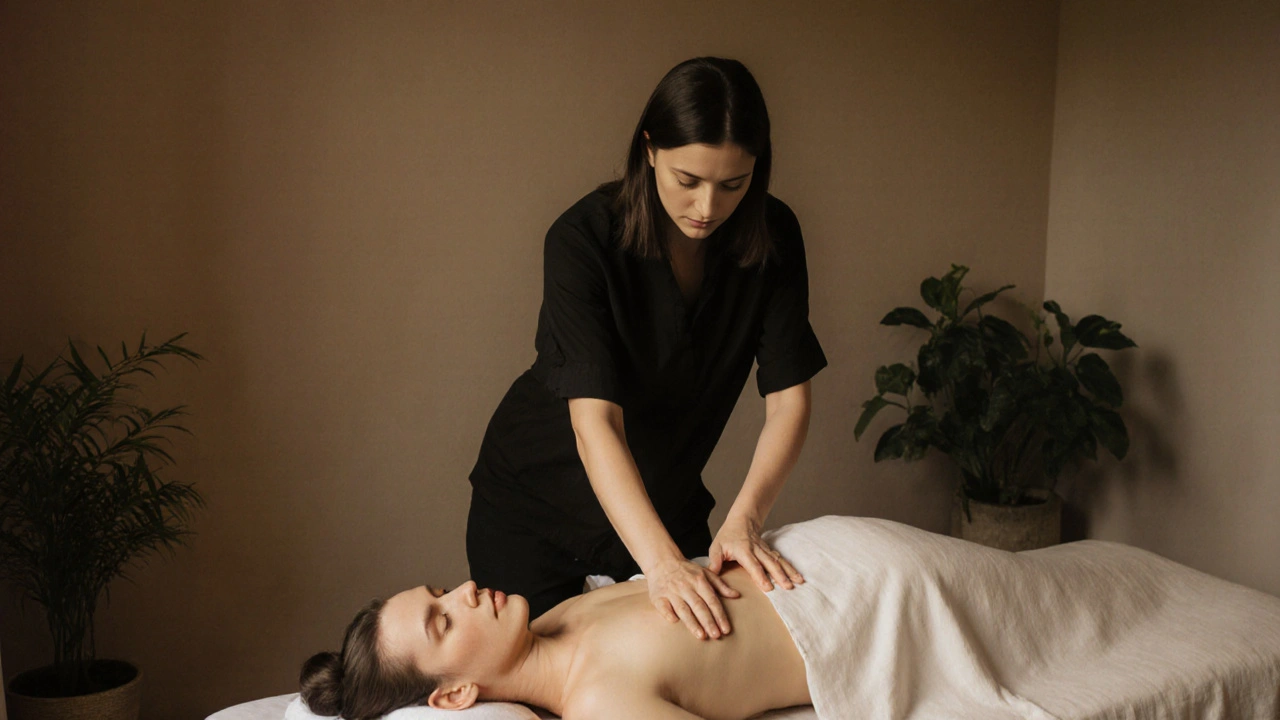
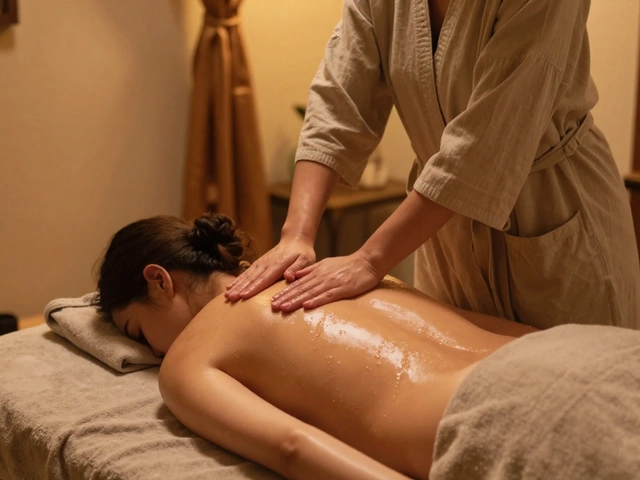
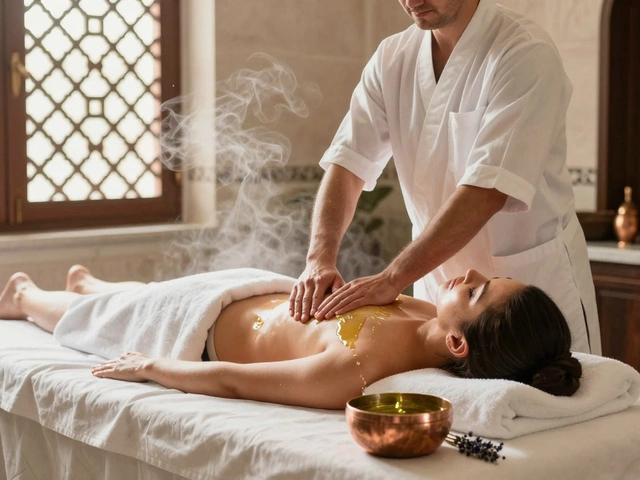
If you’re going to a professional, expect a calm, clinical environment-not a spa with rose petals and soft lighting. Reputable practitioners work in quiet, clean rooms with warm lighting. They’ll ask you about your history, comfort levels, and goals before you undress.
You’ll be covered with a sheet at all times. Only the area being worked on is exposed-and only with your explicit consent. The practitioner will use clean, warm hands and organic oils. They won’t talk much. They’ll focus on your breathing, your tension, your signals.
Some people cry. Some laugh. Some fall asleep. All of it is normal. This isn’t about performance. It’s about release.
Where to Find Yoni Massage in Istanbul
In Istanbul, yoni massage is offered by certified tantric practitioners, somatic therapists, and holistic healers-not in tourist areas, but in quiet neighborhoods like Beşiktaş, Nişantaşı, and Çengelköy.
Look for practitioners who:
- Have training in tantra, somatic therapy, or pelvic floor healing
- Offer a consultation before booking
- Use natural, organic products
- Don’t promise "orgasms" or "sexual transformation"
Ask if they’re affiliated with organizations like the International Association of Tantric Practitioners or Healing Touch International. Trust your gut-if something feels off, walk away.
Cost and Booking
A single session typically costs between 450 and 800 Turkish Lira (roughly $15-$25 USD), depending on the practitioner’s experience and location. Most require a 30-minute intake call first. Sessions last 60 to 90 minutes.
Bookings are usually done via WhatsApp or email-not public websites. Many practitioners don’t advertise publicly. Ask in local wellness groups or through referrals. Word-of-mouth is still the most reliable way.

Safety Tips You Can’t Skip
Yoni massage is safe when done right. But it can be harmful if rushed or forced.
- Never pressure yourself or your partner. If you feel discomfort, stop. No exceptions.
- Use only body-safe oils. Avoid coconut oil if you’re prone to yeast infections. Jojoba or almond oil are safer choices.
- Don’t try this if you have an active infection. Yeast, UTIs, or open sores mean wait until you’re healed.
- Boundaries are sacred. If someone pushes you past your comfort zone, leave. Your body is not negotiable.
- Aftercare matters. Drink water. Rest. Journal if you feel emotional. This work stirs up feelings.
Frequently Asked Questions
Is yoni massage only for couples?
No. Many women practice yoni massage alone as part of self-care. Solo practice helps rebuild body trust, especially after trauma or childbirth. You don’t need a partner to benefit.
Can men do yoni massage?
Yes, but only if the woman feels completely safe and comfortable. Many women prefer female practitioners, especially when healing from trauma. If a man is doing it, he must be trained, respectful, and follow strict consent protocols.
Does yoni massage feel weird at first?
Absolutely. Most people feel awkward, nervous, or even embarrassed. That’s normal. The first touch might feel strange, but with time, it becomes comforting. Think of it like learning to meditate-it feels odd until it doesn’t.
How often should I do yoni massage?
Once a week is ideal for beginners. But even once a month can make a difference. Consistency matters more than frequency. Some women do it only during certain moon phases or seasons-there’s no rulebook.
Is yoni massage legal in Turkey?
Yes, as long as it’s offered by licensed holistic practitioners and doesn’t involve sexual acts or payment for sex. Turkey has strict laws around sexual services, but therapeutic touch for healing is legal and growing in acceptance.
Ready to Begin?
You don’t need to be spiritual. You don’t need to believe in tantra. You just need to be willing to slow down-for yourself, for your body, for your partner.
Yoni massage isn’t about fixing anything. It’s about remembering that your body isn’t a machine. It’s a home. And sometimes, the most intimate thing you can do is sit quietly with it-and listen.
OMG I tried this with my partner last month and I cried the whole time 😭 not because it hurt, but because I finally felt seen. Like, my body wasn’t just a thing to be used-it was mine. And now we just sit together after, no words, just breathing. Changed everything.
I used to think this was some woo-woo nonsense until my therapist suggested it after my divorce. I started doing it alone-just me, some lavender oil, and a playlist of rain sounds. At first I felt ridiculous, like I was touching myself in a weird ritual. But after three weeks? I started noticing things-how my hips relaxed, how I stopped clenching my jaw at work, how I actually looked forward to showering because my skin felt alive again. It’s not magic, it’s just attention. And we’ve forgotten how to give that to ourselves. Now I do it every full moon. No shame. No hurry. Just me and my body, finally on the same team.
so uhm… is this just a fancy way to say ‘touch your vag with vibes’? because i feel like if you’re gonna do that, just get a rose quartz dildo and call it a day. also who decided ‘yoni’ sounded more spiritual than ‘vagina’? did some guy in a tie-dye shirt copyright it?
While I appreciate the intentionality behind this practice, I must emphasize that the conflation of tantric traditions with modern wellness culture often results in profound cultural misappropriation. The Sanskrit term ‘yoni’ is embedded within a complex metaphysical framework that cannot be reduced to a couple’s self-help activity involving coconut oil and candlelight. Furthermore, the commercialization of this practice under the guise of ‘healing’ risks trivializing sacred rituals that have been preserved by lineage holders for centuries. One cannot simply ‘try’ enlightenment with a 90-minute spa session priced at 800 Lira.
First of all, ‘yoni’ is not a euphemism-it’s a sacred term. Second, the table comparing it to ‘erotic massage’ is dangerously reductive. Third, you mention ‘jojoba oil’ but neglect to warn about potential allergens in unrefined varieties. Fourth, the assumption that ‘no words’ are needed aftercare is a gross oversimplification of emotional processing. Fifth-where are the citations? This reads like a Medium post written by someone who watched one YouTube video. I’m not saying it’s bad-I’m saying it’s sloppy.
i think this is just the government’s way to get women to touch themselves so they stop complaining about sex. also i heard they’re putting microchips in the oils now. my cousin’s neighbor’s dog walker’s friend says it’s all part of the new UN agenda for ‘body sovereignty.’ lol. also why is everyone so obsessed with turkish lira? are we all just trying to move to istanbul now?
There’s something quietly revolutionary about returning to the body without agenda. We live in a world that treats intimacy like a product to be optimized-apps for dating, timers for sex, algorithms for arousal. Yoni massage doesn’t ask you to perform. It asks you to be. And in that stillness, you remember: you are not broken. You never were. The tension in your pelvic floor? It’s not a flaw-it’s a story. And sometimes, the most radical act is to listen to it without trying to fix it.
This is actually one of the most thoughtful pieces I’ve read on embodied intimacy in a long time. The distinction between therapeutic touch and erotic performance is crucial, and the step-by-step guidance is grounded and respectful. I’ve shared this with my therapy group-we’re planning a guided session next month. Thank you for writing this with such care.
YEAH. THIS. I’ve been doing this with my partner for 2 years now and it’s the ONLY thing that’s kept us connected through my anxiety episodes and his burnout. You don’t need to be ‘spiritual’-you just need to show up. No phone. No distractions. Just hands, breath, and trust. And if you’re scared? That’s fine. Start with holding hands on the thigh. Then the hip. Then… you’ll know when you’re ready. No pressure. No timeline. Just you. And your body. It’s waiting.
They’re watching you through the oil.