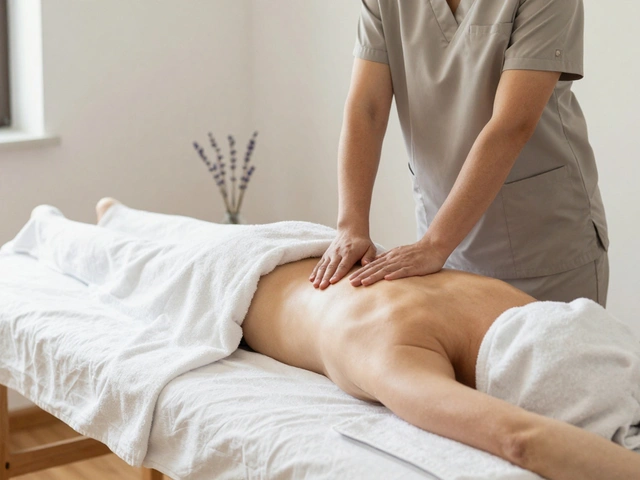
You’ve heard whispers about yoni massage. Maybe it showed up in a wellness blog, or a friend mentioned it in hushed tones. You’re curious-but also unsure. Is this just another trend? Or is there something deeper here?
Let’s cut through the noise. Yoni massage isn’t about sex. It’s not about pleasure alone. It’s about reconnection. Reconnecting with your body, your breath, your inner rhythm. And yes-it’s as simple, and as powerful, as placing your hands gently on your own skin and breathing.
What Is Yoni Massage, Really?
The word yoni comes from Sanskrit, meaning source or womb. In tantric traditions, it’s not just a body part-it’s a sacred space, a gateway to intuition, creativity, and emotional release. A yoni massage, then, is a slow, intentional practice of touching this area with awareness, not desire.
This isn’t something you do to achieve orgasm. It’s something you do to feel. To listen. To heal.
Many women come to yoni massage after years of disconnection-from their bodies, from pleasure, from their own sense of worth. Maybe they’ve been told their sexuality is too much, too messy, too private. Or maybe they’ve simply forgotten what it feels like to be touched without expectation.
Yoni massage offers a quiet space to return.
Why This Practice Matters Today
Think about how often you touch your body-really touch it-with kindness. Most of us brush our teeth, wash our faces, stretch after a workout. But how often do we pause and place our hands on our pelvis, not to fix, not to check, not to judge-but just to be there?
Studies in somatic therapy show that chronic tension in the pelvic floor is linked to anxiety, low self-esteem, and even depression. Trauma, whether physical or emotional, often gets stored here. And yet, we rarely give this area the attention it deserves.
Yoni massage doesn’t erase trauma. But it gives you a tool to gently release it. One breath at a time.
What You Might Feel During a Session
When you first begin, it’s common to feel awkward. Maybe even embarrassed. That’s okay. This isn’t about perfection. It’s about presence.
Some women report warmth spreading through their lower abdomen. Others feel tingling, like static electricity under the skin. A few cry-without knowing why. One woman I spoke with said she felt like she was meeting herself for the first time.
These aren’t random reactions. They’re your body’s way of saying: I’ve been holding on. Let me let go.
There’s no right way to feel. No goal to reach. Just show up. Breathe. Let your hands move slowly. Use oil-coconut, almond, or jojoba-to reduce friction. Let your fingers explore like they’re tracing a map you’ve never read before.
Self-Yoni Massage: A Step-by-Step Practice
You don’t need a therapist to begin. You just need privacy, time, and a willingness to be gentle.
- Find a quiet space. Light a candle if it helps. Play soft music-or silence.
- Warm your hands. Rub them together until they feel soft and alive.
- Apply a few drops of oil to your fingers. Let the scent settle. Breathe in.
- Start outside the yoni. Gently stroke your inner thighs. Let your touch be slow, like a caress you’d give a sleeping child.
- Move slowly toward the outer lips. Don’t rush. Pause. Notice any tension. Breathe into it.
- When you’re ready, lightly touch the clitoris-not to stimulate, but to acknowledge. It’s okay if you don’t feel much. That’s fine.
- Try inserting one finger, just the tip, if it feels safe. Let your body guide you. If it tightens, stop. Breathe. Try again tomorrow.
- Stay here. For five minutes. Ten. Twenty. No timer. Just presence.
- When you’re done, wrap yourself in a warm towel. Drink water. Sit quietly. Let the feeling settle.
This isn’t a technique. It’s a ritual.

Yoni Massage vs. Sensual Massage: What’s the Difference?
| Aspect | Yoni Massage | Sensual Massage |
|---|---|---|
| Primary Goal | Healing, awareness, emotional release | Pleasure, arousal, relaxation |
| Focus | Internal sensation, breath, stillness | External stimulation, touch, rhythm |
| Outcome | Greater body connection, reduced pelvic tension | Temporary euphoria, physical release |
| Use of Oil | Yes-minimal, for comfort | Yes-often more, for glide |
| Sexual Intent | None | Often present |
Yoni massage doesn’t aim to turn you on. It aims to turn you inward.
Where to Practice in Istanbul
In Istanbul, a few quiet studios offer guided yoni massage sessions-mostly led by women trained in somatic therapy, tantra, or pelvic health. These aren’t spas. They’re healing spaces.
You’ll find them in Beyoğlu, Kadıköy, and Beşiktaş-small rooms with low lighting, incense, and no mirrors. The practitioners don’t perform the massage on you. They guide you through it, holding space while you touch yourself.
One studio, Yoni Root, offers monthly women’s circles where participants learn breathwork, pelvic floor awareness, and self-massage. Another, The Quiet Room, works with trauma-informed therapists who integrate yoni massage into longer healing journeys.
These services aren’t advertised on Instagram. They’re shared in whispers. Ask around. Trust your intuition.
What to Expect During a Guided Session
If you choose to work with a practitioner, here’s what usually happens:
- You’ll have a 20-minute conversation first-no touch, just talk. What brings you here? What are you hoping to release?
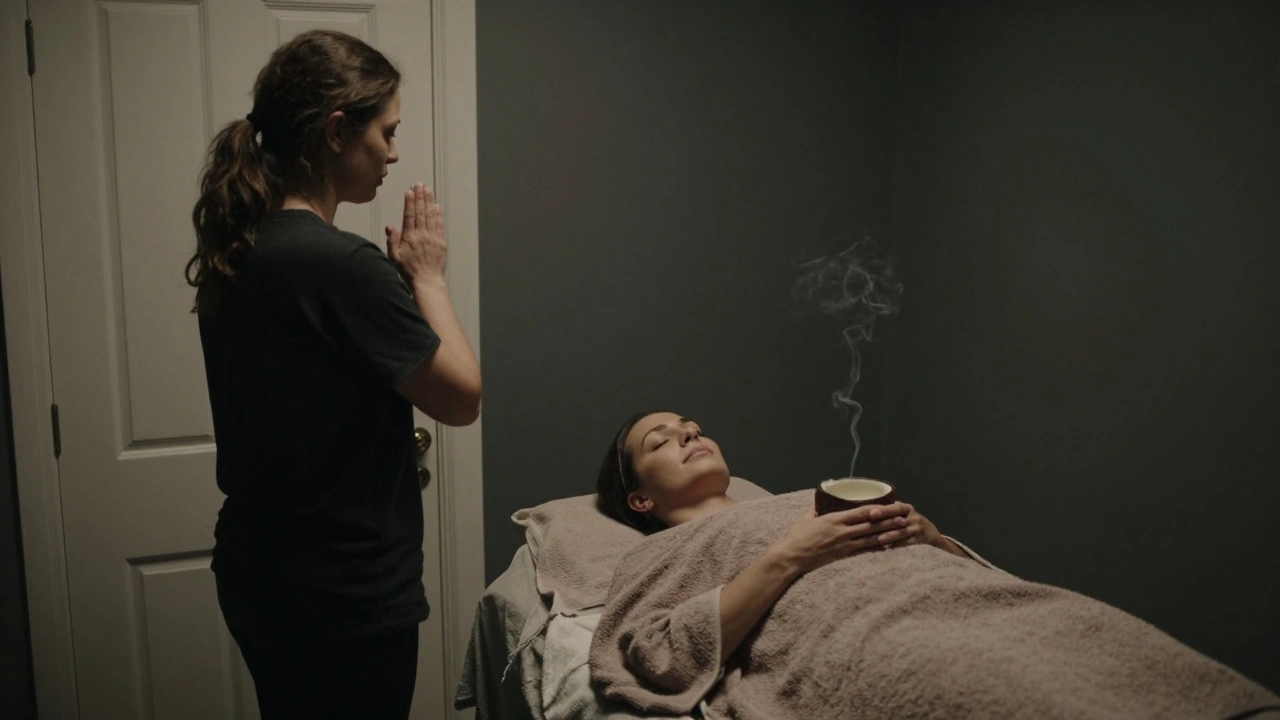
- You’ll be given a private room with a massage table, blankets, and a small bowl of warm oil.
- The practitioner will leave the room while you undress. They’ll knock before returning.
- They’ll guide you through breathing and grounding techniques. Then they’ll show you how to place your hands.
- You’ll be alone for most of the session. They’ll check in gently, every 10 minutes or so.
- Afterward, you’ll be offered herbal tea. No talking required.
There’s no nudity expectation. No pressure. No performance.
Pricing and Booking
Guided sessions in Istanbul typically cost between 400 and 700 Turkish Lira (about $12-$22 USD). Most practitioners offer a first-time discount. Sessions last 60-90 minutes.
Booking is done through word-of-mouth, Instagram DMs, or local wellness directories. Don’t expect a website with a calendar. These services thrive on trust, not algorithms.
Safety First: What You Need to Know
Yoni massage is safe when done with care. But there are rules:
- Never use sharp objects, ice, or unclean tools.
- Stop immediately if you feel pain-not discomfort, but sharp pain.
- Avoid if you have an active infection, open sores, or recent surgery.
- Don’t do this if you’re feeling emotionally overwhelmed. Wait until you’re grounded.
- Always use clean, natural oils. Avoid synthetic fragrances.
- Never let someone else touch you without clear, ongoing consent-even if they’re a professional.
This isn’t a luxury. It’s self-preservation.
Frequently Asked Questions
Is yoni massage only for women?
While the term "yoni" refers to the female genitalia, the practice of sacred pelvic awareness is open to anyone with a vulva. Trans women, non-binary people, and intersex individuals are welcome. Men seeking pelvic healing typically explore lingam massage, which follows similar principles for the penis.
Can I do yoni massage if I’ve never had an orgasm?
Absolutely. In fact, many women who’ve never experienced orgasm find this practice transformative-not because they’re trying to climax, but because they’re learning to feel. Pleasure often follows awareness, not the other way around.
How often should I practice?
Once a week is ideal for deep healing. But even once a month makes a difference. Some women do it daily for 5 minutes-just to reconnect. There’s no rule. Listen to your body. If you feel drawn to it, do it. If you feel resistance, honor that too.
Is this spiritual or therapeutic?
It’s both. Yoni massage draws from ancient spiritual traditions but is now practiced in modern therapeutic settings. Trauma therapists use it to help clients release stored tension. Spiritual teachers use it to deepen embodiment. You don’t need to believe in chakras or energy to benefit. Just show up with curiosity.
Will this improve my sex life?
It might-but not because you’re trying to. When you stop chasing pleasure and start honoring sensation, your body naturally becomes more responsive. Partners often notice a shift: more presence, less performance, deeper connection. But that’s a side effect, not the goal.
Final Thought
You don’t need permission to touch yourself with love. You never did.
Yoni massage isn’t about fixing what’s broken. It’s about remembering what was always there-quiet, tender, and whole.
Start small. One breath. One touch. One day.
Your body is waiting.