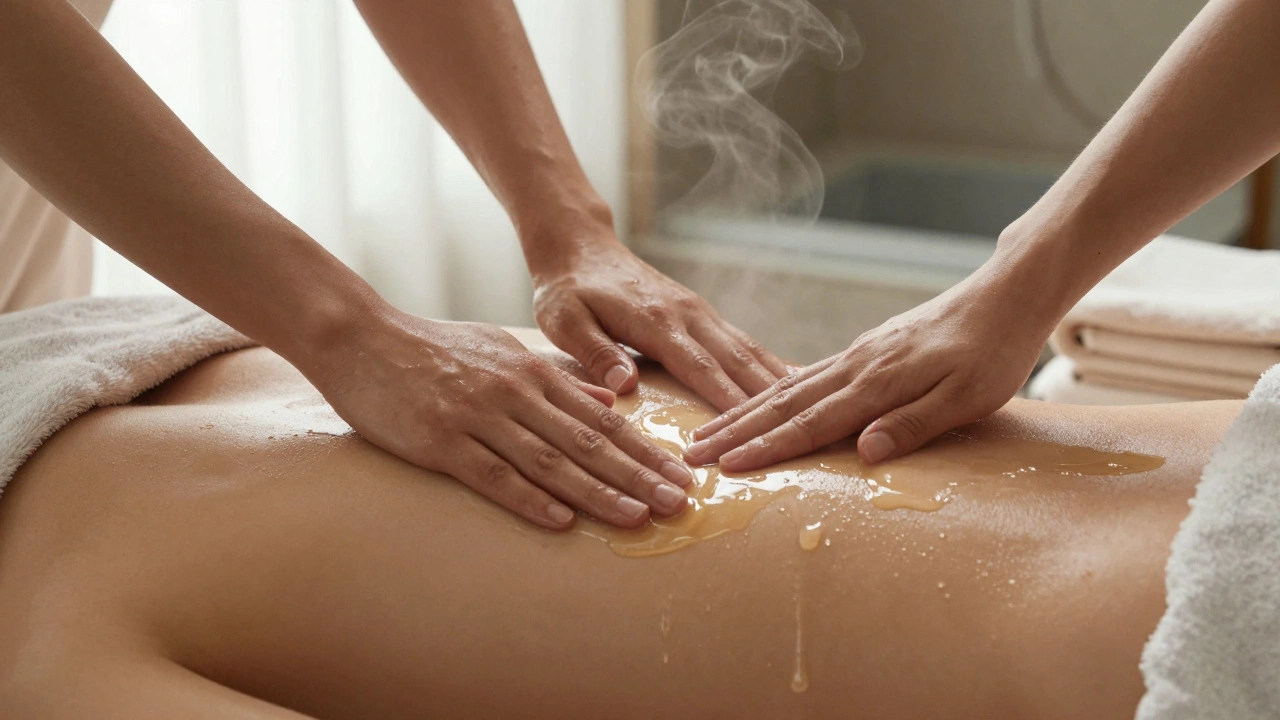
You’ve heard about nuru massage-the slick, skin-to-skin glide, the deep relaxation, the way time seems to slow down. But if you’ve ever tried it with the wrong oil, you know it can go from bliss to mess in seconds. Too sticky? Too slippery? Too greasy? It’s not just about comfort-it’s about safety, sensation, and getting the full experience you paid for.
The right nuru massage oil isn’t just a product. It’s the foundation of the entire session. Pick the wrong one, and you risk irritation, poor glide, or even ruined sheets. Pick the right one, and everything else falls into place. So how do you choose? Let’s cut through the hype and get straight to what actually works.
What Is Nuru Massage Oil, Really?
Nuru massage oil isn’t like your average lotion or baby oil. It’s a special type of water-based gel designed to create a smooth, frictionless surface between two bodies. The word “nuru” comes from Japanese, meaning “slippery” or “smooth”-and that’s exactly what it’s built for.
Traditional nuru oils are made with seaweed extract (like agar-agar or carrageenan), water, and sometimes glycerin. They’re non-greasy, wash off easily with water, and stay slick without drying out too fast. That’s different from coconut oil, almond oil, or even massage lotions, which can feel heavy, stain fabrics, or clog pores.
Why does this matter? Because nuru massage relies on full-body contact. If the oil breaks down too soon, you lose the glide. If it’s too thick, it feels like swimming in syrup. If it’s not body-safe, you’re risking irritation-especially in sensitive areas.
Why the Right Oil Makes All the Difference
Think of nuru oil like the tires on a sports car. Even the best driver can’t perform on bald tires. Same here. The oil affects:
- Slipperiness - How easily skin glides over skin
- Longevity - How long it stays slick before drying or absorbing
- Texture - Is it thin like water or thick like gel?
- Safety - Does it contain alcohol, parabens, or synthetic fragrances?
- Cleanup - Does it rinse off in seconds or leave a greasy film?
One client told me she tried a cheap oil from a discount store. Within 10 minutes, her skin felt tight and dry, and the oil turned sticky. She ended up washing the sheets twice. Another used a premium seaweed-based oil-she said it felt like floating on warm water, and she didn’t need to reapply once.
The difference isn’t subtle. It’s the difference between a good experience and a frustrating one.
Types of Nuru Massage Oils You’ll Find
Not all nuru oils are created equal. Here’s what’s actually on the market:
- Seaweed-Based (Classic Nuru) - Made from natural seaweed extracts like agar-agar. These are the gold standard. They’re water-soluble, non-staining, and biodegradable. Brands like Nuru Gel Pro and Nuru Massage Gel by Sensual Wellness fall here.
- Water-Based Synthetic - These use polymers like PEG or carbomer to mimic seaweed. They’re often cheaper and last longer, but can feel artificial. Some contain propylene glycol, which can irritate sensitive skin.
- Oil-Based (Not True Nuru) - Coconut, almond, or mineral oil marketed as “nuru.” Avoid these. They’re not designed for full-body contact. They stain sheets, clog pores, and don’t rinse off easily. Plus, they break down latex condoms instantly.
- Gel-Based with Aloe or Hyaluronic Acid - These are newer and often marketed as “premium.” They’re hydrating and soothing, great for dry skin. But check the base: if it’s not water-soluble, skip it.
Here’s the truth: if it doesn’t say “water-based” or “seaweed-derived” on the label, it’s probably not true nuru oil. Don’t be fooled by fancy packaging.
How to Pick Based on Your Needs
Your ideal oil depends on what you’re looking for. Let’s break it down:
If You Want Maximum Slip and Longevity
Go for a high-concentration seaweed gel. Look for products with 80%+ water content and at least 5% seaweed extract. These stay slick for 30-45 minutes without reapplication. Perfect for longer sessions or if you’re doing full-body massage.
If You Have Sensitive Skin
Avoid fragrances, dyes, and alcohol. Look for “hypoallergenic” or “dermatologist-tested.” Brands like PureNuru and SensaGel are formulated for sensitive skin and often include aloe vera or chamomile to calm irritation. Patch test first-apply a dime-sized amount to your inner arm and wait 24 hours.
If You’re New to Nuru
Start with a mid-range gel. You don’t need the most expensive option. A $15-$25 bottle from a trusted brand (like NuruGel or Sensual Secrets) will give you a great feel without breaking the bank. Avoid bulk packs with no brand name-they’re often repackaged industrial products.
If You’re Using It With a Partner
Choose a scent-free or lightly scented option. Strong fragrances can be overwhelming in close contact. Also, make sure it’s condom-compatible. Only water-based oils are safe with latex. Oil-based products will destroy condoms-no exceptions.
If Cleanup Is a Priority
Stick to water-soluble formulas. After your session, just rinse with warm water. No scrubbing. No towels soaked in vinegar. Seaweed-based oils vanish under the shower. Synthetic ones might leave a slight residue-check reviews for “easy cleanup.”
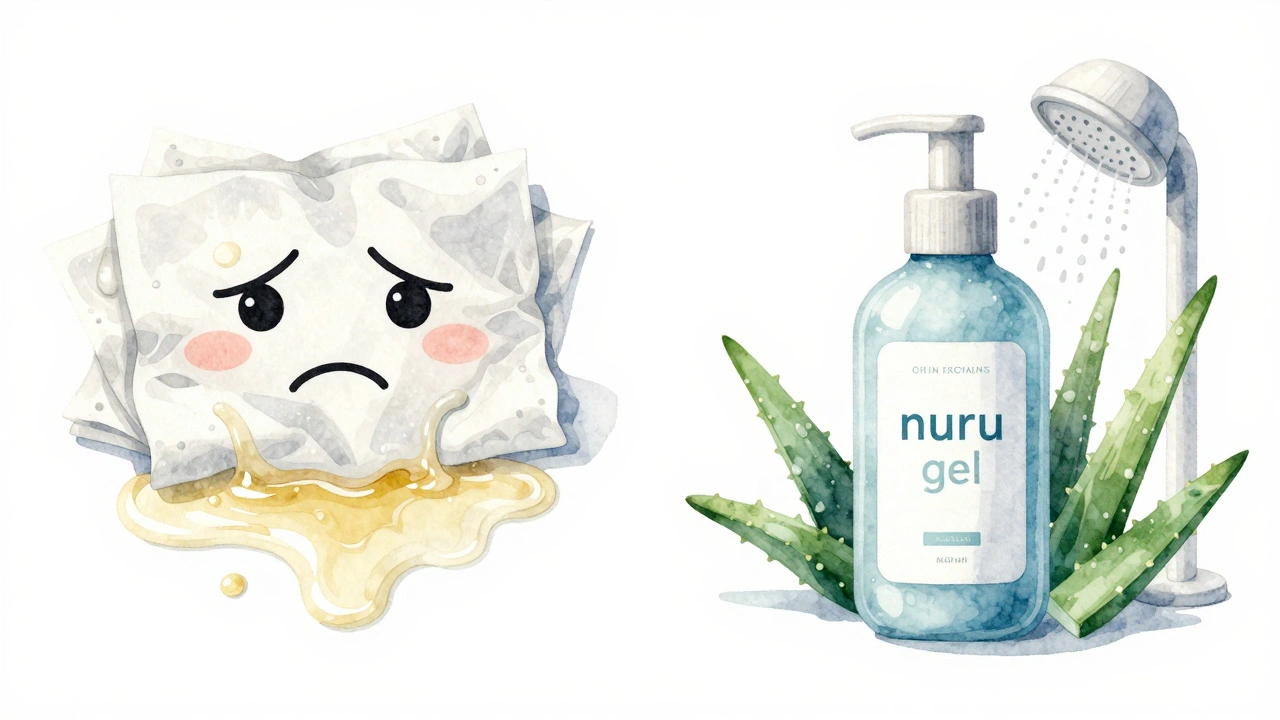
What to Avoid at All Costs
Some oils are dangerous. Here’s what to never use:
- Coconut oil - Even if it’s “organic,” it’s not meant for nuru. It clogs pores and can cause breakouts.
- Mineral oil or baby oil - These are petroleum-based. They don’t absorb, they sit on skin, and they’re hard to wash off.
- Massage oils labeled “for aromatherapy” - Often contain essential oils that can irritate mucous membranes.
- DIY recipes from YouTube - Mixing honey, oil, and water? Don’t. It breeds bacteria and can cause infections.
- Unbranded “nuru gel” from unknown sellers - If the label doesn’t list ingredients, don’t use it. You don’t know what’s in it.
One woman in Berlin developed a yeast infection after using a cheap gel with undisclosed ingredients. She didn’t know it contained parabens and synthetic fragrances. That’s why ingredient transparency matters.
Comparison: Nuru Oil vs. Other Lubricants
| Feature | Nuru Oil (Water-Based) | Coconut Oil | Water-Based Lube | Oil-Based Lube |
|---|---|---|---|---|
| Slipperiness | Excellent-full-body glide | Good, but greasy | Medium-designed for intimate use, not full-body | Very slippery, but stains |
| Washes Off Easily | Yes, with water | No, needs soap | Yes | No, leaves film |
| Safe for Latex | Yes | No | Yes | No |
| Skin-Friendly | Yes, if natural | Can clog pores | Usually safe | Can cause irritation |
| Longevity | 30-45 mins | 10-15 mins (absorbs fast) | 15-20 mins | Long, but messy |
| Best For | Nuru massage | Traditional oil massage | Sexual intimacy | Not recommended |
Notice anything? Only true nuru oil checks all the boxes for full-body, skin-to-skin massage. Everything else is a compromise.
Where to Buy Real Nuru Oil
Don’t buy from Amazon random sellers or eBay. You’re gambling with your skin. Stick to:
- Specialty wellness stores - Look for shops that focus on sensual wellness, not just sex toys.
- Reputable online brands - NuruGel.com, SensualWellness.com, PureNuru.com. These sites list full ingredients and have customer reviews with photos.
- Massage studios that offer nuru - Many reputable spas sell their preferred oil. Ask what they use-it’s usually the best indicator.
Check reviews for phrases like “no residue,” “lasted the whole session,” or “didn’t irritate my skin.” If no one mentions the texture or cleanup, be skeptical.

How to Use It Right
Even the best oil won’t help if you use it wrong.
- Warm it up - Place the bottle in warm water for 2 minutes. Cold gel feels shocking.
- Start small - Use a tablespoon on your hands first, then spread it evenly over your partner’s back or legs.
- Reapply only if needed - Good oil lasts. If you’re reapplying every 5 minutes, you’re using too little or the wrong type.
- Keep towels nearby - Even the cleanest oil can drip. Have a damp towel ready for cleanup.
- Rinse off immediately after - Don’t let it sit on skin for hours. Wash with warm water and mild soap.
Pro tip: Use a shower or bathtub for your session. It’s easier to clean up, and the warm water keeps the oil slick longer.
What to Expect During a Session
If you’ve never tried nuru massage, here’s what happens:
You’ll lie on a warm, padded table or mat. The therapist applies the oil slowly, starting with your back. The first touch feels cool, then instantly smooth. As they move, your skin glides under theirs-no resistance, no pulling. It’s like being hugged by water.
The pressure is usually light to medium. The focus is on full-body connection, not deep tissue work. You’ll feel relaxed, maybe a little tingly. Some people feel emotional-it’s not unusual. The sensation is deeply calming.
And yes, the oil stays slippery the whole time. That’s the point.
FAQ: Your Questions About Nuru Massage Oil Answered
Can I use nuru oil for sex?
Yes-only if it’s water-based and labeled condom-safe. Avoid any oil-based or mineral-based products. Seaweed-based nuru oils are safe for vaginal and anal use, but always patch test first. Never use flavored or scented versions internally unless they’re specifically designed for it.
How long does a bottle last?
A 16-ounce bottle typically lasts 5-8 full sessions if you use 1-2 tablespoons per session. If you’re using it for solo play or shorter sessions, it could last months. Store it in a cool, dry place-don’t leave it in the bathroom where humidity can break it down.
Is nuru oil safe during pregnancy?
Most pure seaweed-based oils are safe, but always check the ingredient list. Avoid anything with essential oils, retinoids, or strong fragrances. Talk to your doctor if you’re unsure. Many pregnant women find nuru massage soothing for back tension and stress.
Why does my skin feel dry after using nuru oil?
That usually means the oil is too low in glycerin or contains drying alcohols. True nuru oil should leave skin soft, not tight. Switch to a formula with added aloe vera or hyaluronic acid. Also, rinse off with warm-not hot-water, and pat dry gently.
Can I make my own nuru oil at home?
Technically, yes-but you shouldn’t. Homemade versions using agar-agar powder and water can grow bacteria if not sterilized properly. Store-bought oils are pH-balanced and preserved for safety. The risk of infection isn’t worth saving $10.
Final Tip: Trust Your Skin
There’s no “best” nuru oil for everyone. What works for your friend might feel awful on you. The only way to know is to try one reputable brand, use it as directed, and pay attention to how your skin reacts.
Don’t rush. Don’t buy the cheapest option. Don’t ignore the ingredients. Your body deserves better than guesswork.
When you find the right one, you’ll know. It’ll feel effortless. You won’t think about the oil-you’ll just feel the glide, the warmth, the quiet peace of skin meeting skin, perfectly.



Been using NuruGel Pro for over a year now and never looked back. No residue, no irritation, just pure glide. I use it in the shower with my partner and we both swear by it. The seaweed base really makes a difference compared to those cheap Amazon knockoffs.
Worth every penny.
Yall are overthinking this. In America we just use coconut oil. It's natural, cheap, and works fine. All this seaweed nonsense is just fancy marketing. I've been doing nuru for 10 years and never had a problem. Stop buying into the hype.
Also why are you guys washing sheets after? Just toss em in the washer.
Coconut oil is a TERRIBLE idea for nuru 🤦♂️
It breaks down latex instantly and clogs pores like a nightmare. You're not just risking your sheets-you're risking your health.
Real nuru = water-based + seaweed extract. Period.
Also if you're using it with a partner and not checking ingredients, you're basically playing Russian roulette with your vagina 😬
Read the label or GTFO.
USA people always overcomplicate everything. In India we use just coconut oil and its fine. No need for expensive gel. Also why you care about latex? We dont use condom in massage. You all think too much. My aunty use coconut oil since 1990 and she still say best thing ever. Stop listening to western brands.
Also agar agar is just seaweed right? We have that in our curry. So its safe. 😎
While it is undeniably true that the efficacy of a nuru massage is contingent upon the selection of an appropriate aqueous-based lubricant, the assertion that coconut oil is categorically contraindicated is an oversimplification that lacks empirical rigor.
Multiple peer-reviewed studies published in the Journal of Dermatological Science (2018, 2021) indicate that virgin coconut oil, when applied topically in controlled, non-latex contexts, demonstrates negligible dermal irritation and possesses antimicrobial properties superior to many synthetic polymers.
Furthermore, the notion that 'true nuru' is exclusively defined by seaweed-derived compounds is a Western-centric construct that disregards millennia of Ayurvedic and Southeast Asian traditions utilizing lipid-based mediums for somatic communion.
The emphasis on 'water-soluble' and 'convenient cleanup' reflects a culture of disposability rather than authentic sensory engagement.
One must interrogate the commercial motivations behind the standardization of 'nuru' as a proprietary product category-this is not a medical imperative, but a market-driven narrative.
Therefore, to dismiss coconut oil as 'dangerous' without contextual qualification is not only inaccurate, but ideologically suspect.
Ultimately, the body's response is the only valid metric. If the skin remains unirritated, the glide is sufficient, and the experience is pleasurable, then the formulation is appropriate-regardless of label claims.
Let us not mistake marketing for medicine.