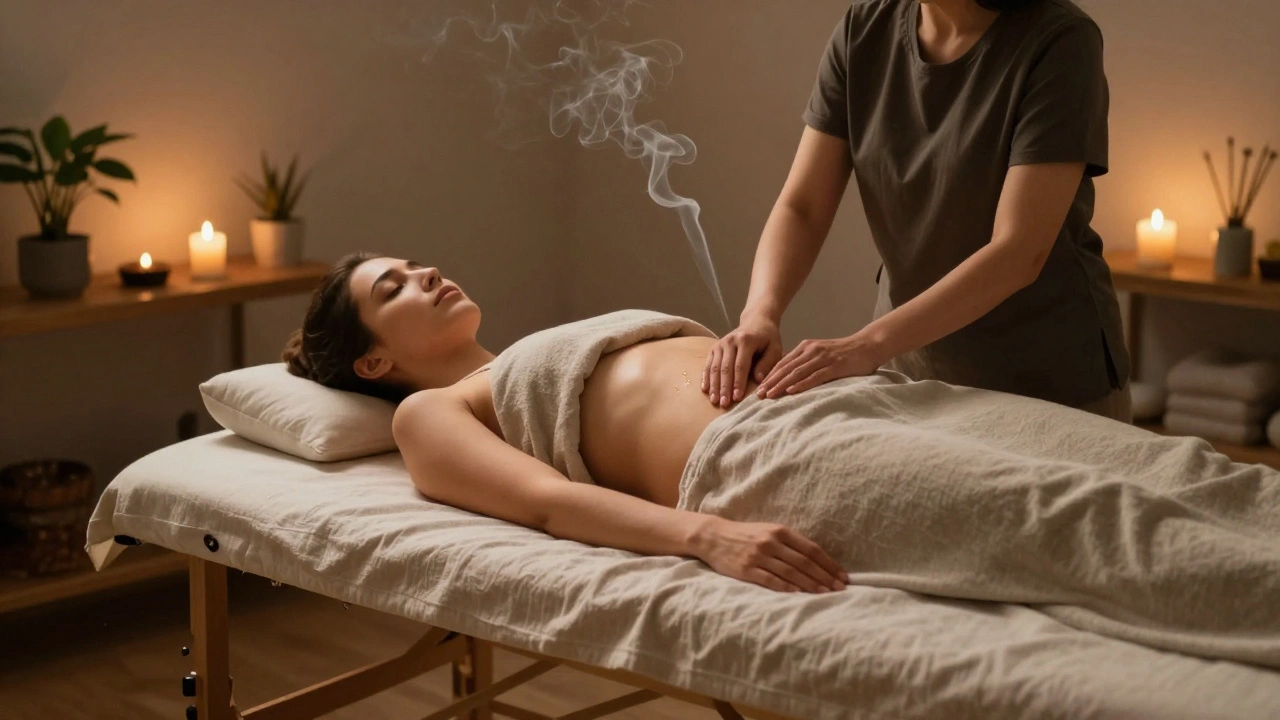
You’ve heard whispers about it-maybe in a wellness blog, a friend’s hushed conversation, or a cryptic Instagram post. Yoni massage isn’t just another spa treatment. It’s a quiet revolution in how women connect with their own bodies. And if you’re curious, you’re not alone.
What Exactly Is Yoni Massage?
The word yoni comes from Sanskrit, meaning "source" or "womb." It’s not slang. It’s sacred language used for centuries in Eastern spiritual traditions to honor the feminine anatomy as a vessel of life, power, and intuition. A yoni massage isn’t about sex. It’s about reconnection. It’s about releasing stored tension, shame, or numbness that many women carry without even realizing it.
Think of it like a deep tissue massage-but instead of your shoulders or back, the focus is on the vulva, vagina, and surrounding pelvic muscles. It’s done slowly, with intention, using warm oil, breathwork, and gentle pressure. No penetration. No orgasm as a goal. Just presence.
Women who’ve tried it describe it as "like finally meeting yourself after years of ignoring your own voice." Some cry. Some laugh. Some sit in silence for ten minutes afterward, just breathing. That’s the point.
Why Does Yoni Massage Matter Today?
Modern life doesn’t exactly encourage women to tune into their pelvic region. From tight jeans to pelvic floor dysfunction, from trauma to cultural taboos, many women grow up disconnected from this part of themselves. Studies in somatic therapy show that holding emotional stress in the pelvis can lead to chronic pain, low libido, anxiety, and even difficulty orgasming-not because of biology, but because of suppressed energy.
Yoni massage helps reverse that. It’s not magic. It’s neuroscience. The clitoris has over 8,000 nerve endings-more than any other part of the human body. When you touch it with care, not arousal, you activate the parasympathetic nervous system. That’s the part that says, "You’re safe." And when that switch flips, the body starts healing.
In Istanbul, where ancient baths meet modern stress, more women are turning to this practice-not as a novelty, but as a form of self-care that’s been overlooked for too long.
What Are the Real Benefits?
Let’s cut through the fluff. Here’s what actually changes after a few sessions:
- Reduced pelvic pain-especially for those with vaginismus or endometriosis
- Better sexual response-not because of increased arousal, but because the body learns to relax
- Emotional release-many report crying for the first time in years, often without knowing why
- Improved body image-no more avoiding mirrors or feeling ashamed of natural changes
- Deeper intimacy-even with partners, because you start communicating your needs more clearly
One client from Kadıköy told me, "I didn’t know my body could feel this calm. I thought I was just broken. Turns out, I was just unheard."
Types of Yoni Massage Practices You’ll Find in Istanbul
Not all yoni massages are the same. Here’s what’s actually offered locally:
- Tantric Yoni Massage-blends breathwork, chakra balancing, and slow touch. Often done with candlelight and chanting. Best for spiritual seekers.
- Healing-Focused Yoni Massage-led by certified somatic therapists. Targets trauma, scar tissue, or postpartum recovery. Uses medical-grade oils and gentle techniques.
- Self-Yoni Massage-taught in workshops. You learn to do it yourself. No therapist involved. Ideal for those who want autonomy.
- Couples Yoni Massage-partner-led, with guidance. Not erotic. More about learning to hold space for each other’s vulnerability.
Be careful of places advertising "yoni massage" as a euphemism for erotic services. Real practitioners don’t use terms like "happy ending." They use words like "sacred," "embodied," and "safe."
How to Find a Reputable Practitioner in Istanbul
Here’s how to avoid scams and find someone truly qualified:
- Look for certifications: Check if they’re trained in Tantra, Somatic Experiencing, or Women’s Health Therapy. Ask for proof.
- Read reviews carefully: Look for mentions of "felt safe," "no pressure," "didn’t feel judged." Avoid ones that say "very hot" or "got me off."
- Ask about boundaries: A real practitioner will explain consent protocols before you even lie down.
- Location matters: Many work from quiet studios in Beşiktaş, Çengelköy, or Nişantaşı-not hotels or private apartments.
- Start with a consultation: Most offer a 15-minute free call. Use it to ask: "What’s your training? What’s the goal of this session?"
Some trusted names in Istanbul include Yoni Space in Beşiktaş and Rooted Woman in Kadıköy. Both have been running for over five years with consistent client testimonials.
What to Expect During Your First Session
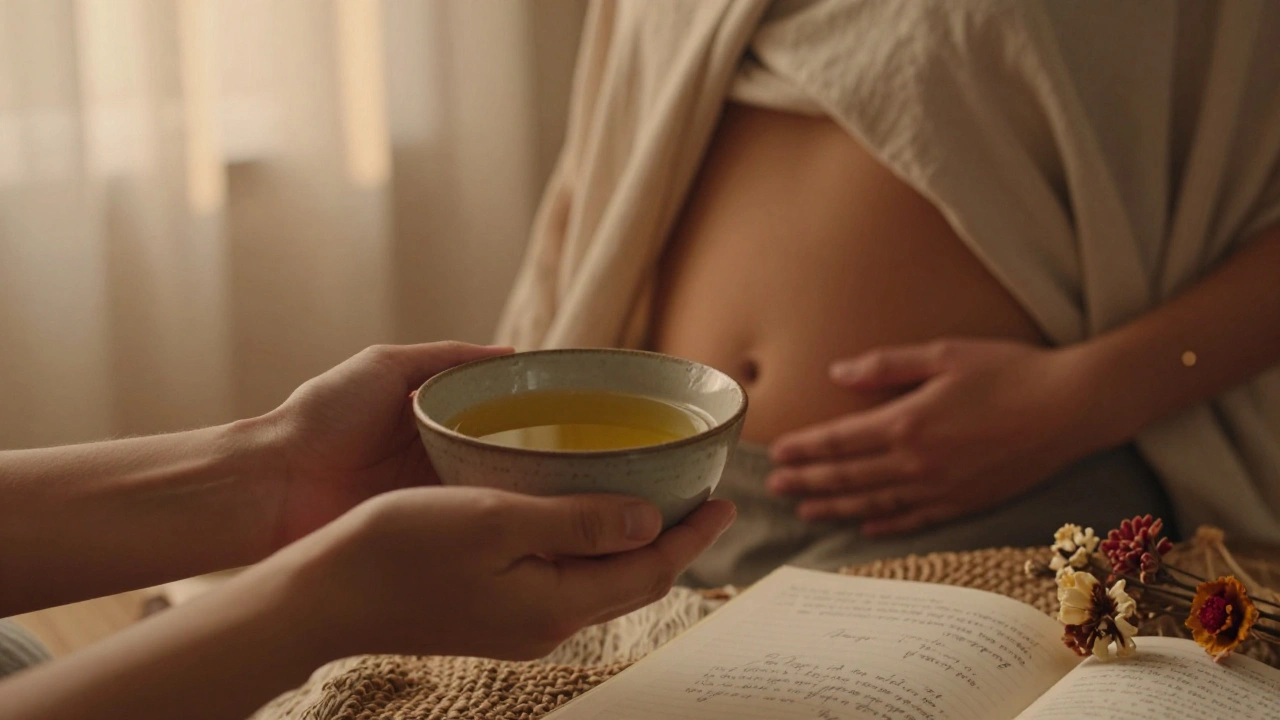
You’ll arrive, maybe nervous. That’s normal. You’ll be offered tea. A quiet room. Soft music. The practitioner will explain everything step by step.
You’ll undress privately. Lie on a warmed table. A drape covers you. Only the area being worked on is exposed. The practitioner uses warm sesame or coconut oil-never latex or scented products. Their hands are slow, deliberate. They might ask you to breathe into your belly. Or to name a feeling as it comes up.
There’s no expectation to orgasm. No pressure to perform. You can say "stop" at any time-even mid-touch. The whole session lasts 60 to 90 minutes. Afterward, you’ll be given space to rest. Sometimes they offer a warm towel, or just sit quietly with you.
Many leave feeling lighter. Some feel nothing at first. That’s okay too. This isn’t a one-time fix. It’s a practice.
Pricing and Booking
In Istanbul, prices range from 450 TL to 1,200 TL per session, depending on experience and setting. Most offer package deals: 3 sessions for 1,100 TL, 5 for 1,700 TL. That’s less than a weekend getaway, but far more transformative.
Booking is usually done through email or WhatsApp. No online booking forms. Why? Because this isn’t a haircut. It’s a sacred exchange. Practitioners prefer a personal intro first.
Payment is cash or bank transfer. No credit cards. That’s intentional-it filters out casual curiosity.

Safety Tips You Can’t Afford to Skip
This isn’t risky if done right. But here’s what you must know:
- Never go alone to a private home. Always choose a studio with a public entrance.
- Check if the practitioner is female. Most women feel safer with a female practitioner, and reputable ones will tell you this upfront.
- Ask about hygiene: Disposable gloves? Clean linens? Oil sterilization?
- If they touch your breasts or anus without explicit consent-leave. Immediately.
- If you feel pressured to "go deeper" or "let go more," that’s not healing. That’s manipulation.
Trust your gut. If something feels off, it probably is.
Yoni Massage vs. Sensual Massage in Istanbul
| Aspect | Yoni Massage | Sensual Massage |
|---|---|---|
| Primary Goal | Emotional healing, body reconnection | Physical pleasure, arousal |
| Technique | Slow, non-sexual touch, breathwork | Erotic stimulation, full-body rubbing |
| Practitioner Training | Therapy, Tantra, somatic certification | None required-often unlicensed |
| Consent Process | Explicit, verbal, ongoing | Often implied or assumed |
| Aftercare | Quiet space, tea, reflection | Usually none |
| Legal Status in Turkey | Legal if therapeutic | Gray area-often unregulated |
One is a healing modality. The other is entertainment. Don’t confuse them.
Frequently Asked Questions
Is yoni massage only for women who’ve experienced trauma?
No. While many women come after trauma, others come simply because they’ve never felt connected to their bodies. It’s for anyone who wants to feel more alive in their skin-whether you’ve had a baby, a breakup, years of neglect, or just never learned how to touch yourself with kindness.
Can I do this at home by myself?
Absolutely. Many women start with self-massage using guided audio or workshops. It’s a powerful first step. But working with a trained practitioner gives you something you can’t replicate alone: the safety of being witnessed without judgment.
Will I orgasm during a yoni massage?
Sometimes. But it’s not the goal. In fact, trying to orgasm often blocks the deeper release. The magic happens when you stop chasing a result and just let your body feel what it feels.
Is yoni massage religious?
It draws from ancient spiritual traditions, but modern practice is secular. You don’t need to believe in chakras, gods, or energy to benefit. It’s about nervous system regulation, not spirituality.
How many sessions do I need?
One can shift something. Three will change your relationship with your body. Five or more often lead to lasting emotional and physical shifts. It’s not a quick fix-it’s a return to yourself.
Ready to Begin?
You don’t need to understand it all to start. You just need to be willing to feel. If you’ve been carrying shame, silence, or numbness in your pelvic area, this might be the quietest, most powerful act of self-love you’ve ever tried. No one’s asking you to believe in it. Just try it. Once. With an open heart. And see what your body remembers.
I tried this last month after reading your post, and wow-just, wow. I didn’t know my body had been holding onto this much tension. The oil, the breathing, the silence afterward-I cried for like 20 minutes. Not because I was sad. Just because I finally felt seen. My pelvic floor therapist said it’s like rebooting a frozen system. And honestly? It worked.
This changed everything.
It is, in many respects, a profound reclamation of somatic autonomy-a quiet rebellion against the commodification of the feminine body in contemporary therapeutic landscapes. The Sanskrit etymology of 'yoni' as source or womb is not merely poetic; it is ontological. To engage in such a practice is to participate in an ancient dialogue between consciousness and corporeality, one that modern medicine has, for too long, reduced to anatomical function. The neurological basis-8,000 nerve endings activating the parasympathetic nervous system-is not incidental; it is evidence of evolutionary design meant for safety, not stimulation. This is not massage. It is re-embodiment.
I’m from Istanbul, and I’ve seen this shift firsthand. When I first heard about Yoni Space in Beşiktaş, I thought it was a gimmick. But my sister went-and came back different. Not quieter, not weirder-just… calmer. Like she’d been carrying a backpack full of rocks for 15 years and finally set it down. I went last winter. The practitioner didn’t say much. Just asked, ‘Where do you feel it?’ I didn’t know. Then I did. And I cried. No one rushed me. No one touched me without asking. I left with warm tea and a new understanding of what ‘safe’ actually feels like. If you’re even slightly curious-go. Don’t overthink it. Just feel.
Yoni massage is essentially a neurosomatic recalibration protocol that bypasses cognitive dissonance around genital shame. The somatic therapist acts as a holding container for embodied trauma-think polyvagal theory meets tantric somatics. The absence of orgasmic intent is critical; it shifts the nervous system from sympathetic dominance to ventral vagal activation. Real practitioners use medical-grade, phthalate-free oils (like cold-pressed sesame) and enforce strict consent protocols-no gloves? No session. No verbal check-ins? Red flag. Also, avoid anyone who says ‘energy flow’ without citing Bessel van der Kolk. This isn’t New Age fluff-it’s evidence-based somatic therapy with roots in ancient wisdom. And yes, it’s legal in Turkey as long as it’s framed as therapeutic, not erotic. #EmbodiedHealing
Okay, but let’s be real-how many of these ‘healing’ practitioners are actually undercover sex workers? I’ve seen the videos. The candlelight, the whispering, the ‘you’re safe’ nonsense-it’s all a setup. And don’t tell me it’s not erotic because they don’t use the word ‘orgasm.’ If you’re touching someone’s genitals for 90 minutes with oil and breathing, you’re not doing therapy-you’re doing seduction with a diploma. And why cash only? Why no online booking? Why no reviews on Google? It’s all too convenient. Plus, why is every single testimonial from a woman who ‘never felt connected’? That’s not healing-that’s a cult script. And don’t even get me started on the chakras. This is just BDSM with a yoga mat and a Sanskrit glossary. Someone’s making bank off women’s trauma. And I’m not buying it.
Thank you for this thoughtful, well-researched piece. I appreciate the emphasis on consent protocols, hygiene standards, and the distinction between therapeutic and sensual modalities. As a licensed therapist specializing in trauma-informed care, I can confirm that the somatic techniques described align with established clinical frameworks. The use of breathwork, non-goal-oriented touch, and aftercare rituals are all evidence-based components of trauma recovery. I have referred several clients to certified practitioners in New York and Chicago with similar protocols. The key is credential verification-training in Somatic Experiencing, IFS, or Women’s Health Therapy is non-negotiable. I urge readers to prioritize safety over curiosity. This practice, when done correctly, is transformative. When done carelessly, it can be retraumatizing. Thank you for guiding people wisely.
How quaint. A modern rebranding of ancient erotic rites, draped in the velvet robes of therapeutic legitimacy. The language is so carefully curated-‘sacred,’ ‘embodied,’ ‘safe’-as if the mere invocation of these terms absolves the practice of its inherent eroticism. One must wonder: if the goal is truly ‘neurological regulation,’ why the candlelight? Why the chanting? Why the insistence on ‘witnessing’? The body does not require an audience to heal. The real magic here is not in the touch, but in the marketing. And yet-how cleverly disguised. A woman’s vulnerability, commodified as enlightenment. I suppose it’s better than a massage parlor in Bangkok. But let’s not pretend this is anything other than aestheticized seduction with a certificate.