You’ve heard whispers about it-soft, hushed conversations in wellness circles, late-night Instagram reels with candlelight and lavender oil, maybe even a friend who swore it changed her life. But what yoni massage really is? It’s not about sex. It’s not about pleasure in the way pop culture sells it. It’s about reclaiming a part of yourself that was never meant to be hidden, shamed, or ignored.
What Exactly Is a Yoni Massage?
The word yoni comes from Sanskrit, meaning "source" or "sacred space." In ancient traditions, it wasn’t just a body part-it was seen as the gateway to feminine energy, creativity, and spiritual power. A yoni massage is a gentle, intentional touch practice designed to help women release stored tension, trauma, and emotional blockages held in the pelvic region. It’s not erotic. It’s not a sexual service. It’s a healing ritual.
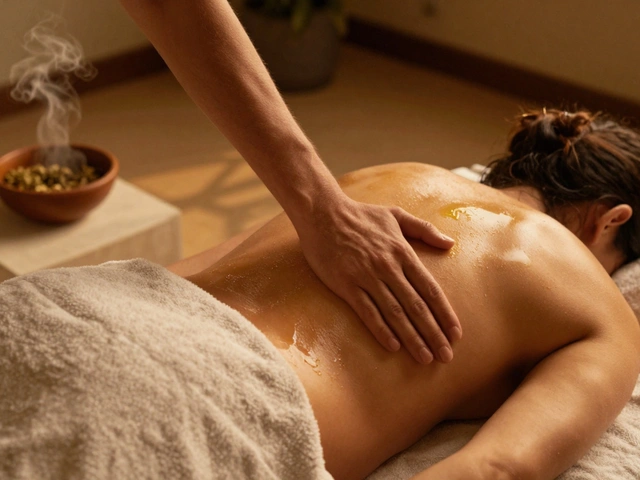
Think of it like a deep tissue massage-but for your soul. Instead of working on tight shoulders or stiff lower back muscles, the practitioner focuses on the soft tissues of the vulva and vaginal canal using slow, mindful pressure, breathwork, and sometimes warm herbal oils. The goal? To help you reconnect with your body on a level deeper than sensation. Many women describe it as crying during the session-not from pain, but from finally feeling safe enough to let go.
Why This Matters Now More Than Ever
Modern life doesn’t exactly celebrate the feminine. We’re told to be productive, efficient, thin, quiet, and always in control. Our bodies? They’re treated like machines that need fixing-not sacred vessels that need honoring. For women who’ve experienced sexual trauma, birth complications, or years of shame around their sexuality, the pelvic area becomes a fortress. Muscles tighten. Nerves shut down. Sensation fades. And with it goes a quiet part of your joy, your intuition, your power.
A 2023 study from the International Journal of Women’s Health found that women who engaged in regular pelvic bodywork (including yoni massage) reported a 68% increase in self-reported body satisfaction and a 52% reduction in anxiety around intimacy. This isn’t magic. It’s neuroscience. The pelvic floor is wired directly to the vagus nerve-the main highway of your parasympathetic nervous system. When you relax it, you calm your entire nervous system.
What You’ll Feel During a Session
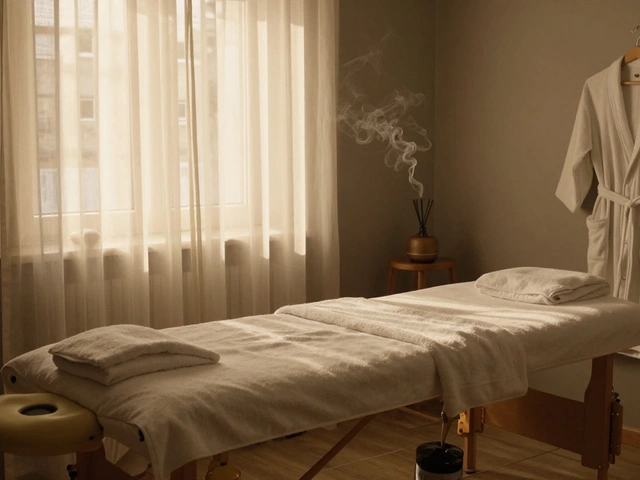
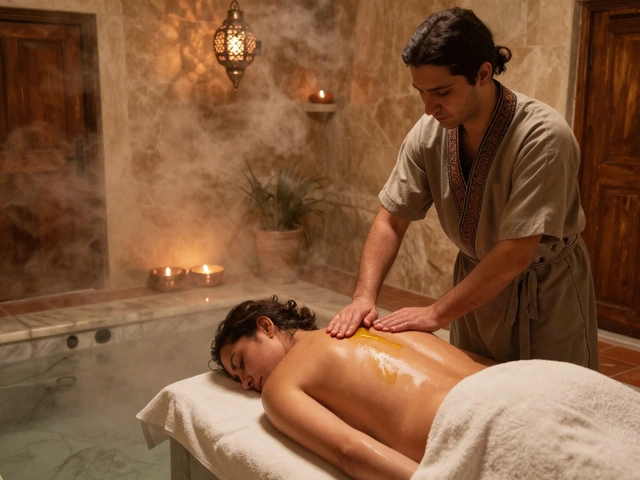
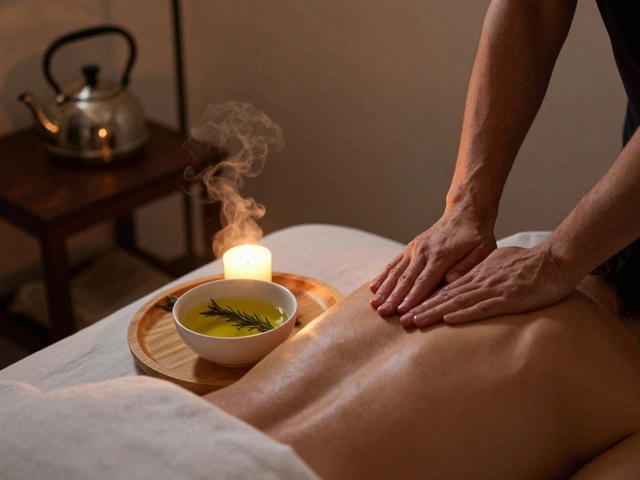
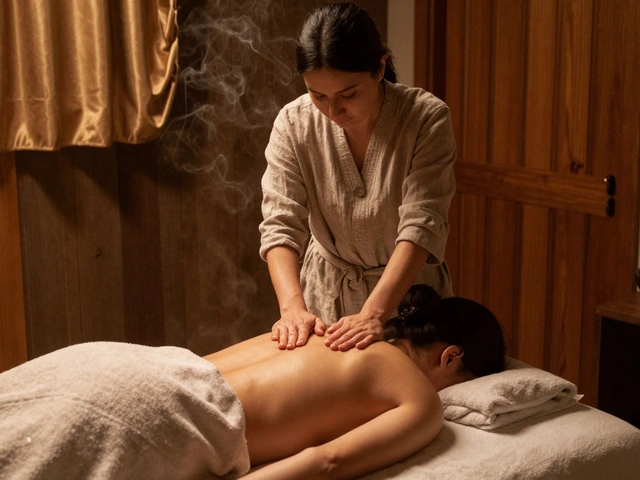
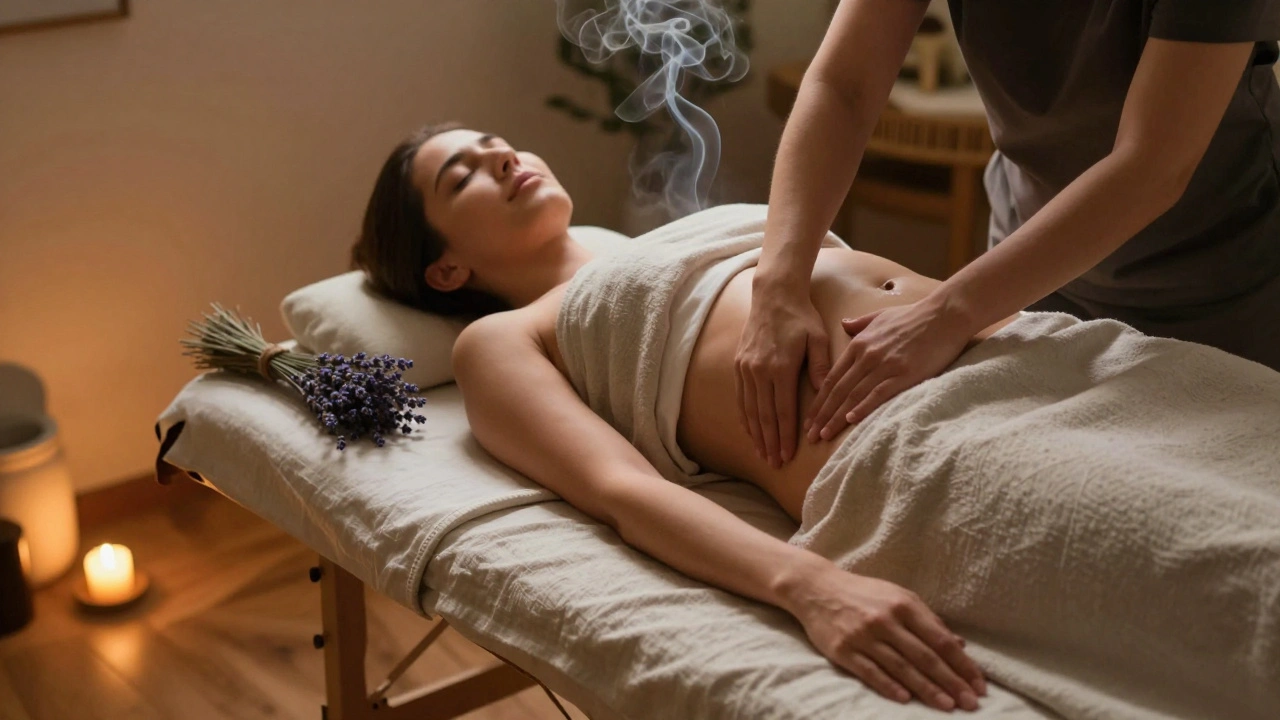
First, the setting: dim lights, soft music, warm blankets. No mirrors. No cameras. Just you, the practitioner (always a trained woman), and a quiet, safe space. You’ll lie on a massage table, covered with a sheet. The practitioner will begin with gentle breathwork-guiding you to inhale slowly through your nose, exhale through your mouth. Then, she’ll ask you to place your hands on your belly, and together, you’ll breathe into that space.
Touch comes only after you give consent. She might start by massaging your inner thighs, then your lower abdomen. The first real contact with the yoni is slow-almost hesitant, like meeting someone you’ve been afraid to talk to for years. There’s no rushing. No expectations. You’re not here to orgasm. You’re here to feel.
Some women feel heat. Others feel nothing at first-and that’s okay. Numbness is common after trauma or years of disconnect. One client told me, "I didn’t feel anything for 20 minutes. Then, out of nowhere, I started sobbing. I hadn’t cried like that since I was 14."
Types of Yoni Massage Practices
Not all yoni massages are the same. There are a few main styles you’ll come across:
- Tantric Yoni Massage: Rooted in ancient Indian spirituality, this version combines breath, sound, and energy work. It’s slow, meditative, and often includes chanting or mantras.
- Healing-Focused Yoni Massage: Designed for trauma recovery, this approach is led by therapists trained in somatic psychology. It’s gentle, clinical in its care, and often paired with counseling.
- Self-Yoni Massage: You can do this alone. With clean hands, warm oil, and a few minutes of quiet, you can begin to explore your own body without judgment. Start with light circles around the outer lips. No pressure. Just presence.
Most practitioners in Istanbul, Berlin, or Portland offer a blend of tantric and healing-focused techniques. The key is intention-not technique.

How to Find a Trusted Practitioner
Not every "yoni massage" provider is legit. Some use the term as a cover for sexual services. Here’s how to tell the difference:
- Look for credentials: Are they trained in somatic therapy, trauma-informed care, or tantric healing? Ask for their certification.
- Check reviews: Real clients talk about emotional release, not "hot sessions." Look for words like "safe," "held," "seen."
- Ask about boundaries: A true practitioner will explain consent protocols, hygiene, and what to expect before you even lie down.
- Trust your gut: If something feels off, leave. Your intuition is your best guide.
In Istanbul, many women go to practitioners in the Kadıköy or Beşiktaş neighborhoods who work out of quiet, residential studios. In New York, look for certified bodyworkers through the International Association of Sexual Health Professionals. In Berlin, the Women’s Wellness Collective offers monthly group sessions.
What to Expect After Your First Session
Some women feel euphoric. Others feel exhausted. Some cry for hours. Others sleep for 12. All of it is normal.
Your body has been holding onto emotions for years-maybe decades. Releasing them takes energy. The next day, you might notice:
- More sensitivity in your skin
- Deeper sleep
- Stronger connection to your intuition
- Less fear around intimacy
- More spontaneous joy
One woman I spoke to said, "I started dancing in the kitchen while making tea. I hadn’t done that since college." That’s the ripple effect.
Cost and Booking
Prices vary by location and experience level. In Istanbul, a 90-minute session typically costs between 250-400 Turkish Lira (roughly $8-13 USD). In the U.S. or Europe, expect $120-$200 for a 90-minute session. Most practitioners require a 30-minute intake call first. This isn’t just paperwork-it’s to make sure you’re emotionally ready.
Bookings are usually done through private websites or WhatsApp. Don’t expect to find them on Google Ads or mainstream spa directories. This work thrives in quiet, word-of-mouth spaces.

Safety First: What to Watch Out For
Yoni massage is safe when done right. But here’s what you need to avoid:
- Practitioners who don’t use gloves or clean linens
- Anyone who pressures you to go deeper than you’re comfortable
- Services offered in hotels or private homes without clear boundaries
- Claims that this will "cure" sexual dysfunction or guarantee orgasms
Real yoni massage doesn’t promise results. It offers presence. And presence is enough.
Yoni Massage vs. Sensual Massage
| Aspect | Yoni Massage | Sensual Massage |
|---|---|---|
| Primary Goal | Emotional healing, nervous system regulation | Erotic stimulation, pleasure |
| Practitioner Training | Therapy, somatic, trauma-informed | Often none; may be unlicensed |
| Consent Process | Explicit, step-by-step, ongoing | Often implied or rushed |
| Aftercare Provided | Yes-tea, quiet space, grounding exercises | Rarely |
| Emotional Response | Crying, clarity, release | Excitement, arousal, sometimes guilt |
The difference isn’t subtle. One invites you home to yourself. The other asks you to perform.
Frequently Asked Questions
Is yoni massage only for women who’ve experienced trauma?
No. While many women seek it for trauma recovery, others come simply because they’ve lost touch with their bodies. Maybe you’ve had kids, been in long-term relationships, or just feel disconnected. You don’t need a crisis to benefit. You just need curiosity.
Can I do this at home?
Absolutely. Self-yoni massage is powerful. Start with warm coconut or almond oil. Sit quietly, breathe into your pelvis, and use your fingertips to make slow circles around your outer lips. No pressure. No goal. Just presence. Many women find this becomes a daily ritual-like brushing their teeth, but for their soul.
Will I orgasm during the session?
Sometimes. But that’s not the point. Orgasms can happen, but so can tears, laughter, silence, or nothing at all. The goal isn’t to achieve pleasure-it’s to reclaim your right to feel, without conditions.
Is this spiritual or religious?
It can be, but it doesn’t have to be. Some people use mantras and crystals. Others just want to feel safe in their skin. There’s no dogma here. It’s about your experience, not someone else’s belief system.
How many sessions do I need?
There’s no rule. Some feel shifted after one. Others come monthly for a year. Think of it like therapy-you go as long as it serves you. The most important thing? Listen to your body. If you feel lighter, you’re on the right path.
Yoni massage isn’t about fixing what’s broken. It’s about remembering what was never broken to begin with. Your body isn’t a problem to solve. It’s a home you’ve been too afraid to live in. This is your invitation to come back-in your own time, on your own terms.