You’ve felt it before-that deep, slow release when hands move over your skin just right. Not sexual, not clinical, but something in between. A warmth. A sigh. A quiet letting go. That’s sensual massage. And it’s not just about touch. It’s about biology, chemistry, and the quiet magic of human connection. If you’ve ever wondered why a sensual massage leaves you feeling lighter, calmer, or even strangely centered, the answer isn’t mystery. It’s neuroscience.
What Exactly Is Sensual Massage?
Sensual massage isn’t erotic massage. It’s not about arousal or climax. It’s about sensory awareness. It’s a slow, intentional form of touch that engages your skin, nerves, and mind-not your genitals or fantasies. Think of it like a slow dance between pressure and rhythm. The hands move with awareness, not speed. The goal isn’t to excite, but to awaken. To remind your body it’s safe. That it’s held. That it’s okay to relax.
Unlike Swedish or deep tissue massage, sensual massage doesn’t focus on knots or muscle repair. It doesn’t use oils to slick over skin for glide. Instead, it uses warmth, texture, and rhythm to invite your nervous system to drop its guard. You might feel fingertips tracing your spine, palms cradling your shoulders, or the slow drag of a warm stone along your thigh. No thrusting. No urgency. Just presence.
Why It Works: The Biology of Touch
Here’s the real secret: your skin is your largest organ-and it’s packed with nerve endings. More than 5 million of them. When touch is slow, steady, and non-threatening, those nerves send signals straight to your brain’s pleasure centers. Not the ones tied to sex. The ones tied to safety.
Studies from the Journal of Bodywork and Movement Therapies show that sustained, gentle touch increases oxytocin levels by up to 25% in just 15 minutes. Oxytocin? That’s the bonding hormone. The same one released during childbirth, hugging, or petting a dog. It lowers cortisol (your stress hormone), slows your heart rate, and makes your muscles melt. This isn’t placebo. It’s measurable.
At the same time, the parasympathetic nervous system kicks in. That’s the part of your body that says, “It’s safe to rest.” When you’re stressed, your sympathetic system (fight-or-flight) is running the show. Sensual massage flips the switch. Your breathing deepens. Your jaw unclenches. Your shoulders drop. You don’t even realize it’s happening-until you look up and realize you haven’t thought about your to-do list in 20 minutes.
How It Differs From Other Massage Types
Let’s clear up the confusion. A Swedish massage? That’s about muscle relaxation. Deep tissue? It’s about breaking down scar tissue. Thai massage? It’s stretching and pressure points. Sensual massage? It’s about reconnection.
Here’s how they stack up:
| Feature | Sensual Massage | Swedish Massage | Deep Tissue | Thai Massage |
|---|---|---|---|---|
| Primary Goal | Emotional and sensory relaxation | Muscle relaxation | Release chronic tension | Flexibility and energy flow |
| Touch Speed | Slow, deliberate | Smooth, flowing | Firm, focused | Dynamic, rhythmic |
| Pressure Level | Light to medium | Light to medium | Heavy | Variable |
| Use of Oil | Yes, for glide and warmth | Yes | Usually no | No |
| Focus Area | Whole body, especially back, neck, limbs | Whole body | Deep muscle layers | Energy lines and stretches |
| Emotional Response | Calming, grounding, connected | Relaxed | Relieved | Centered |
The difference? Sensual massage doesn’t just work on your muscles. It works on your sense of self. You’re not being fixed. You’re being remembered.
What Happens During a Session
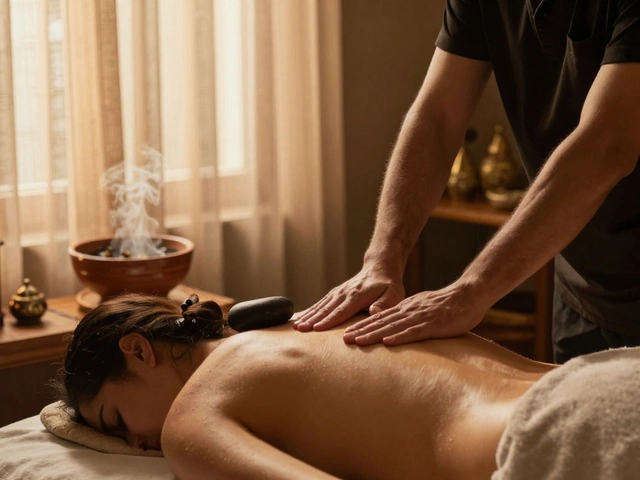
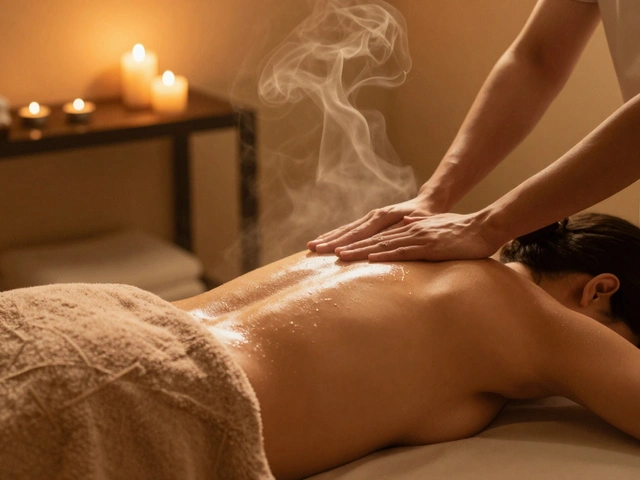
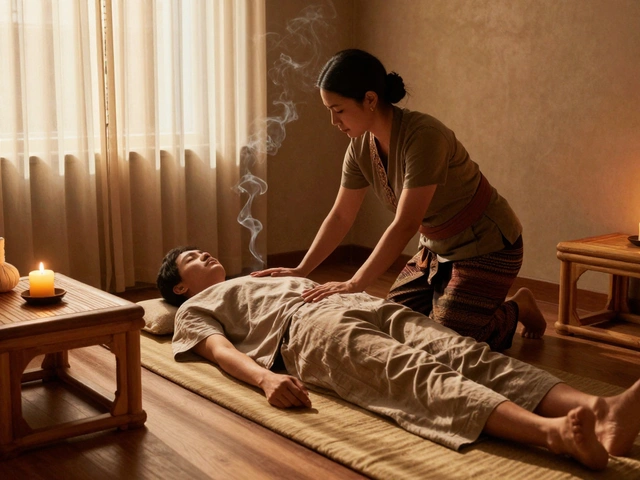
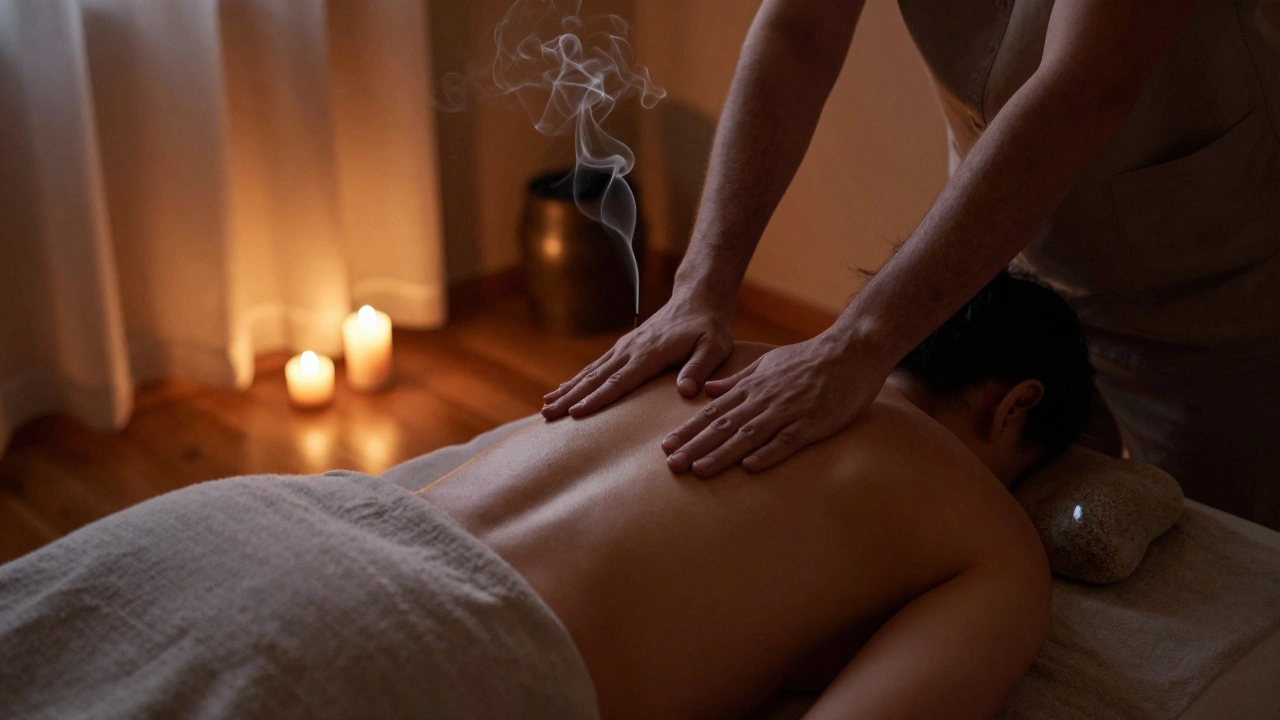
You lie down. The room is warm. Candles flicker. Incense-maybe sandalwood or cedar-floats in the air. The therapist’s hands are warm. Not cold. Not hurried. They begin with your feet. Not because they’re important. But because they’re safe. You’re not expected to talk. You’re not expected to respond. Just breathe.
One hand glides up your calf. Slow. Like a tide. Another rests gently on your lower back. No pressure. Just presence. Your skin drinks it in. Your breath slows. You feel a shiver-not from cold, but from recognition. This is how your body wants to be touched. Not rushed. Not judged. Not analyzed.
At some point, you’ll feel a tear. You didn’t plan it. You didn’t mean to. But your body remembered something. Maybe it was the way your mother used to rub your back. Or the last time you felt truly safe. The therapist doesn’t say anything. Just keeps touching. Gently. Consistently.
By the end, you don’t feel tired. You feel clear. Like someone wiped a fog off your mind.

Where to Find It in Istanbul
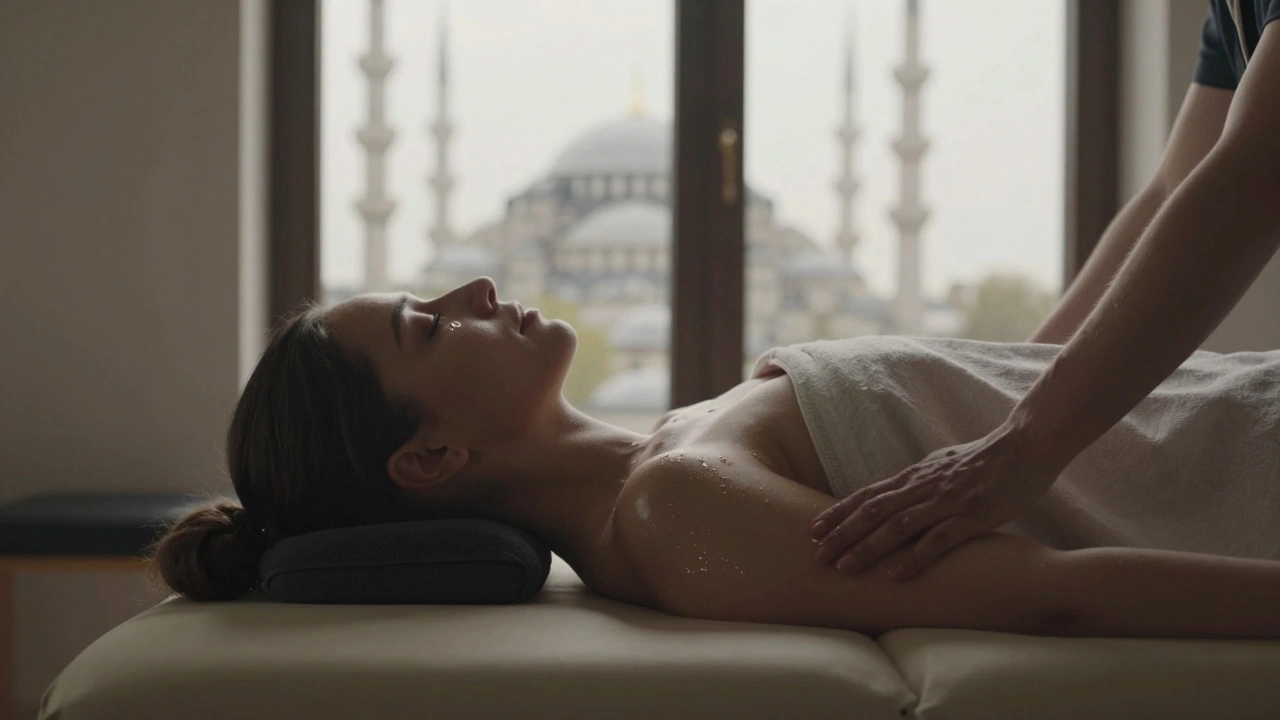
In Istanbul, sensual massage isn’t advertised in every spa. It’s whispered. Recommended. Found through word of mouth. Look for places that don’t use words like “erotic” or “happy ending.” Instead, search for therapists who mention “mindful touch,” “somatic healing,” or “nervous system regulation.”
Some studios in Beyoğlu and Nişantaşı offer private sessions with certified practitioners trained in somatic therapy. They don’t list prices online. You call. You ask. You describe what you’re looking for. If they understand, they’ll invite you in. If they don’t? Walk away. This isn’t a service you book on an app. It’s a relationship you build.
What to Expect in Pricing and Booking
A typical session lasts 60 to 90 minutes. Prices range from 400 to 800 Turkish Lira, depending on the therapist’s experience and the space. Don’t be fooled by cheap deals. This isn’t a commodity. You’re paying for presence-not just time.
Booking is personal. Most practitioners require a short phone call before your first session. They’ll ask how you’re feeling. What you’re hoping to release. Not to judge. To prepare. You’ll be asked to arrive early. To shower. To leave your phone outside. To breathe before you lie down.
There’s no contract. No package deals. No upsells. You pay for one session. And if it feels right? You might come back.
Safety and Boundaries
Good sensual massage has clear boundaries. Always. The therapist will explain them before you undress. No genital contact. No kissing. No pressure to respond emotionally. You are in control. Always. You can stop at any time. You can ask for more pressure. Less. Different touch. They’ll listen.
If someone tries to push you into anything-physical or emotional-walk out. That’s not healing. That’s exploitation. True sensual massage doesn’t cross lines. It honors them.
Also, don’t go if you’re feeling emotionally raw or unstable. This isn’t a substitute for therapy. It’s a complement. If you’re in crisis, find a counselor first. Then, when you’re ready, let touch help you come back to your body.
Who Benefits Most?
You don’t need to be stressed to benefit. But if you’ve been carrying tension for years-if you’ve forgotten what it feels like to be held without condition-this is for you.
People who come back again and again? Often they’re:
- Parents who haven’t touched anything but a baby or a coffee mug in months
- Professionals who spend 10 hours a day staring at screens
- People recovering from trauma, loss, or burnout
- Those who feel disconnected from their own bodies
It’s not about sex. It’s about relearning how to be in your skin without shame, fear, or performance.
Frequently Asked Questions
Is sensual massage the same as erotic massage?
No. Erotic massage aims to stimulate sexual response. Sensual massage aims to soothe the nervous system. One is about arousal. The other is about calm. The techniques may look similar, but the intent is completely different. A good sensual massage therapist will never cross into sexual territory-and you should never feel pressured to.
Can I do sensual massage on myself?
You can, but it’s harder. Self-touch lacks the external presence that helps your brain relax. When someone else touches you with care, your nervous system says, “Someone else is holding this for me.” That’s the magic. But if you can’t find a practitioner, try slow, mindful self-massage with warm oil. Focus on your arms, shoulders, feet. Breathe. Don’t rush. It’s not about perfection. It’s about presence.
How often should I get a sensual massage?
There’s no rule. Some people come once a month. Others once a year. It depends on your needs. If you’re recovering from stress, weekly for a month helps reset your nervous system. If you’re just curious, one session might be enough. Listen to your body-not your schedule.
Do I have to be naked?
No. Most people wear underwear. Some prefer to be fully draped. The therapist will leave a cloth over you at all times, uncovering only the area being worked on. You’re never exposed. Your comfort comes first. Always.
What if I feel emotional during the massage?
It’s common. Touch unlocks stored emotions. Tears, laughter, silence-all are welcome. A good therapist won’t interrupt. They won’t ask why. They’ll just keep touching. Let it happen. You’re not broken. You’re healing.
Final Thought
Sensual massage doesn’t fix your life. But it reminds you that your body still remembers how to feel. How to trust. How to rest. In a world that keeps asking you to do more, be more, perform more-it’s a quiet rebellion to just lie there and let someone hold you without asking for anything in return.
Maybe that’s why it works.