You’ve probably seen both on a spa menu: Thai massage and Swedish massage. One promises deep stretches and energy flow, the other promises gentle gliding strokes and pure calm. But which one actually fits you? If you’re sitting there wondering whether to pick the invigorating Thai session or the soothing Swedish one, you’re not alone. Let’s cut through the noise and show you exactly what each one feels like - no fluff, just real details you can use today.
Quick Takeaways
- Thai massage is active, rhythmic, and stretches your whole body - like yoga with hands-on guidance.
- Swedish massage is gentle, flowing, and designed to melt tension - perfect for stress relief.
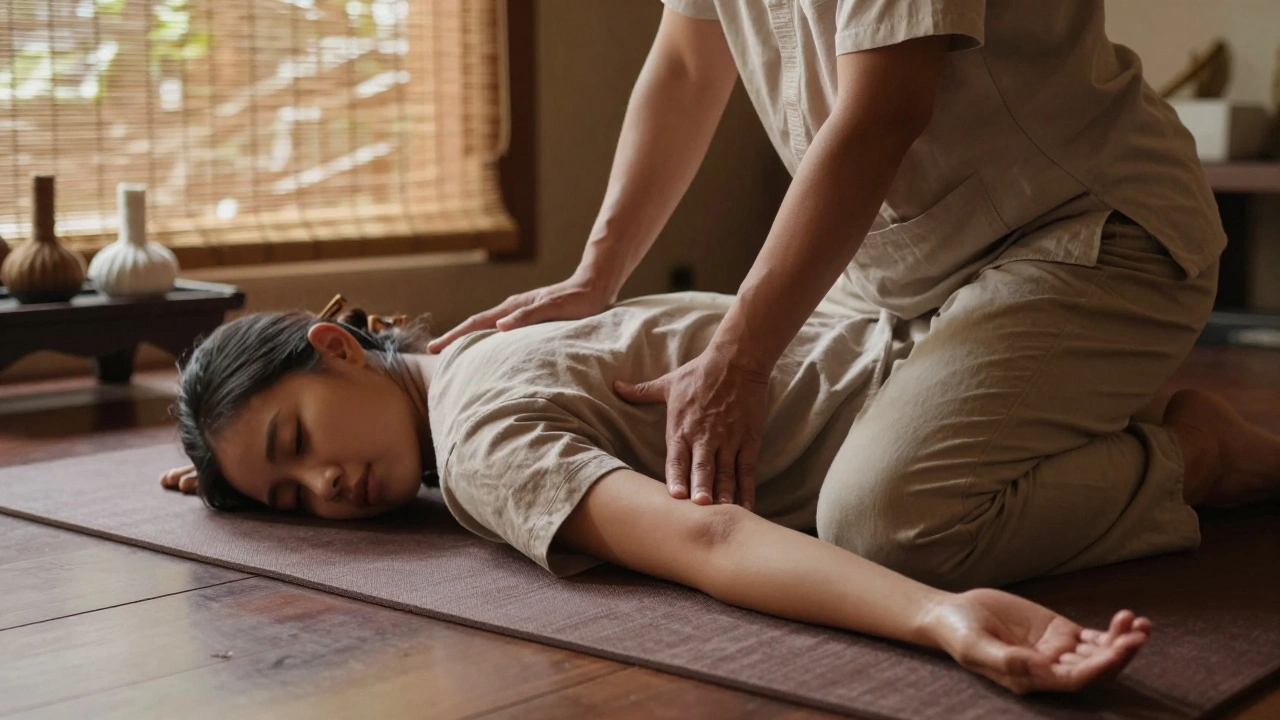
- Thai massage uses no oil, so you wear loose clothes and move through poses.
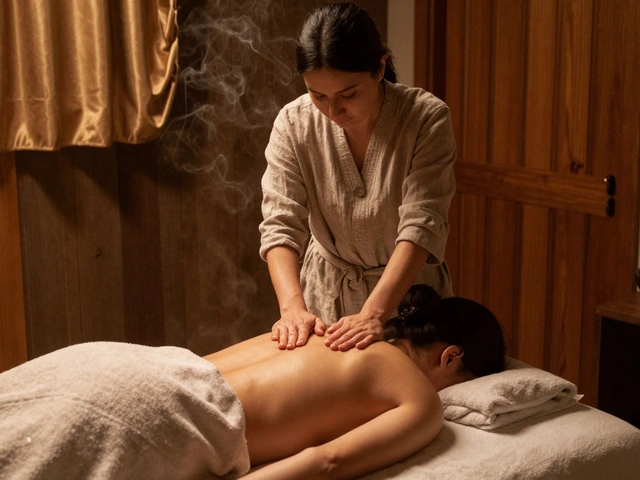
- Swedish massage uses oil and is done on a table - you’re covered with a towel the whole time.
- If you’re stiff from sitting all day, Thai might wake you up. If you’re burned out and need to unwind, Swedish will hug you back to life.
Direct Answer
If you want to feel energized and loosened up like you just finished a yoga class, choose Thai massage. If you want to melt into relaxation and let go of daily stress, Swedish is your go-to. Neither is better - it’s about what your body needs right now.
What Thai Massage Really Feels Like
Imagine lying on a mat on the floor while your therapist uses their hands, elbows, knees, and even feet to guide you through a series of stretches. No oil. No nakedness. Just you in loose cotton pants and a tank top, moving slowly as pressure builds in your hips, shoulders, and spine. Thai massage isn’t just a massage - it’s a full-body adjustment wrapped in rhythm.
It’s not random. Every movement follows traditional Sen lines - energy pathways in the body, similar to acupuncture meridians. The therapist applies pressure along these lines, then pulls, pushes, and twists you into positions that open tight spots you didn’t even know were locked. You might groan. You might laugh. You’ll definitely feel it the next day - in a good way.
People who sit at desks all day swear by Thai massage. It fixes hunched shoulders, tight hamstrings, and that constant lower back ache. One client from Kadıköy told me she used to need painkillers after work. After six Thai sessions, she stopped taking them. Not because she’s super flexible - but because her body finally moved the way it was meant to.
What Swedish Massage Really Feels Like
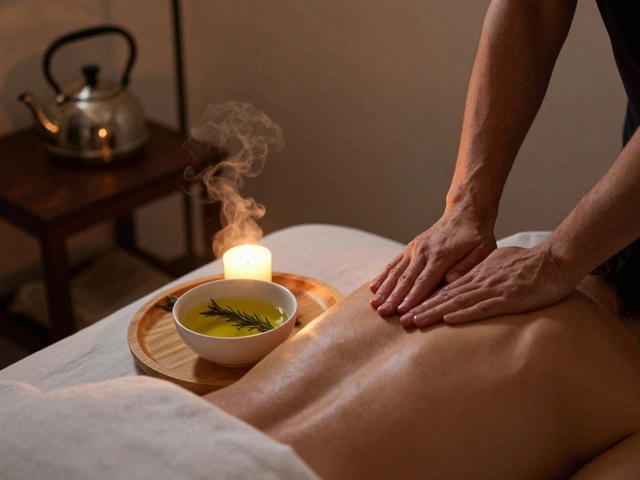
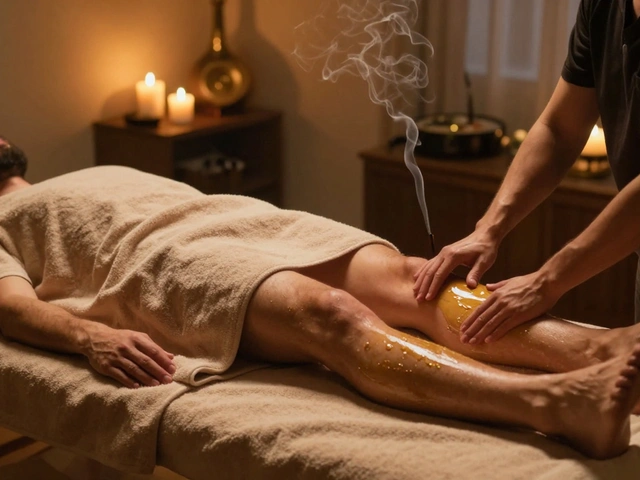
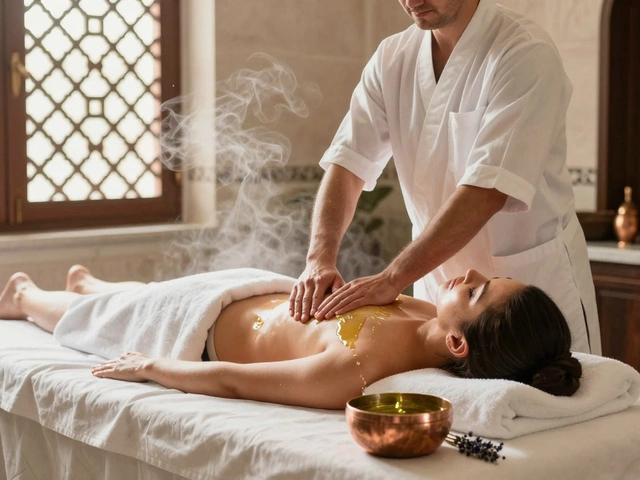
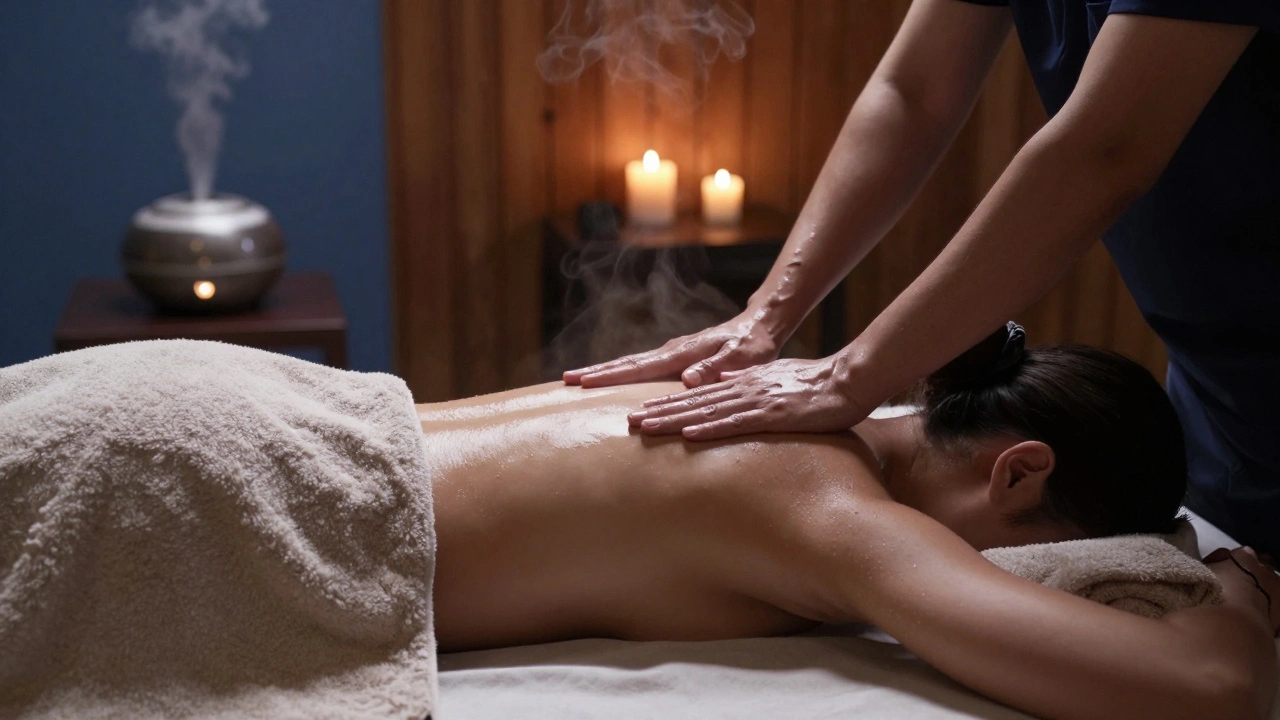
Now picture this: dim lights, soft music, warm oil, and a therapist gliding their hands over your back in long, smooth strokes. You’re on a table, covered with a towel, and the only thing you need to do is breathe. That’s Swedish massage - the classic spa experience.
It uses five main techniques: effleurage (gliding), petrissage (kneading), friction (deep circular motions), tapotement (rhythmic tapping), and vibration. Each one targets different layers of muscle. The goal isn’t to break tension apart - it’s to help it dissolve.
Swedish is the go-to for people overwhelmed by stress. Think of it as a warm blanket for your nervous system. If you’ve been working late, caring for kids, or just surviving life, Swedish massage tells your body: It’s okay to relax now. No stretching. No pressure. Just calm.
One woman from Beşiktaş told me she booked Swedish after her divorce. She didn’t want to talk. She just wanted to feel held. After 60 minutes, she cried quietly - not from sadness, but because her body finally let go.
Benefits of Thai Massage
- Improves flexibility and joint mobility - great for athletes or desk workers
- Boosts circulation and lymphatic flow - helps reduce swelling and fatigue
- Reduces muscle tension without deep pressure - ideal if you hate “cracking”
- Enhances energy levels - many feel alert afterward, not sleepy
- Works on mental focus - the rhythmic motion has a meditative effect
Benefits of Swedish Massage
- Lowers cortisol (stress hormone) levels significantly
- Improves sleep quality - especially for people with insomnia
- Relieves chronic pain from tension headaches and neck strain
- Increases blood flow to muscles - helps recovery after workouts
- Calms the nervous system - perfect for anxiety or burnout
How They Compare: Thai vs. Swedish
| Feature | Thai Massage | Swedish Massage |
|---|---|---|
| Setting | Mat on the floor | Massage table |
| Clothing | Loose, comfortable clothes (no undressing) | Undressed under towel |
| Oil Used | No | Yes |
| Pressure | Medium to deep, active | Light to medium, soothing |
| Movement | You’re stretched and moved | You stay still |
| After Effects | Alert, energized, slightly sore | Relaxed, sleepy, calm |
| Best For | Stiffness, poor posture, low energy | Stress, anxiety, sleep issues |
What to Expect During a Session
For Thai massage: You’ll arrive, change into provided clothes, and lie down on a thick mat. The therapist will start at your feet and work upward, using their body weight to apply pressure. You’ll be guided into poses like a seated forward fold or a gentle backbend. It’s not about being flexible - it’s about letting them move you. You might hear a few pops - that’s your joints adjusting, not breaking. No talking needed. Just breathe.
For Swedish massage: You’ll be asked to undress to your comfort level and cover up with a towel. The therapist will leave the room while you get settled. Then they’ll begin with long strokes along your back, gradually moving to your legs, arms, and neck. The pressure is adjusted as you go. If it’s too light or too firm, speak up. This isn’t a silent ritual - it’s a conversation.
How to Find Quality Thai or Swedish Massage in Istanbul
Here’s the truth: Not all spas are created equal. In Istanbul, you’ll find everything from luxury hotel spas to hidden gems in Kadıköy alleys. Look for places that specialize - not just offer massage as an add-on.
For Thai massage: Ask if the therapist was trained in Chiang Mai or Bangkok. Real Thai therapists know the Sen lines and use the full-body technique. Avoid places where the therapist just kneads your back - that’s not Thai. Places like Thai Wellness House in Beşiktaş or Anantara Spa at the Four Seasons have certified Thai practitioners.
For Swedish massage: Look for therapists with certification in European or American techniques. Many places in Nişantaşı and Şişli offer Swedish as part of a wellness package. Check reviews for phrases like “gentle pressure,” “calming atmosphere,” or “left me feeling reset.” Avoid places that rush you in and out.
Pricing and Booking
In Istanbul, Thai massage typically costs between 350 and 600 Turkish Lira per hour. Swedish runs slightly cheaper - 300 to 500 TL per hour. Higher prices usually mean better training, longer sessions, or premium locations.
Book ahead. Both types are popular, and good therapists fill up fast. Most places let you book online. If you’re unsure which to pick, call and ask: “I’m new to this. Which one would you recommend for someone who sits all day and feels tense?” A real pro will give you honest advice.
Safety Tips
- Don’t do Thai massage if you’re pregnant, have a recent injury, or have severe osteoporosis. The stretches can be too intense.
- Swedish is safer for most people - but avoid deep pressure if you have blood clots or are on blood thinners.
- Hydrate well after both. You’re releasing toxins - water helps flush them out.
- Wait at least 24 hours before intense exercise after Thai massage. Your body’s adjusting.
- Speak up if something hurts. Pain isn’t progress. Discomfort? Maybe. Sharp pain? Stop.
FAQ: Your Questions About Thai and Swedish Massage Answered
Can I do Thai massage if I’m not flexible?
Absolutely. Thai massage isn’t about how flexible you are - it’s about letting the therapist guide your body. Many people start stiff and end up amazed at how much they loosen up. The therapist adjusts every stretch to your comfort level. You’re not expected to touch your toes - just relax and breathe.
Which one hurts more?
Thai massage can feel intense - especially in tight areas like hips or shoulders. But it’s not pain like a bruise. It’s more like a deep release, like when you finally stretch after sitting too long. Swedish is gentle. If you’re sensitive to pressure, Swedish is the safer pick. Neither should make you cry - if it does, speak up.
Can I combine both in one visit?
Some spas offer hybrid sessions - 30 minutes Thai, 30 minutes Swedish. It’s a great way to get both energy and calm. But don’t expect a full hour of each unless you pay for two separate sessions. Ask ahead if they offer combos.
Is Thai massage better for athletes?
Yes. Thai massage improves range of motion and helps prevent injury by releasing deep muscle restrictions. Many runners and yoga practitioners in Istanbul swear by it. Swedish is great for recovery, but Thai helps you move better - which matters more if you’re active.
Do I need to shower before or after?
Shower before Thai massage - you’re moving in clothes, and sweat can make it slippery. After either type, a warm shower helps your muscles relax. Avoid cold showers right after - they can tighten muscles back up.
Ready to Choose?
Think of it this way: Thai massage is your body’s wake-up call. Swedish is your body’s hug. One doesn’t replace the other - they serve different needs. If you’re stuck, try one now. Next month, try the other. See how you feel. Your body will tell you which one it misses when you’re gone.