Ever felt like your body holds more than just muscle and bone? Like there’s a quiet tension buried deep inside-something no regular massage ever touches? That’s where lingam massage comes in. Not just another spa treatment, it’s a deliberate, mindful practice designed to release emotional blockages, reconnect you with your body, and awaken a deeper sense of peace. And yes, it’s about more than pleasure. It’s about healing.
What Exactly Is Lingam Massage?
The word lingam comes from Sanskrit, meaning "symbol of creation." In tantric traditions, it refers to the male genitalia not as a sexual organ alone, but as a sacred energy center. A lingam massage isn’t about arousal or orgasm. It’s about presence. It’s about slowly, gently, and with full attention, guiding energy through the penis, perineum, and prostate to release stored stress, shame, or emotional numbness.
Think of it like a deep-tissue massage-but instead of working on your shoulders or back, you’re working on the core of your masculinity, your vitality, your emotional anchor. Many men who try it describe it as the first time they ever felt truly connected to their own bodies. Not because of sensation, but because of the space it creates.
Why It Matters: The Emotional and Physical Benefits
Here’s the truth: most men never learn how to relax their pelvic floor. We tense it when we’re stressed, hold it when we’re anxious, and ignore it when we’re overwhelmed. Over time, that tension becomes chronic. It shows up as lower back pain, erectile issues, low energy, or even emotional detachment.
A properly done lingam massage helps break that cycle. Studies in somatic therapy (like those from the Journal of Bodywork and Movement Therapies) show that pelvic relaxation techniques can reduce cortisol levels by up to 32% in just one session. That’s stress relief you can feel in your bones.
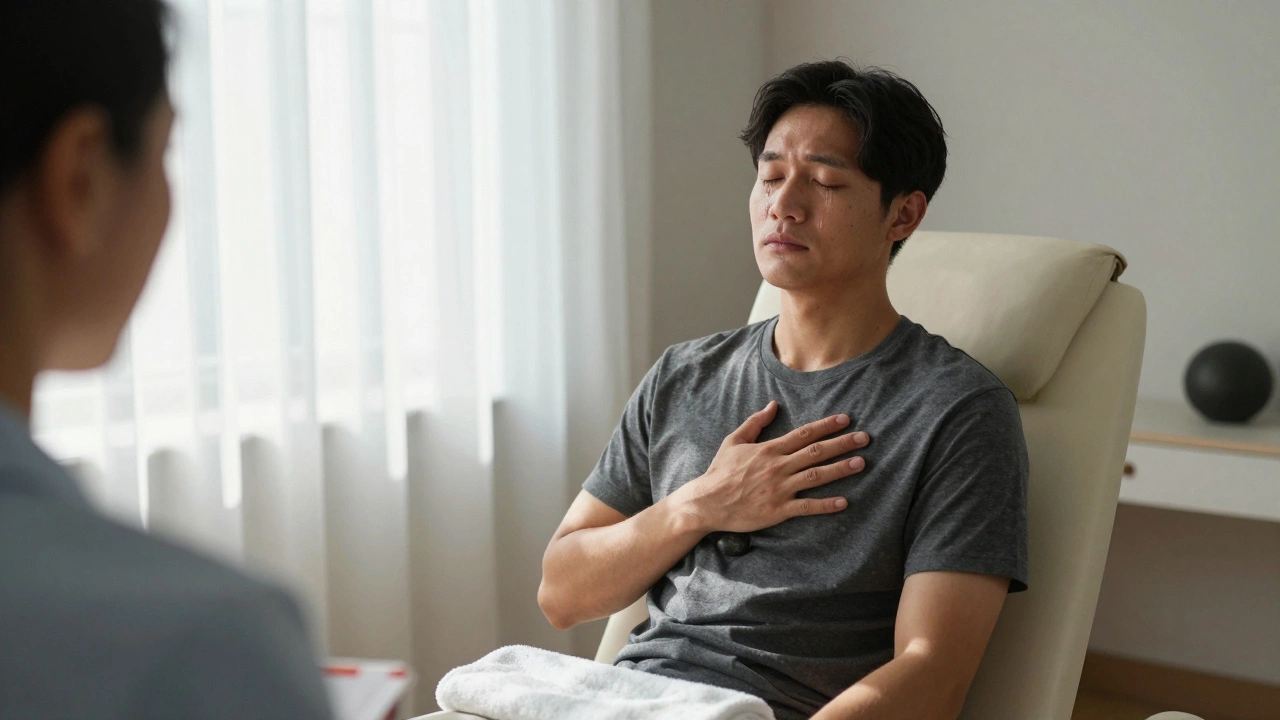
Physically, it improves blood flow to the pelvic region, which supports prostate health and can ease symptoms of benign prostatic hyperplasia (BPH). Emotionally, men report feeling less angry, less numb, and more open-not just to partners, but to themselves. One client, a 42-year-old engineer, told me: "I hadn’t cried in 15 years. After my first session, I sat in my car and just… sobbed. I didn’t know why. But I finally felt like I could breathe again."
How It’s Different From Other Massages
Let’s be clear: lingam massage is not erotic massage. It’s not about getting off. It’s not about quick gratification. It’s also not the same as yoni massage (which focuses on the female anatomy). The intention is entirely different.
- Yoni massage: Often used in tantric contexts to deepen intimacy and feminine energy flow.
- Erotic massage: Designed for arousal and sexual release.
- Lingam massage: Designed for healing, release, and reconnection-with no expectation of orgasm.
The practitioner uses slow, rhythmic strokes, warm oils, and breathwork to help you stay grounded. If you start to feel aroused, that’s normal. But the goal isn’t to chase it. It’s to observe it, let it rise, and let it pass-without judgment.
What Happens During a Session?
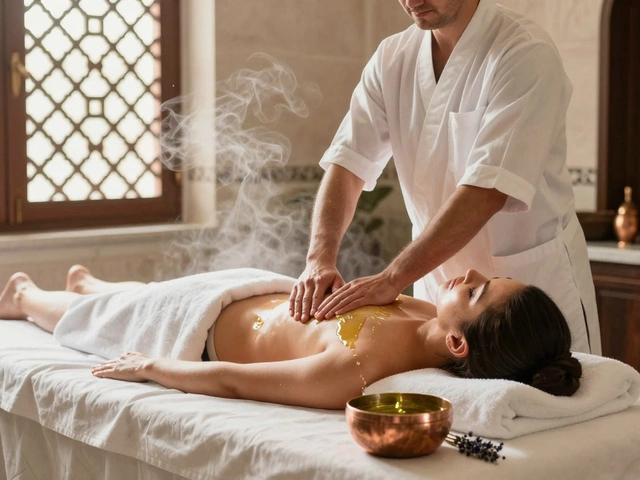
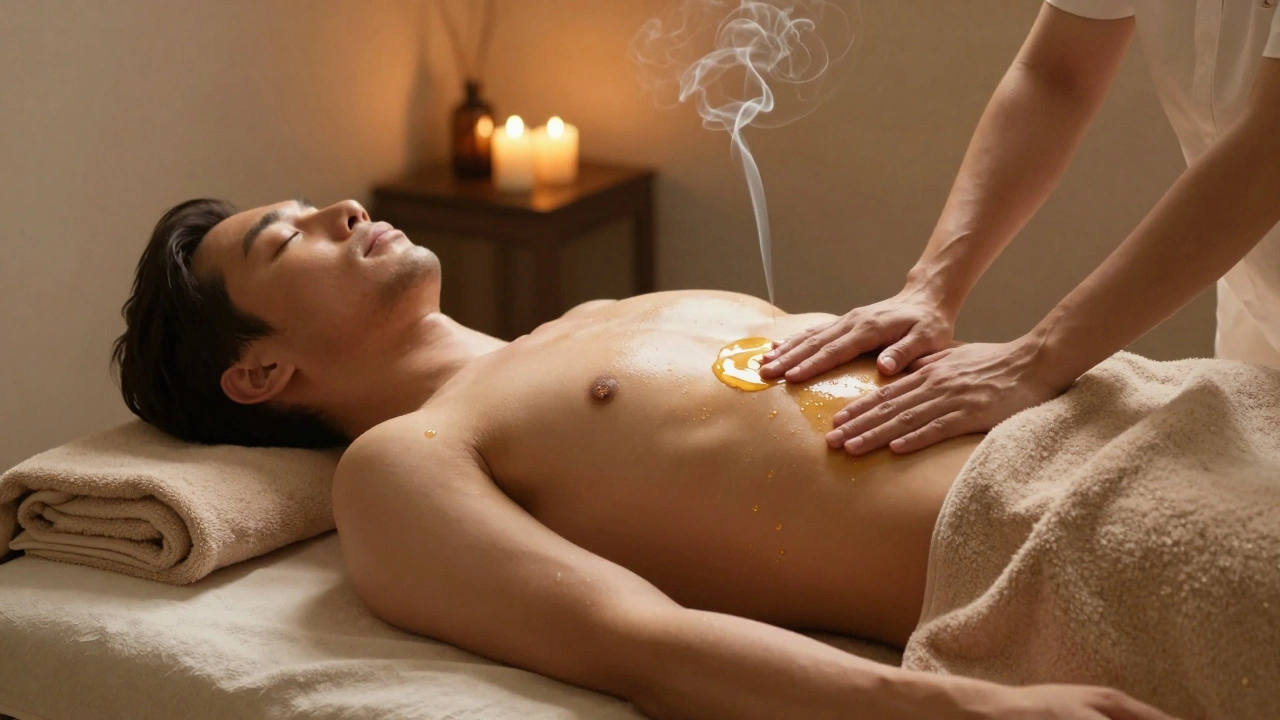
Most sessions last 60 to 90 minutes. You’ll be in a quiet, warm room with soft lighting. The therapist will begin with a brief conversation to understand your goals and boundaries. Then you’ll lie on a massage table, covered with a towel.
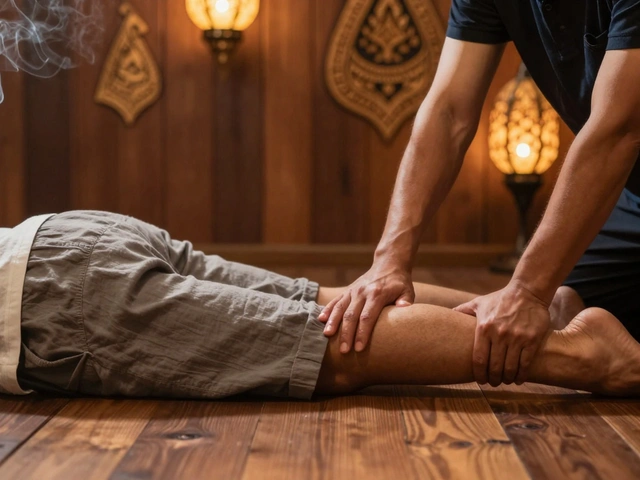
The massage starts with gentle work on your legs, lower back, and abdomen-areas that hold tension connected to the pelvis. Only after you’re fully relaxed does the therapist move to the lingam, using a specialized oil (often coconut or almond-based) and long, flowing strokes. There’s no penetration, no thrusting, no pressure. Just steady, intentional touch.
You might feel warmth, tingling, or even emotional waves. Some men cry. Others laugh. Some fall asleep. All of it’s normal. The therapist won’t rush you. They’ll stay present, breathing with you, guiding you back to your body whenever your mind starts to wander.

How to Find a Qualified Practitioner
This isn’t something you find on Uber or a random spa listing. Look for practitioners trained in tantric somatic therapy, energetic bodywork, or conscious touch. Many come from backgrounds in massage therapy, psychology, or yoga.
Start by searching for terms like:
- "Tantric male healer"
- "Sacred prostate massage practitioner"
- "Conscious touch therapist for men"
Check their website. Do they talk about boundaries, consent, and emotional safety? Do they mention training? Avoid anyone who uses sexualized language or promises "orgasmic release" as the main benefit.
Reputable practitioners will offer a 15-minute free consultation. Use it. Ask: "How do you ensure emotional safety during the session?" Their answer will tell you everything.
What to Expect in Terms of Cost and Booking
Prices vary by location and experience. In major cities, expect to pay between $120 and $200 for a 75-minute session. Some practitioners offer package deals-three sessions for $300 is common.
Booking is usually done online. You’ll fill out a short intake form about your health, goals, and boundaries. Most require a deposit to confirm. Sessions are typically held in private, professional studios-not hotels or homes.
Safety First: What You Need to Know
This work is powerful. And like any deep healing, it’s not for everyone.
- Don’t do this if you have active infections (UTI, STI, or prostate inflammation). Wait until you’re fully healed.
- Don’t rush into it. If you feel anxious about your genitals, start with a regular massage first. Build trust in your body.
- Always set boundaries. You can say "stop," "slower," or "I’m not ready" at any time. A good practitioner will honor that instantly.
- Aftercare matters. Drink water. Sit quietly. Avoid screens for an hour. Let your nervous system settle.
Some men feel emotionally raw afterward. That’s okay. It means the work was real. Journaling helps. So does talking to a therapist-or just a trusted friend.
Lingam Massage vs. Prostate Massage: What’s the Difference?
| Aspect | Lingam Massage | Prostate Massage |
|---|---|---|
| Primary Goal | Emotional healing, energy flow, reconnection | Physical relief, urinary health, medical benefit |
| Technique | External, slow, rhythmic strokes with breathwork | Internal, digital stimulation (often medical) |
| Practitioner | Energy worker, tantric therapist | Urologist or licensed medical provider |
| Outcome Focus | Emotional release, reduced anxiety, presence | Improved urine flow, reduced inflammation |
| Orgasm Expected? | No-often avoided | Possible, but not the goal |
One is holistic. The other is clinical. One heals the spirit. The other treats the body. They can complement each other-but they’re not the same.
Frequently Asked Questions
Is lingam massage only for men who are gay or bisexual?
No. Lingam massage is for any man who wants to reconnect with his body, regardless of sexual orientation. Many straight, married men seek it out to heal from past trauma, stress, or emotional distance. The practice is about energy and presence, not sexuality.
Can I do lingam massage on myself?
Yes, but with caution. Self-massage can be a powerful tool for mindfulness, but it’s easy to slip into habit patterns-speed, pressure, goal-oriented touch. If you’re new to this, start with a professional. Once you’ve learned the rhythm, self-practice can deepen your awareness. Use warm oil, breathe deeply, and focus on sensation-not performance.
How many sessions do I need?
There’s no magic number. Some men feel a shift after one session. Others need three to five to release deep layers of tension. Think of it like therapy: you don’t stop after one talk. The best approach is to start with one, then listen to your body. If you feel lighter, clearer, more grounded, that’s your cue to continue-or to pause and integrate.
Is lingam massage legal?
Yes, when performed by licensed professionals in a clinical or therapeutic setting. The key is intent. If the service is framed as healing, energy work, or somatic therapy-with no sexual activity-it’s legal in most countries. Always verify the practitioner’s credentials and ensure they operate within local regulations.
Will this make me more sexually confident?
Not directly. But it often does. When you stop seeing your body as something to perform with-and start seeing it as something to be with-you naturally become more present. That presence translates into deeper connections, less performance anxiety, and a quieter, more authentic sexual energy. Confidence follows awareness.
Final Thought: This Isn’t Just a Massage
Lingam massage isn’t about fixing something broken. It’s about remembering something you forgot: that your body is a temple, not a tool. That your energy matters. That your vulnerability isn’t weakness-it’s the birthplace of real strength.
If you’ve been carrying shame, silence, or stress in your groin, it’s time to let it go. Not with force. Not with speed. But with gentle, patient touch-and the courage to let someone else hold space for you.
You don’t need to be perfect. You don’t need to be ready. You just need to be willing.