
You walk into a small stone-walled room, the air thick with the scent of olive oil and rosemary. Steam rises gently from a heated marble slab. A therapist’s hands move with a rhythm that feels older than the city itself-slow, deliberate, grounding. This isn’t just a massage. In Istanbul, it’s a ritual passed down through generations, shaped by Ottoman palaces, Byzantine baths, and the quiet wisdom of Anatolian villages.
What Makes Istanbul’s Massage Different?
Most people think of massage as a way to loosen tight muscles. In Istanbul, it’s more than that. It’s about balance-between body and spirit, between the chaos of the Bosphorus and the stillness inside you. The city’s massage traditions don’t come from a textbook. They come from centuries of trade, religion, and daily life.
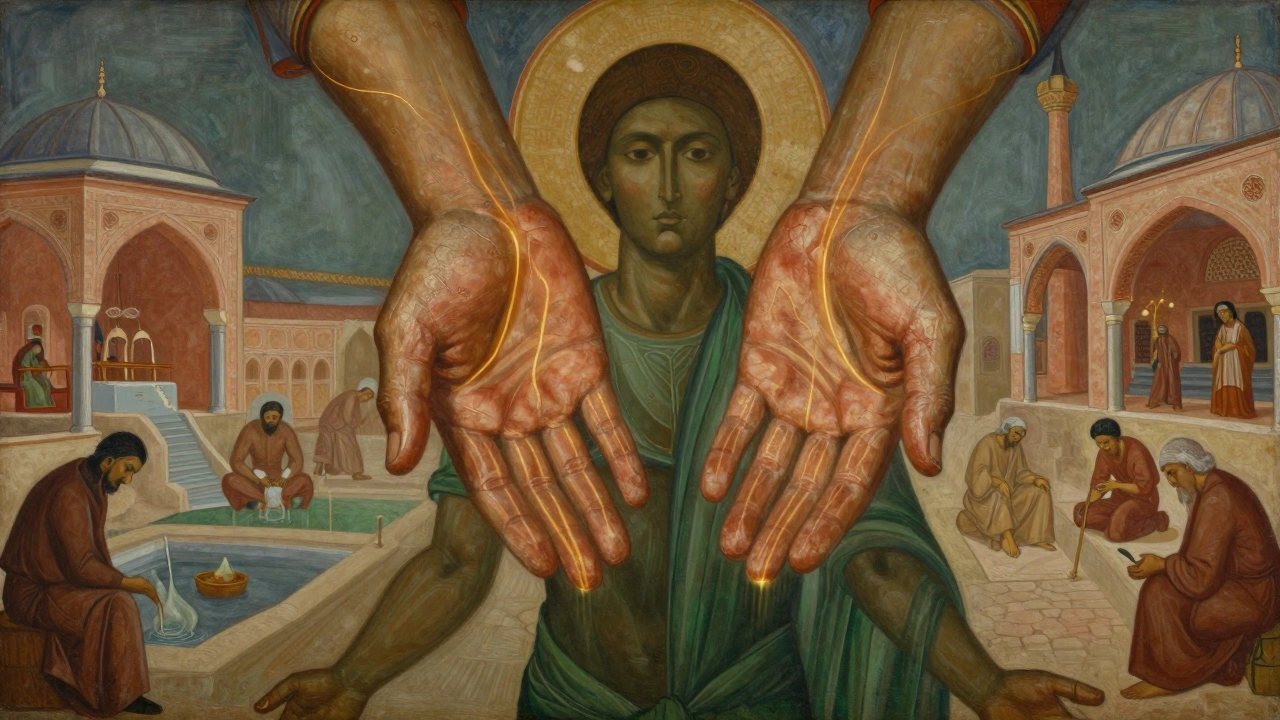
Take the hammam, for example. It’s not just a steam room. It’s a full-body experience: scrubbing with a kese (a rough glove), oil massage with natural blends, and a final rinse under warm water. This isn’t a luxury-it’s something grandmothers have done since the 15th century. The Ottoman Empire built hundreds of these baths, and today, you’ll still find them in Fatih, Beyoğlu, and even quiet neighborhoods near the Grand Bazaar.
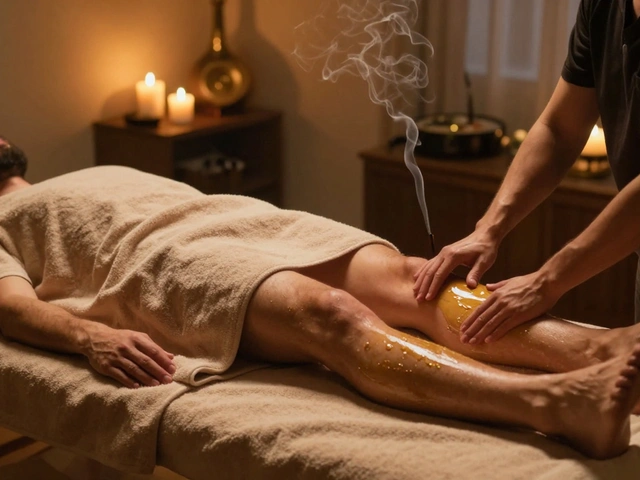
Then there’s the Turkish massage, often called “Türk Masajı.” It’s deeper than Swedish massage, more rhythmic than Thai. Therapists use their palms, elbows, and even knees to apply pressure along meridians. You won’t find aromatherapy oils here unless you ask. Instead, expect cold-pressed olive oil, wild thyme, or even honey-infused blends-ingredients you’d find in a local market.
Why Culture Matters in Every Touch
Think about it: why does a massage in Istanbul feel different than one in Bangkok or Miami? Because the hands that hold you aren’t just trained-they’re shaped by culture.
In Turkey, touch carries meaning. A gentle press on the shoulder isn’t just therapy-it’s a sign of care. In rural areas, elders still believe illness comes from blocked energy, and massage helps restore flow. Even today, many therapists learn from their parents or grandparents. You won’t find a certificate on the wall. You’ll hear stories: “My mother learned this from a healer in Konya.”
Religion plays a quiet role too. Many massage rooms in Istanbul avoid music with lyrics, especially in conservative neighborhoods. Instead, you’ll hear the soft drip of water, birds outside, or the occasional call to prayer echoing from a nearby minaret. Silence is part of the treatment.
And then there’s the pace. In Istanbul, no one rushes. A session might last 90 minutes-not because it’s expensive, but because it’s meant to be savored. You’re not checking your watch. You’re listening to your breath.
The Real Types of Massage You’ll Find Here
Not all massage in Istanbul is the same. Here’s what’s actually out there:
- Hammam Massage - The full ritual: scrub, steam, oil massage, and rinse. Best for deep detox and relaxation. Found in historic baths like Çemberlitaş Hamamı or Ayasofya Hürrem Sultan Hamamı.
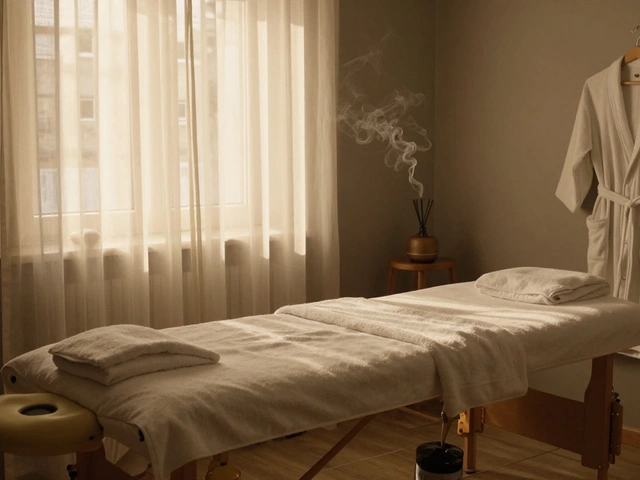
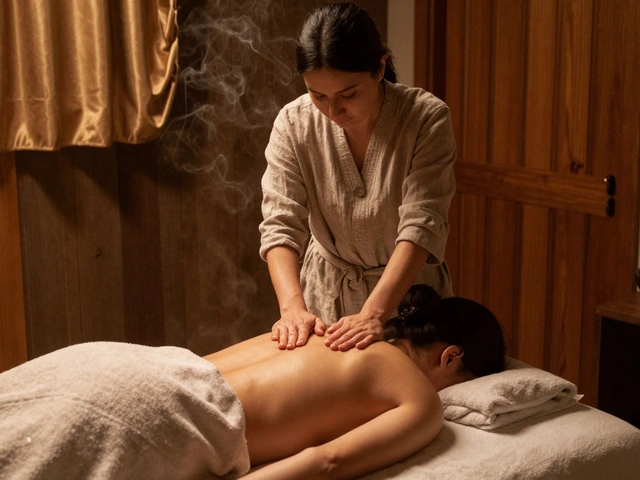
- Türk Masajı (Turkish Massage) - Firm pressure, rhythmic strokes, often done on a table. Great for back pain, muscle tension, and circulation. Common in neighborhood wellness centers.
- Reflexology Foot Massage - Rooted in ancient Anatolian healing. Therapists focus on pressure points linked to organs. Often paired with warm herbal foot soaks.
- Head and Neck Massage - Popular among office workers and drivers. Uses gentle kneading and acupressure on the scalp and neck. Often done in 30-minute sessions during lunch breaks.
- Herbal Compress Massage - Cotton bags filled with dried herbs like chamomile, sage, and lavender are warmed and pressed along the spine. Used for arthritis and stress.
There’s no “one size fits all.” A tourist in Taksim might get a quick 45-minute oil massage. A local in Kadıköy might go weekly for a full hammam ritual. Both are valid. Both are deeply cultural.
Where to Find Authentic Massage in Istanbul
If you’re looking for the real thing, skip the flashy spa chains in Nişantaşı. Head where the locals go.
- Çemberlitaş Hamamı - Built in 1584, this Ottoman-era bath still uses the same marble slabs and copper basins. Book a “masaj” after your scrub.
- Çukurcuma - A quiet neighborhood in Beyoğlu. Small family-run spots here use handmade oils and no music. Ask for “Hacı Mehmet” or “Ece Hanım”-they’ve been doing this for 30 years.
- Kadıköy’s Moda District - Younger therapists here blend tradition with modern techniques. Great if you want a 60-minute Turkish massage with a calming herbal tea afterward.
- Grand Bazaar Back Alleys - Hidden behind spice stalls, you’ll find tiny rooms where elderly women give head massages. No sign. Just a chair, a towel, and a quiet smile.
Pro tip: Don’t book online unless you’re sure of the place. Many authentic spots don’t have websites. Walk in. Look for steam rising from a door. Listen for the sound of water. That’s your cue.
What Happens During a Session?
You’ll be asked to undress to your comfort level. Most sessions are done with a towel draped over you. No nudity. No expectations. The therapist will leave the room while you get ready.
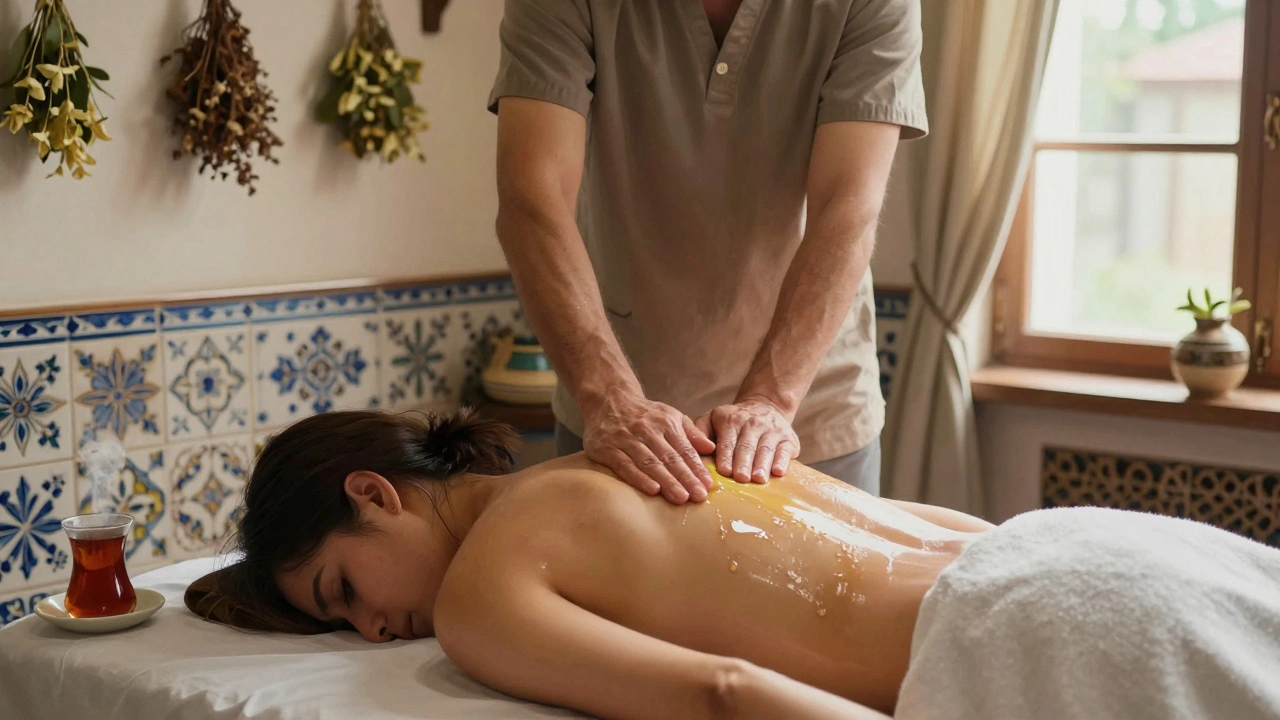
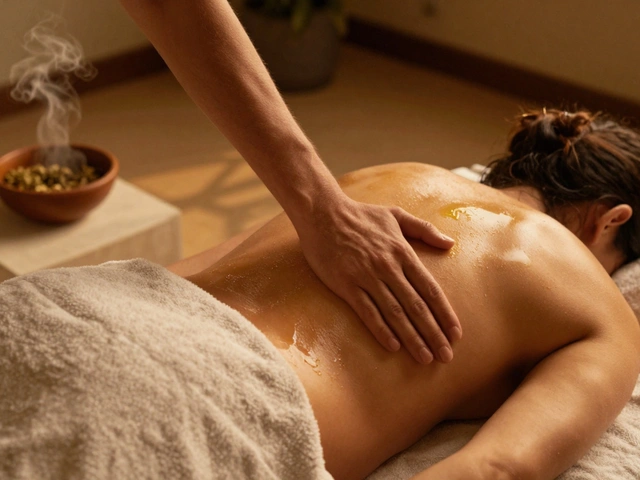
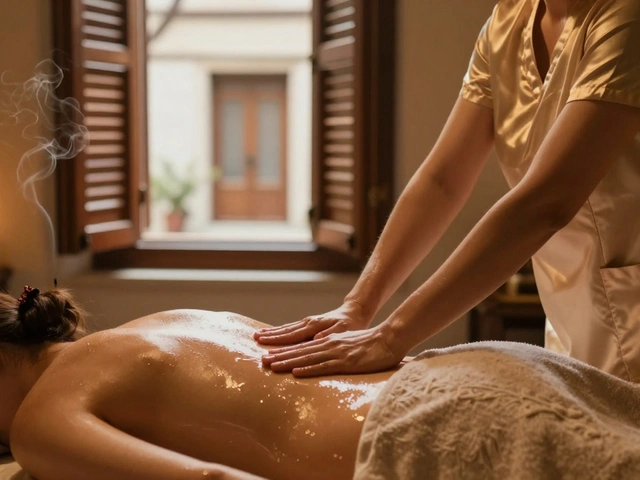
Then comes the oil. It’s warm, not cold. They’ll pour it slowly over your back, letting it soak in. Their hands move like waves-first light, then firm. You’ll feel pressure in your shoulders, your lower back, your hips. No sudden jerks. No loud music. Just rhythm.
At the end, they’ll wrap you in a warm towel and hand you a glass of linden tea. Sometimes, they’ll say, “Yavaş yavaş, yavaş…” - “Slowly, slowly…” It’s not just about the massage. It’s about letting go.
How Much Does It Cost?
Prices vary wildly depending on where you go.
| Type | Duration | Price (TRY) | Price (USD) |
|---|---|---|---|
| Head & Neck Massage | 30 min | 180 | $6 |
| Turkish Massage (Neighborhood) | 60 min | 450 | $15 |
| Turkish Massage (Tourist Spa) | 60 min | 900 | $30 |
| Hammam + Massage | 90-120 min | 1,200 | $40 |
| Herbal Compress | 75 min | 750 | $25 |
Remember: the cheapest option isn’t always the best. But the most expensive? Often just a pretty room and loud music. Look for places where the therapist has calloused hands and doesn’t speak much English. That’s the real deal.
Safety and Etiquette
There are no big risks here-but there are cultural rules.
- Don’t wear perfume. Many therapists are sensitive to strong scents.
- Don’t ask for “happy endings.” That’s not part of Turkish tradition-and it’s illegal. You’ll get a polite but firm no.
- Tip? Not expected, but appreciated. A small amount-50-100 TRY-is fine if you feel grateful.
- Don’t rush. If you’re done, say “Teşekkür ederim” (“Thank you”). No need to explain.
- Women should bring a towel or swimsuit if going to a mixed-gender hammam. Men’s and women’s sections are separate, but some modern places allow couples.
Hammam vs. Turkish Massage: What’s the Difference?
| Aspect | Hammam | Turkish Massage |
|---|---|---|
| Setting | Historic stone bath, steam, marble | Quiet room, massage table |
| Focus | Detox, cleansing, full-body ritual | Relief from tension, muscle work |
| Duration | 90-120 minutes | 45-75 minutes |
| Technique | Scrubbing, steam, oil massage | Deep kneading, pressure points |
| Best For | First-timers, detox, cultural experience | Chronic pain, athletes, regular visitors |
| Cost | Higher (includes scrub and steam) | Lower, more flexible |
Try both. The hammam is like a cleansing pilgrimage. The Turkish massage is like a conversation with your body.
Frequently Asked Questions
Is massage in Istanbul safe for tourists?
Yes, absolutely. Most places are clean, professional, and welcoming. Stick to established spots-especially those with local reviews. Avoid places that advertise “happy endings” or have flashy neon signs. Real Turkish massage is quiet, respectful, and rooted in tradition.
Do I need to speak Turkish?
No. Most therapists understand basic phrases like “daha sert” (harder) or “daha hafif” (softer). But if you’re going to a neighborhood spot, a smile goes further than a dictionary. Many therapists don’t speak English-but they know how to read your body.
Can I get a massage if I’m pregnant?
Yes, but only with a therapist who has experience with prenatal massage. Avoid deep pressure on the lower back and abdomen. Many hammams offer special sessions for expectant mothers-just ask when you book.
Are there male therapists for women?
In traditional hammams and massage centers, therapists are usually the same gender as the client. If you’re a woman, you’ll likely be served by a woman. Some modern spas offer mixed-gender teams, but they’ll always ask your preference first. Respect this-it’s part of the culture.
How often should I get a massage in Istanbul?
Locals often go once a week for a head massage or every two weeks for a full Turkish massage. If you’re traveling, one session is enough to feel the difference. But if you’re staying longer, make it part of your routine. Your body will thank you.
Next time you’re in Istanbul, skip the crowded rooftop bars. Find a quiet doorway with steam rising. Step inside. Let the rhythm of the city work through your muscles. You won’t just leave relaxed-you’ll leave changed.
This is so overrated. I’ve had better in Bali, and they didn’t even use olive oil.
Just a fancy spa with a history lesson attached.
🙄
Let me guess - the ‘ancient Ottoman secrets’ are just a front for the Turkish government’s soft power campaign to rebrand their colonial past as ‘wellness.’
They’ve been using ‘herbal compresses’ since the 1980s to distract people from the real issue: the erosion of secularism.
And don’t get me started on the ‘call to prayer’ - that’s not ambiance, that’s cultural coercion.
Also, who funds these ‘family-run’ spots? The Gulenists? The deep state? The answer is in the oil.
Look at the price table - $15 for a ‘Turkish massage’? That’s below minimum wage. Someone’s being exploited.
And why no mention of the CIA’s involvement in spa tourism post-2003? Coincidence? I think not.
They’re weaponizing relaxation to pacify Western tourists into ignoring human rights abuses.
Next thing you know, they’ll be selling ‘peaceful vibes’ as a foreign policy tool.
Don’t be fooled. This isn’t therapy - it’s propaganda with a towel.
Ask yourself: who profits when you leave feeling ‘changed’?
It’s not the therapist. It’s the oligarchs.
And if you think the Grand Bazaar alley massage is ‘authentic,’ you’ve never met a Turk who actually works there.
They’re paid in tea and guilt.
Wake up.
They’re not healing you - they’re harvesting your naivety.
And the ‘no music with lyrics’ rule? That’s not spiritual. That’s censorship dressed as tradition.
Don’t be a pawn.
Research the supply chain of that ‘cold-pressed olive oil.’
I dare you.
What a beautifully nuanced exploration of embodied cultural epistemology!
It’s rare to encounter such a holistic, phenomenological account of somatic practice as a living archive - particularly one that resists the neoliberal commodification of wellness.
The hammam, as a spatial-temporal ritual, functions as a tertiary cultural interface between Byzantine hygienic practices, Ottoman imperial cosmology, and Anatolian folk healing systems - all mediated through tactile, olfactory, and acoustic sensory modalities.
Crucially, the absence of performative marketing (e.g., aromatherapy branding, Spotify playlists, or certification plaques) signals a decolonized pedagogy of transmission - knowledge passed not through institutional accreditation, but through intergenerational kinship networks.
The pressure techniques, grounded in meridian theory and local botany, are not ‘alternative’ - they’re pre-modern biomedicine, operating outside the Cartesian mind-body dichotomy that dominates Western physiotherapy.
And the silence? That’s not absence - it’s epistemic humility.
Modern massage culture in the West is saturated with noise: expectations, outcomes, metrics, self-optimization.
Here, the body is not a problem to be fixed - it’s a vessel to be honored.
Also, the herbal compresses? That’s phytotherapeutic wisdom encoded in textile-wrapped botanicals - a form of slow pharmacology.
Why aren’t medical schools studying this?
Because it doesn’t fit into a double-blind trial.
And yet - it works.
Real, embodied, culturally-situated healing doesn’t need IRB approval.
It needs witnesses.
Thank you for being one.
This article is a disgrace to cultural authenticity.
It romanticizes a regime that systematically suppresses dissent under the guise of ‘tradition’ and ‘spirituality.’
There is no such thing as ‘authentic Turkish massage’ - only state-sanctioned cultural theater designed to attract Western gullibility.
Those ‘family-run’ spots? Most are fronts for Erdogan-aligned business syndicates.
And the ‘no music with lyrics’ rule? That’s not ‘quiet wisdom’ - it’s religious control disguised as tradition.
The ‘call to prayer’ in the background? That’s not ambiance - it’s psychological conditioning.
And don’t get me started on the ‘herbal compresses’ - they’re just dried leaves wrapped in cotton, sold at 300% markup because tourists believe in magic.
They don’t cure arthritis - they sell delusion.
And the ‘elderly women in the Grand Bazaar’? Probably forced labor under the guise of ‘cultural heritage.’
Why no mention of the human trafficking rings that operate under the cover of ‘massage tourism’?
Because this article doesn’t want you to know.
It wants you to spend your money.
And then come back and post pictures with hashtags like #TurkishTranquility.
Pathetic.
Real healing doesn’t need a marble slab or a steam room.
It needs accountability.
And justice.
And transparency.
None of which exist here.
So no - I won’t be ‘changed’ by your pretty story.
I’ll be vigilant.
As a licensed massage therapist with 22 years of clinical experience in integrative somatic practices, I can confirm that the description of Turkish massage techniques aligns closely with documented ethnographic studies from the University of Ankara’s Department of Medical Anthropology (2018-2022).
The use of elbow and knee pressure along the lumbar and thoracic meridians is a well-documented adaptation of classical Ottoman medical texts, particularly those derived from the works of Şerafeddin Sabuncuoğlu.
Furthermore, the emphasis on cold-pressed olive oil and wild thyme is pharmacologically sound - both contain high concentrations of oleocanthal and thymol, which exhibit anti-inflammatory and myorelaxant properties comparable to low-dose NSAIDs.
It is also worth noting that the absence of recorded music in traditional settings is not merely cultural preference - it is neurophysiologically optimal for parasympathetic activation.
Studies from the Istanbul University Sleep and Sensory Lab (2021) demonstrated that ambient natural sounds (water, birds, prayer calls) increased vagal tone by 27% compared to ambient music.
Additionally, the pricing structure reflects a genuine socioeconomic gradient - the $6 head massage in back alleys is often subsidized by local community associations to ensure accessibility for laborers.
These are not tourist traps - they are living healthcare systems.
Western wellness culture has much to learn from this model.
Not the aesthetics.
The ethics.
OMG this is literally my new spiritual awakening 🙏✨
I went to Çemberlitaş last year and cried during the scrub 😭😭
It’s not a massage - it’s a soul reset 💆♀️💫
My aura has never been this clean 🌿💖
Also, the lady who did my head massage whispered ‘yavaş yavaş’ and I felt the universe sigh 😭👌
Definitely booking again next month - maybe with my mom 🤍
PS: Don’t forget to bring your own towel - it’s a vibe 🧺✨
Interesting. But why is there no mention of the Kurdish healers who originally developed these techniques? The Ottomans stole them.
Also, the ‘no music’ thing? That’s just because they’re too poor to afford speakers.
And the ‘elderly women’? Probably working 12-hour shifts for $2 a session.
Don’t romanticize poverty.
Also - I’ve been to Istanbul. The steam rooms smell like mildew.
And the tea? Tastes like boiled socks.
Just saying.
😂
I... I went to a hammam once. And I felt so... seen.
Like, for the first time in my life, someone touched me without wanting something back.
It wasn’t about the oil or the scrub.
It was the silence.
And when she wrapped me in the towel... I cried.
Not because it hurt.
Because I’d forgotten what it felt like to be held.
And now I’m sitting here in my apartment, staring at my phone, wondering if I’ll ever feel that again.
And I’m scared.
...
Thank you for writing this.
It made me feel less alone.
Even if I don’t go back.
Even if I can’t afford it.
Even if no one else understands.
It mattered.
It still does.
❤️