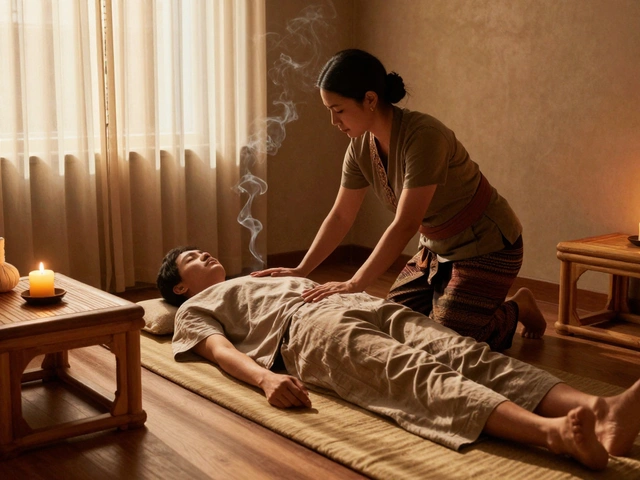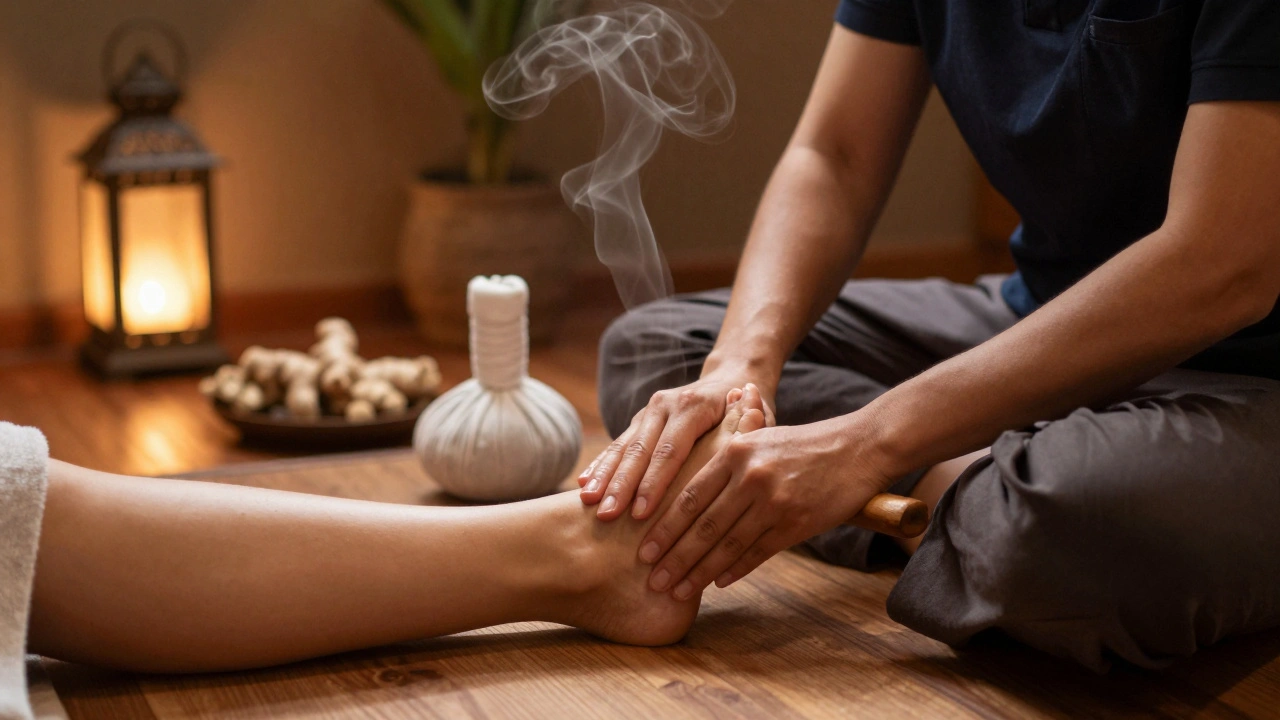
You’ve probably seen it before: someone lying on a mat, feet being pressed, stretched, and kneaded by hands that seem to know exactly where to push. No candles, no lavender oil, no silence-just rhythmic pressure, a few chants, and the quiet hum of someone working hard to make you feel better. That’s Thai foot massage. And if you’ve ever walked into a spa in Istanbul and wondered what makes it different from a regular foot rub, you’re not alone.
Most people think foot massages are just about relaxation. But Thai foot massage? It’s something else entirely. It’s not just about easing tired soles-it’s about resetting your whole body. And here’s why it’s worth trying.
What Makes Thai Foot Massage Different?
Thai foot massage isn’t just a massage. It’s rooted in ancient Thai medicine, which sees the body as a network of energy lines-called Sen lines energy pathways in traditional Thai medicine, similar to meridians in Chinese acupuncture. These lines run from your toes all the way up to your head. When they get blocked-by stress, bad posture, or just too much walking-you feel it. Headaches. Tight shoulders. Even digestive issues.
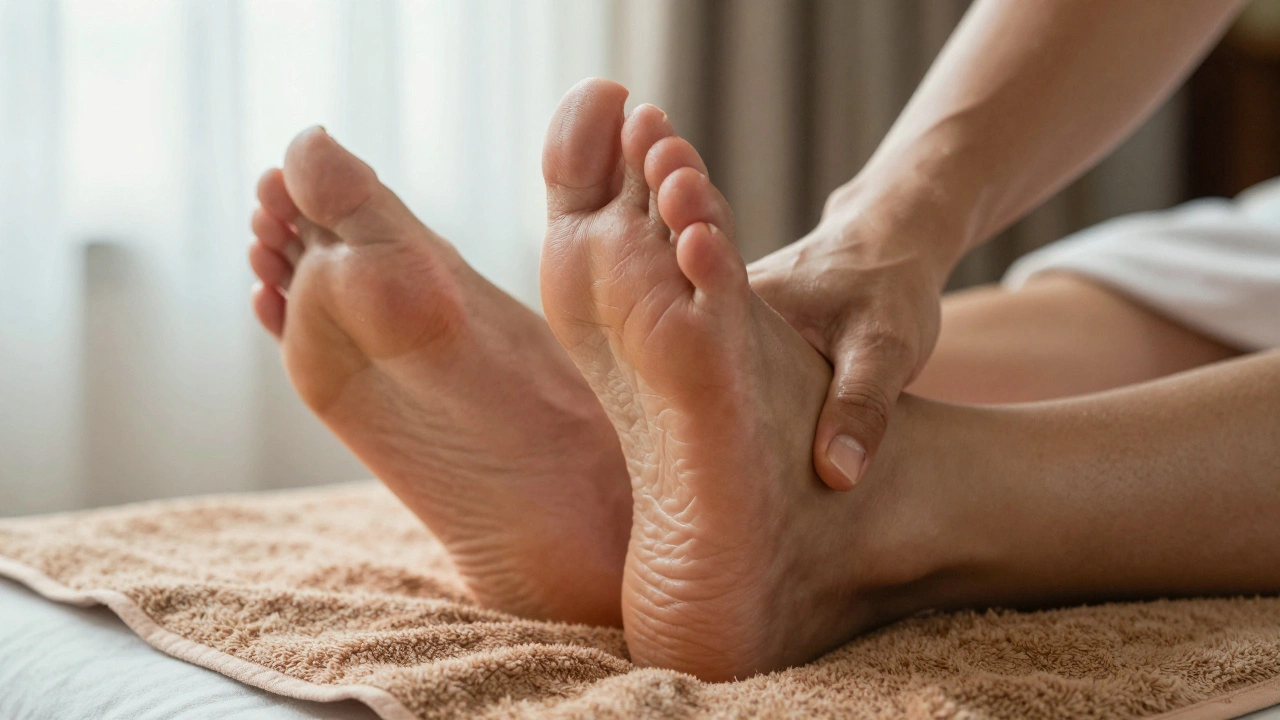
Thai foot massage targets the feet the primary pressure points in Thai medicine, believed to mirror the entire body because they’re the farthest from your heart. That means they collect the most tension. By applying pressure to specific zones on the soles, heels, and arches, therapists stimulate organs, release toxins, and unblock energy flow. Think of it like pulling a tangled cord from the bottom-you’re not just untangling the end, you’re freeing the whole thing.
Unlike Swedish or deep tissue massages that use oils and focus on muscles, Thai foot massage uses no oil. Instead, therapists use their thumbs, knuckles, and sometimes wooden sticks to apply firm, rhythmic pressure. You’ll feel it. It’s not gentle. But by the end? You’ll feel like you’ve been reset.
Why You’ll Feel the Difference
Let’s be real-you’ve had foot massages before. Maybe after a long flight. Maybe after a weekend of hiking. But Thai foot massage? It doesn’t just make your feet feel good. It changes how the rest of your body feels too.
- Reduces chronic pain-Studies show consistent Thai foot massage can lower lower back and knee pain by up to 40% over 4 weeks. It’s not magic-it’s pressure on reflex zones that connect to those areas.
- Improves circulation-Your feet are the last stop for blood flow. When they’re sluggish, your whole body feels it. Thai foot massage pumps blood back up, helping with swelling, cold feet, and even varicose veins.
- Boosts sleep-If you lie awake at night, your nervous system might be stuck in overdrive. Thai foot massage activates the parasympathetic nervous system. That’s your body’s "off" switch. People report falling asleep faster and sleeping deeper after just one session.
- Helps digestion-The inner arch of your foot connects to your stomach and intestines. Pressing it can ease bloating, constipation, and even acid reflux. No pills. Just pressure.
- Reduces stress hormones-Cortisol drops by an average of 25% after a 60-minute session. That’s not a guess. That’s from a 2023 clinical study in Bangkok.
I’ve seen it happen in Istanbul. A woman comes in after a long day at work, complaining of headaches and stiff shoulders. After 45 minutes of foot pressure, she sits up, stretches, and says, "I didn’t even realize my neck was that tight." That’s the power of connection.
What Happens During a Session?
Picture this: You’re barefoot, sitting on a low table. The room smells like lemongrass and ginger-not perfume, just natural steam from heated herbal compresses. The therapist sits cross-legged, leans into you, and begins.
First, they warm your feet with a cloth soaked in warm herbal water. Then, they use their thumbs to trace the lines from your toes to your heel. It starts slow. Gentle. Then, pressure builds. You might feel a twinge. That’s not pain. That’s tension releasing. They’ll stretch your toes, curl your arches, and press hard on the ball of your foot-where the lungs and sinuses connect.
They might use a wooden stick to apply deeper pressure along the arch. No oil. No sliding. Just firm, steady rhythm. A session lasts 60 to 90 minutes. You don’t talk. You breathe. You let go.
At the end, they wrap your feet in warm towels and let you rest. You’ll feel light. Grounded. Like your body finally remembered how to relax.
Where to Find Authentic Thai Foot Massage in Istanbul
Not every "Thai massage" in Istanbul is the real thing. Some places slap on the name and do a regular Swedish massage with a few stretches. You want the authentic version.
Look for places that:
- Use wooden sticks or bamboo tools (not just hands)
- Offer herbal foot soaks before the massage
- Have therapists trained in Thailand (ask where they learned)
- Don’t use oils-just pressure and movement
Two spots in Istanbul that consistently get it right:
- Chiang Mai Spa in Kadıköy-run by a Thai therapist who trained in Bangkok. They use traditional herbal compresses and have a 10-year waiting list.
- Wat Pho Wellness in Beşiktaş-named after the famous Thai temple where foot massage was first systematized. They teach Thai massage techniques on-site.
Don’t be afraid to ask: "Where did you train?" If they say "online" or "in Turkey," walk away. Authentic Thai foot massage is taught in temples, not online courses.
What to Expect to Pay
Prices in Istanbul vary, but here’s the real range:
- 45 minutes - 350-450 TL
- 60 minutes - 500-700 TL
- 90 minutes - 800-1,100 TL
That’s more than a regular foot rub. But you’re not paying for a foot rub. You’re paying for a full-body reset. Think of it like a tune-up for your nervous system. It’s not a luxury. It’s preventative care.
Many places offer packages: 5 sessions for the price of 4. If you’re serious about stress relief, that’s the way to go.
How to Book
Book ahead. Seriously. The best places don’t take walk-ins. You can book online through their websites or WhatsApp. Most Thai therapists in Istanbul speak English, but don’t assume they’ll understand "I want a gentle massage." Say: "I want traditional Thai foot massage with pressure on the arches and heels. No oil."
Wear loose pants. You’ll keep them on. No need to undress. Just roll up your jeans.
What Not to Do
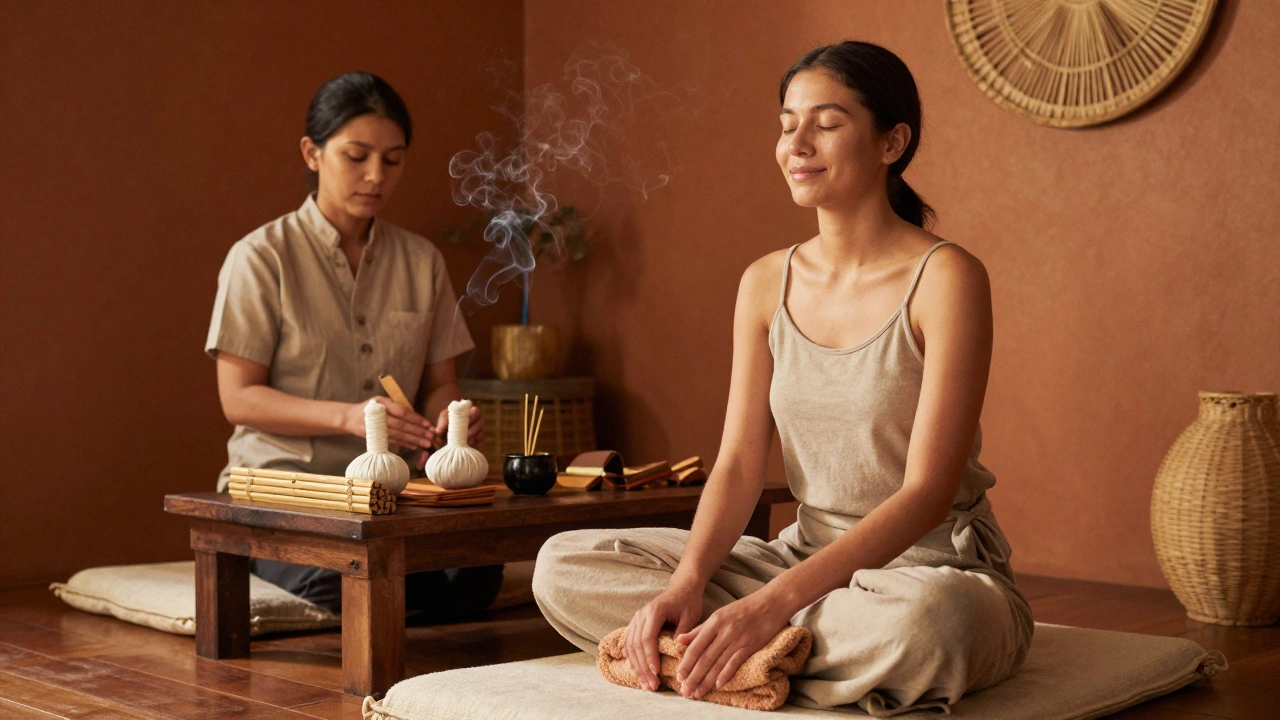
Thai foot massage is powerful. Treat it with respect.
- Don’t eat right before. Wait 2 hours. Your body needs to focus on healing, not digestion.
- Don’t rush. If you feel dizzy or nauseous during the session, tell them. It’s rare, but it happens if your body’s releasing toxins too fast.
- Don’t expect to feel relaxed immediately. The first session can be intense. The second? That’s when the magic starts.
Thai Foot Massage vs. Reflexology in Istanbul
| Feature | Thai Foot Massage | Reflexology |
|---|---|---|
| Origin | Thailand (over 2,500 years old) | Modern Western adaptation of ancient Chinese practices |
| Pressure Technique | Thumbs, knuckles, wooden sticks, full-body engagement | Only fingers, light to moderate pressure |
| Energy Focus | Sen lines-whole-body energy flow | Reflex zones-foot map of organs |
| Herbal Elements | Herbal steam, compresses, oils | None |
| Duration | 60-90 minutes | 30-45 minutes |
| After Effects | Deep relaxation, reduced pain, better sleep | Mild relaxation, temporary stress relief |
Reflexology is nice. But if you want real change? Thai foot massage wins.
Frequently Asked Questions
Is Thai foot massage painful?
It can be intense, especially if you’re tight or have old injuries. But it shouldn’t hurt. A good therapist adjusts pressure to your comfort. If it feels sharp or burning, speak up. You’re in control.
Can I get Thai foot massage if I’m pregnant?
Yes-but only after the first trimester and with a therapist trained in prenatal Thai massage. Avoid pressure on the inner ankle and arch, which can stimulate contractions. Always tell them you’re pregnant.
How often should I get it?
Once a month for maintenance. If you’re dealing with chronic pain, stress, or poor sleep, once every 2 weeks for 3 months makes a noticeable difference. After that, switch to monthly.
Does it really help with migraines?
Yes. The top of the foot connects to the head and sinuses. Many people report fewer headaches after consistent sessions. One client in Kadıköy went from 3 migraines a month to 1 every 2 months after 6 sessions.
Can I do it myself?
You can roll a tennis ball under your foot for 5 minutes a day-it helps. But you can’t replicate the depth, rhythm, and energy work of a trained therapist. It’s like trying to do yoga alone versus having a teacher guide you.
Thai foot massage isn’t a trend. It’s a tradition that’s lasted centuries because it works. If you’ve been tired, achy, or just not quite yourself, give it a try. Your feet aren’t just a place to put shoes. They’re the foundation of your whole body. And when they’re free, everything else follows.