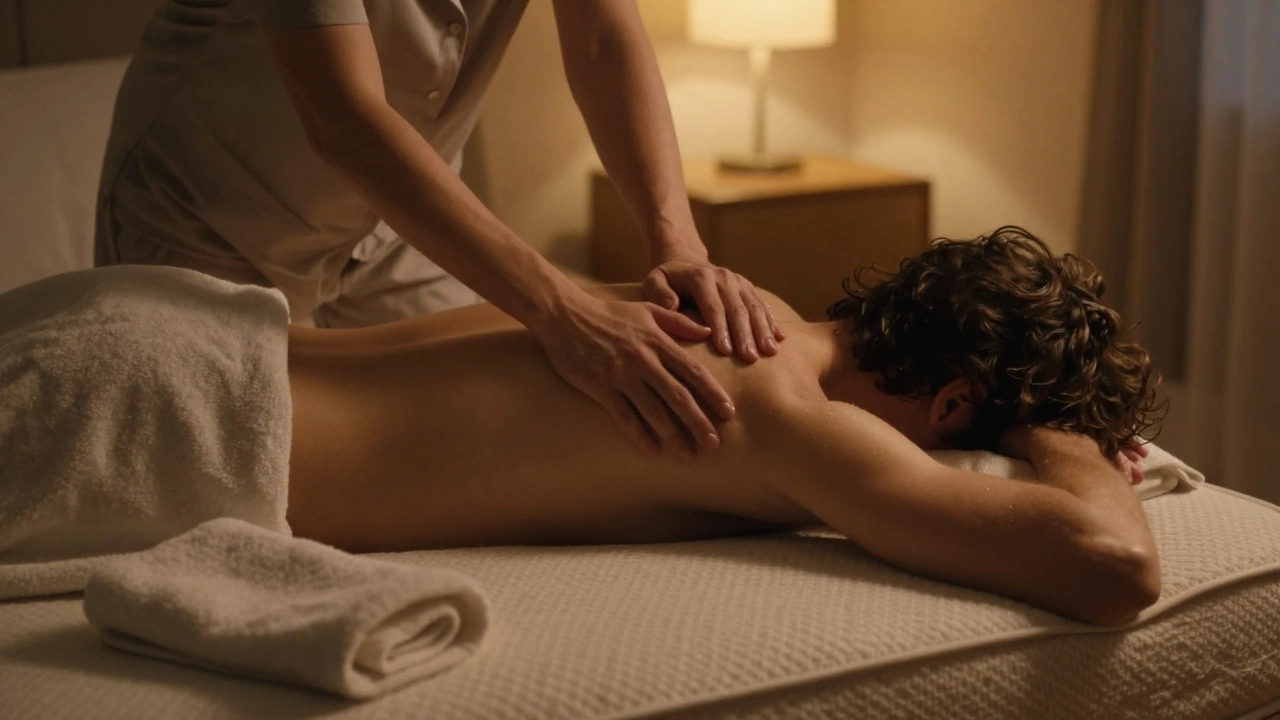
You’ve been busy. Work, bills, kids, errands. The last time you held hands without checking your phone? Probably last year. But what if just 30 minutes a week could bring you closer than months of conversations? That’s the quiet power of a couples massage.
Key Takeaways
- Couples massage isn’t about sex-it’s about reconnection through touch.
- Simple techniques like long strokes and warm oil can reduce stress hormones in both partners.
- Doing it at home saves money and builds ritual, not just relaxation.
- Communication before and after matters more than perfect technique.
- Even if you’re not a pro, your partner will feel the love in your hands.
Why Couples Massage Works (Even If You’re Not a Spa Expert)
Think about how often you say “I love you” without actually touching. Words are nice, but skin-to-skin contact releases oxytocin-the bonding hormone. Studies show that regular touch lowers cortisol (the stress hormone) by up to 31% in both giver and receiver. That’s not magic. That’s biology.Most couples don’t need fancy oils or candles. They need to remember how to be present with each other. A massage doesn’t fix your relationship. But it gives you a space to breathe together-no screens, no agendas, just two bodies moving in rhythm.
What Couples Massage Really Is (And What It’s Not)
Let’s clear this up right away: a couples massage is not a prelude to sex. It’s not erotic. It’s not about performance. It’s about safety. It’s about saying, “I’m here for you-not to fix you, not to talk to you, just to be with you.”Many people assume they need training or certification. You don’t. You just need willingness. A slow hand on the shoulder. A gentle stroke down the spine. Warmth. Silence. That’s all it takes to start.
The Real Benefits (Beyond Relaxation)
You already know massage feels good. But here’s what most people miss:- Reduces conflict: A 2023 study from the University of Miami found couples who did weekly touch rituals reported 40% fewer arguments over minor issues.
- Improves sleep: Lower cortisol means deeper rest. No more lying awake next to each other, both exhausted but wired.
- Breaks emotional distance: When you’re physically close without expectation, you start noticing small things again-the way they sigh, how their neck tenses when they’re tired.
- Builds trust: Letting someone touch your back, especially if you’re not used to it, is vulnerable. Doing it together? That’s intimacy built in real time.
One couple I spoke with-Mark and Lena-started doing 15-minute massages after dinner. No music. No candles. Just them. After three weeks, Lena said, “I felt seen for the first time in years.” Mark just smiled and said, “I didn’t even know I was holding my breath until I stopped.”
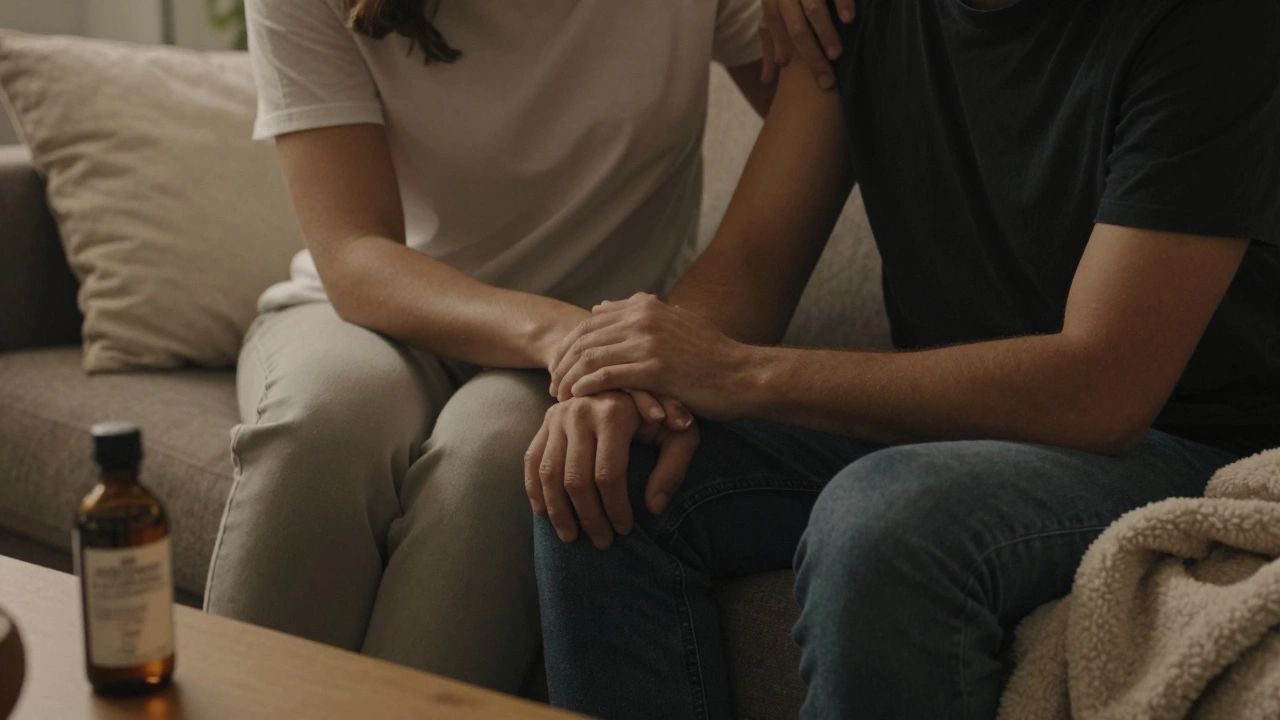
How to Do a Couples Massage at Home (No Experience Needed)
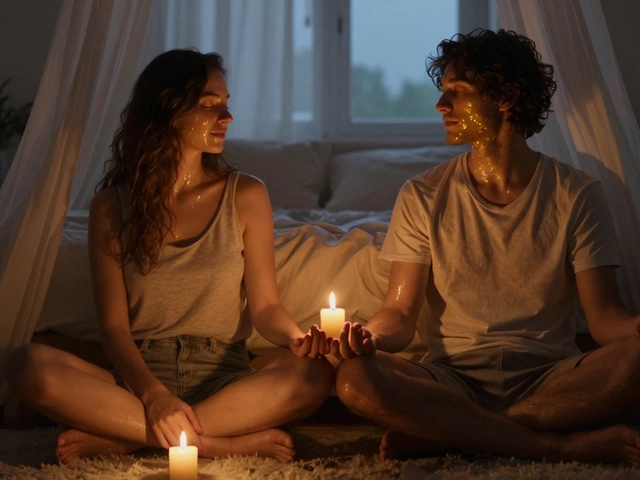
You don’t need a massage table. You don’t need expensive oils. You just need 20 minutes and a quiet space.- Set the mood: Dim the lights. Play soft music-nothing with lyrics. A fan or white noise machine helps block outside sounds.
- Use warm oil: Coconut, almond, or even olive oil works. Warm it in your hands before touching skin. Cold oil? Instant mood killer.
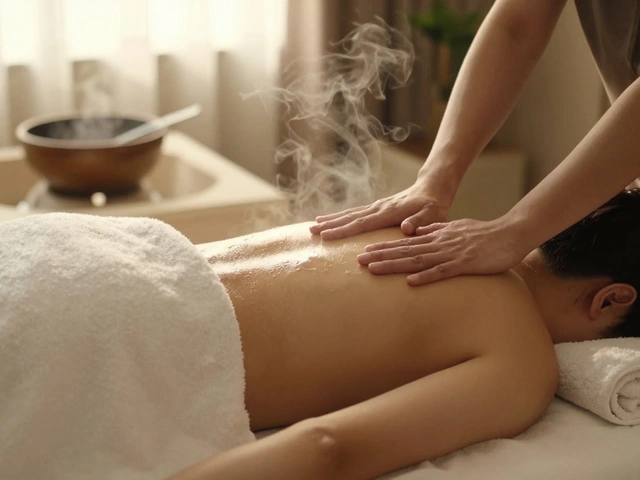
- Start with the back: Have one person lie face down. Place your hands on their lower back. Slowly glide upward with firm, even pressure. Don’t knead. Don’t poke. Just glide. Like you’re smoothing out wrinkles in a blanket.
- Move to the shoulders: Use your thumbs in small circles. Not deep. Just enough to melt tension. If they flinch, ease up.
- Switch roles: After 10 minutes, swap. Let the receiver become the giver. No talking. Just breathe together.
- End with a hug: No rush. Hold each other for a full 30 seconds. Let the calm sink in.
That’s it. No fancy moves. No pressure to be perfect. If you miss a spot? Doesn’t matter. If your hands get tired? Stop. This isn’t a job. It’s a gift.
What to Avoid
Even with good intentions, mistakes happen:- Don’t go too deep: Pain isn’t progress. If it hurts, you’re doing it wrong.
- Don’t talk: Unless they ask. Silence is part of the therapy.
- Don’t rush: Ten minutes of real focus beats 30 minutes of distracted rubbing.
- Don’t make it a chore: If you’re annoyed, skip it. Come back when you’re both in the right headspace.
What You’ll Need (Simple and Affordable)
| Item | Why It Matters | Cost Estimate |
|---|---|---|
| Coconut or almond oil | Smooth glide, nourishes skin, mild scent | $8-$15 per bottle |
| Soft towels | For wiping excess oil, keeping warm | $10-$20 (you probably already have these) |
| Quiet space | Free from distractions-no TV, no kids, no phone | $0 |
| Time | 20-30 minutes, twice a week | $0 |
You don’t need a spa. You need consistency.
When to Try a Professional Couples Massage
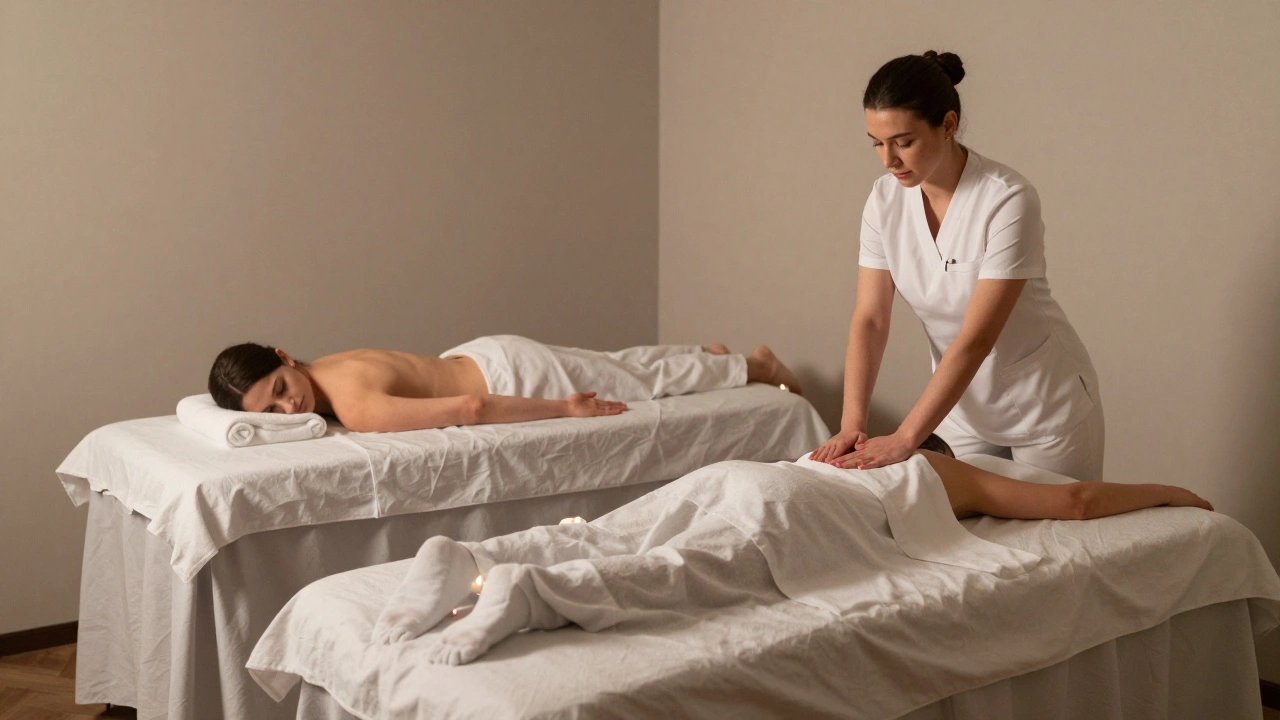
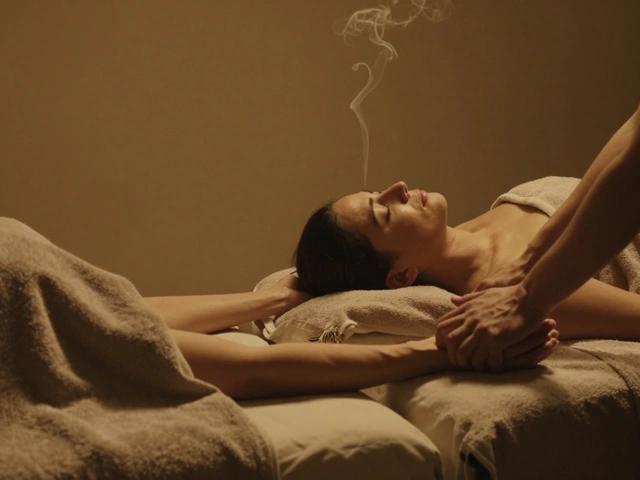
If you’ve tried the home version and want to level up, a professional session can deepen the experience. Look for licensed therapists who specialize in relational touch, not just “romantic massage.” Avoid places that push packages or imply something sexual.What to expect:
- Two side-by-side tables in the same room
- Soft lighting, no music with lyrics
- Therapists who leave the room while you get undressed
- Focus on long, flowing strokes-not deep tissue or pressure points
Price range: $120-$200 for 60 minutes. Worth it if you use it as a reset button-not a monthly splurge.
FAQ: Your Questions About Couples Massage Answered
Do we need to be naked during a couples massage?
No. Most people keep their underwear on, especially at first. The goal is comfort, not exposure. Therapists use draping techniques to keep you warm and covered. At home, wear whatever makes you feel safe-loose pajamas, shorts, or even just a towel.
What if one of us isn’t into it?
Don’t force it. Touch should feel good, not like a chore. Try starting with something smaller-a hand massage while watching TV, or a shoulder rub after dinner. Let curiosity, not pressure, lead the way. If they’re resistant, ask why. Maybe they’re uncomfortable with touch. That’s okay. Start slow.
Can we do this if we’re not romantic anymore?
Yes. In fact, that’s exactly when it helps most. Touch doesn’t require romance-it requires presence. You don’t need to feel love to give a good massage. You just need to be there. Over time, the physical connection often rekindles the emotional one.
How often should we do it?
Twice a week for 15-20 minutes is ideal. But even once a week makes a difference. The key isn’t frequency-it’s consistency. Miss a week? No guilt. Just start again next time.
Is couples massage only for heterosexual couples?
Absolutely not. Any two people who care about each other can benefit. The science of touch doesn’t care about gender or orientation. What matters is mutual respect and willingness to be vulnerable.
Final Thought: Touch Is the Oldest Language
We forget this, but before we had words, we had touch. A hand on the forehead. A back rubbed after a long day. A hug when nothing else helped. That’s the language you’re learning again. Not with words. Not with gifts. But with your hands.You don’t need to be perfect. You just need to show up. And that’s more than enough.
Man, this hit me right in the soul. I used to think touch was just physical-until my wife started rubbing my shoulders after work, no words, just her hands. I didn’t realize I’d been holding my breath for years. Now we do it every Tuesday and Thursday, even if it’s just ten minutes. No candles. No music. Just us. Turns out, the quietest moments are the ones that heal you the most.
And yeah, it’s not about being perfect. Last week I accidentally dug my thumb into her spine-she laughed and said, ‘That’s the sound of my spine saying ‘thank you’ in Morse code.’ We both cried. Not because it hurt. Because it felt real.
Let me tell you something-I’m not a touchy-feely guy. Grew up in a household where ‘I love you’ was whispered like a secret you weren’t allowed to say out loud. But after reading this, I tried it with my wife. Just two minutes on her back while she watched TV. She didn’t say anything. Just leaned into my hands. And then, out of nowhere, she said, ‘You’ve never done that before.’
That’s when it hit me: we don’t need grand gestures. We need tiny, consistent acts of presence. It’s not about technique. It’s about showing up with your whole self-even if your hands are clumsy, even if you’re nervous, even if you’re not sure what you’re doing. The love is in the willingness. Not the skill.